
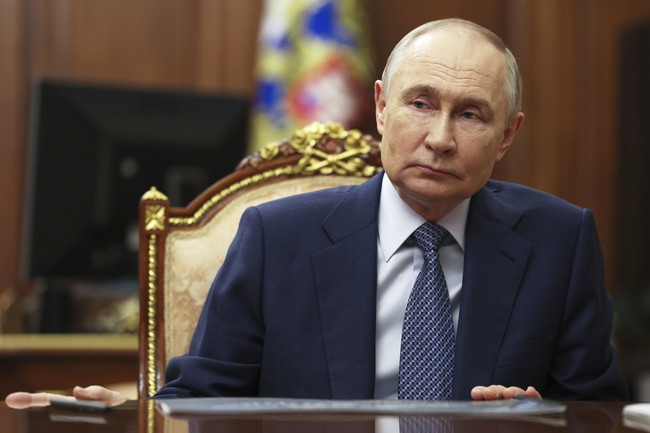
The CIA director’s surprise trip to Moscow has rattled Washington and raised tough questions about U.S. strategy and messaging, with both governments tightly quiet about who he met and why he went.
Central Intelligence Agency Director John Ratcliffe reportedly made an unannounced visit to Moscow, a move few expected and one that landed in headlines amid sparse official comment. Given the sensitivity of intelligence work and Russia’s reputation for secrecy, silence from both sides is predictable but frustrating. The timing and targets of the meetings — public or private — are at the center of intense speculation.
News outlets spotted a U.S. military transport plane and a diplomatic motorcade at a Moscow airport around the same time, fueling immediate questions about the purpose and scope of the trip. No government spokesmen in either country have confirmed the itinerary or attendees, which only amplifies the uncertainty. In these high-stakes situations, silence often speaks as loudly as any official statement.
https://x.com/CBSNews/status/2092267532774257128
FIRST ON CBS: CIA Director John Ratcliffe is in Moscow, Russia for meetings, sources familiar with the situation told CBS News Tuesday.
News of his trip comes after a U.S. Air Force Boeing C-17A Globemaster III transport plane was spotted at a Moscow airport, along with a U.S. diplomatic motorcade. Neither the U.S. nor Russian governments has commented on the identity of the U.S. official in Russia or the purpose of the visit.
There are obvious topics Ratcliffe could be there to discuss: Russian intentions toward NATO, possible escalations related to Ukraine, and regional crises such as Iran’s actions. Some insiders suggest the visit aimed to clarify Kremlin intentions and to press for de-escalation through direct engagement. From a Republican perspective, the visit looks like an effort to assert American strength and keep lines of communication open without backing down on deterrence.
Reports suggest U.S. intelligence assessments have noticed a shift in Vladimir Putin’s risk calculus, with Moscow possibly more willing to try hybrid or deniable operations against NATO allies. That pattern of probing could be designed to test the resolve of the alliance and this administration. Facing that sort of pressure, direct conversations at the highest levels of intelligence make strategic sense.
Unconfirmed accounts say the U.S. warned Ukraine to stand down from strikes while Ratcliffe was in Moscow, a move some view as a pragmatic short-term step to avoid miscalculation. Others worry such pauses could limit Ukraine’s options when they need leverage most. Balancing deterrence, alliance cohesion, and the avoidance of unintended escalation is the tightrope policymakers now walk.
According to reporting, the trip may have lasted only a few hours on the ground, which would fit a highly controlled, narrowly focused set of meetings rather than broad diplomatic talks. Kremlin spokesmen declined to acknowledge any scheduled meetings with U.S. officials that week, a predictable denial given how Moscow handles sensitive contacts. For Washington, that denial means the administration will likely frame the outcome carefully, if it decides to acknowledge anything at all.
Some commentators are asking whether Ratcliffe’s visit is part of a broader push by the current administration to reset how the U.S. handles strategic rivals through a mix of firm posture and direct engagement. Supporters argue this approach restores deterrence and credibility, compelling adversaries to rethink aggressive gambits. Critics warn about the risks of private deals undercutting allies or signaling weakness where strength is needed.
The lack of reaction from either capital leaves a vacuum filled by conjecture, partisan spin, and competing intelligence leaks. That vacuum benefits adversaries, so maintaining clear, disciplined messaging should be a priority for any responsible administration. From a Republican viewpoint, surprises like this work best when they reinforce American leverage rather than undermine it.
Whatever the private conversations covered, the optics of a U.S. intelligence chief in Moscow are powerful: they show the administration is willing to confront difficult questions directly and to meet adversaries where it counts. That can be reassuring if paired with unmistakable deterrence. It can be alarming if it seems to substitute secret diplomacy for robust support of allies.
Until officials decide to brief the public, speculation will continue and various narratives will compete for traction. The important follow-up will be whether any outcomes are shared publicly and whether those outcomes strengthen U.S. national security and the transatlantic alliance. For now, the trip is a reminder that tough, quiet work often happens beyond public view, and its results matter to the broader strategic picture.
Ratcliffe’s visit also comes as recent U.S. intelligence assessments indicate that Putin’s risk calculus may be shifting, with the Russian leader potentially increasingly willing to authorize provocative actions against NATO members — including hybrid operations and other deniable measures short of conventional military action — in order to test the resolve of the alliance and the Trump administration.
Reporting has indicated Ratcliffe’s trip was brief and tightly coordinated, and some outlets have pointed to a short on-the-ground window in Moscow. The administration has not provided official details, leaving it to journalists and analysts to piece together likely scenarios. That piecing together will shape public perception unless the White House chooses to control the narrative.



Add comment