
More Fraudulent Voter Rolls Found in a Red State – Will This Cleanup Change the Midterms?
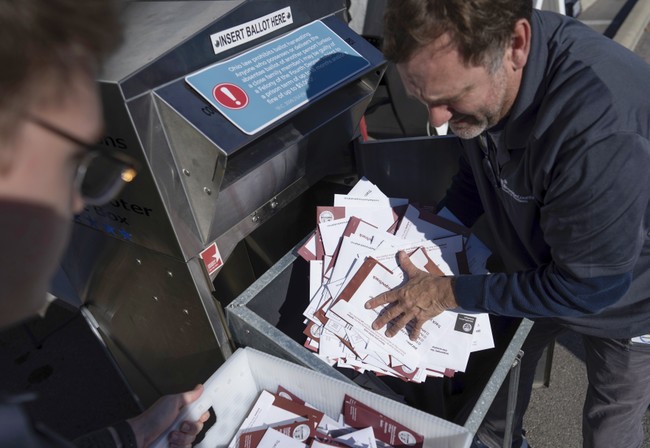
The discovery of thousands of questionable registrations in several states, plus specific findings in Ohio, has pushed election integrity into the spotlight again and raised real questions about how voter rolls are maintained and what that means for upcoming midterms.
Recent investigations in red states and swing states are revealing larger-than-expected numbers of noncitizen and duplicate registrations. Officials are referring cases for federal review and, in some instances, claiming that ineligible individuals appear to have cast ballots. These developments are reshaping the conversation about election security and the practical steps states must take to keep rolls clean.
Republican secretaries of state and attorneys general are treating these findings as evidence that more rigorous checks are needed. The pattern stretches from Texas and Arkansas to Ohio and Pennsylvania, with officials saying they’ve found registrations belonging to illegal aliens, duplicates, and even instances where votes were apparently cast under those names. That mix of allegations and referrals has energized conservative calls for tighter registration processes and voter ID.
As illegal immigrants from all over the world poured into the U.S. during the Biden administration, Republicans voiced concerns about non-citizens making it onto state voter rolls and casting illegal votes. Democrats insisted that it was a “rare” occurrence. Really? Besides the possible ineligible voters found in Texas, a review in Ohio revealed a possible 138 people who cast illegal votes. In Georgia, 1,634 people were placed in “pending citizenship” status as they were unable to be verified. And in the all-important swing state of Pennsylvania, a “glitch” (is that what Democrats call it now?) in the voter registration process enabled non-citizens to vote illegally for a time. While the so-called glitch went on between 2006 and 2017 (that’s a hell of a glitch), 168 ineligible people registered to vote. CNN referred to these numbers as “infinitesimal.” Hey CNN, how many is not the point.
Ohio’s latest announcement is the kind of result that conservatives point to when arguing that weak safeguards invite real problems. The Ohio Secretary of State reported over 1,000 noncitizens who appear to have registered to vote unlawfully, and many of those cases were forwarded to the Department of Justice for potential prosecution. Officials also flagged people who seem to have voted in multiple states, after death, or from unlawful residences.
An investigation by Ohio Secretary of State Frank LaRose has uncovered over 1,000 noncitizens who “appear to have registered to vote unlawfully in Ohio,” his office announced Tuesday.
LaRose says he has referred all 1,084 cases to the Department of Justice, noting that 167 of the individuals appear to have cast a ballot in a federal election since 2018. LaRose’s office also referred 135 others for potential prosecution, citing evidence of other unlawful voting activity.
“Ohio has earned its reputation as the Gold Standard, and our Election Integrity Unit continues to prove why,” LaRose said in a statement to Fox News Digital. “We work tirelessly to ensure that every eligible voter’s voice is heard, and anyone who tries to cheat the system will face serious consequences.”
LaRose sent a letter to the DOJ’s criminal division on Tuesday, highlighting the evidence of the 1,084 noncitizen voter registrations as well as other alleged crimes.
The other crimes include 99 individuals who appear to have voted in two states in the same federal election; 16 people who appear to have voted twice in Ohio in the same federal election; 14 who appear to have voted in a federal election after the date of their death; four who appear to have engaged in ballot harvesting and two who registered at an unlawful residence.
Local conditions matter. The overload of migrants in some counties created strains on public services and sparked political arguments that fed statewide campaigns. Candidates used those local stories to highlight broader national issues, and some of those arguments are now backed up by official findings of improper registrations and potential illegal voting. For conservatives, that validates concerns raised earlier about enforcement and accountability.
State-level reforms are moving forward in a number of places, from voter ID initiatives to stricter verification rules for new registrations. Where courts and officials have allowed tougher enforcement, proponents say the results are cleaner rolls and more confidence in election outcomes. Opponents warn against disenfranchisement, but the current debate is squarely about balancing access with security.
There have also been political maneuvers around redistricting and election timing that critics say are attempts to blunt competitive threats. In one state, a proposed special session to alter maps close to an election was challenged as unconstitutional, with the attorney general stepping in to halt what he called a violation of the state’s amendment process. Those fights show how election law and political strategy often intersect in high-stakes moments.
Legal and administrative pushes are now intersecting: state officials want clean rolls, federal prosecutors are being asked to review referred cases, and activists on both sides are mobilizing around the issue. That combination promises to keep voter integrity and registration policy at the center of election-season politics.
State and local officials will likely keep auditing and referring suspicious registrations, while advocacy groups continue to press for stronger safeguards. The outcome could reshape how registration systems operate and how seriously voters and officials treat the accuracy of the rolls in the run-up to 2026.


Add comment