
The U.S. and Israel launched major strikes on Iran after a deadline tied to America’s demand that Tehran abandon nuclear enrichment, and New York City’s Democratic Socialist mayor Zohran Mamdani publicly criticized the attack while his city increased security. This piece examines the timeline of events, Mamdani’s statements, law enforcement responses, reactions across the political spectrum, and breaking news about Iran’s leadership amid the unfolding crisis. It keeps the direct quotes intact and maintains the original embeds in their places.
The strikes began in the early hours following a White House announcement that framed the operation as a response to Iran’s long-standing nuclear program. Officials called it Operation “Epic Fury” and described it as a coordinated effort with Israel. The sudden escalation sent shockwaves through global markets and city streets alike, prompting immediate security measures in major urban centers.
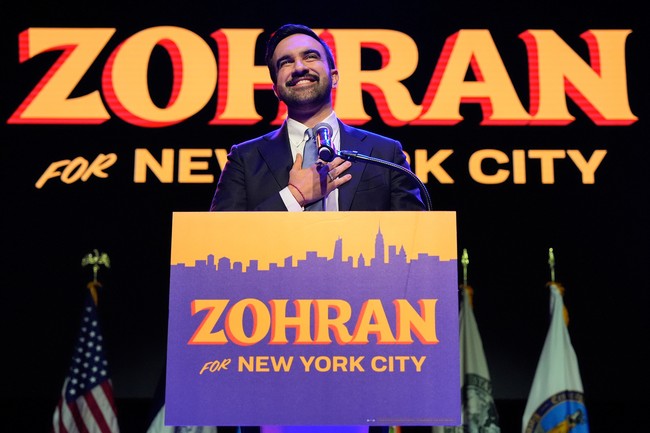
In New York City, Mayor Zohran Mamdani spoke publicly and sharply critiqued the strikes, calling them an illegal escalation. He framed the action as “a catastrophic escalation in an illegal act of war of aggression” and emphasized that Americans want relief from domestic issues instead of more foreign entanglements. His remarks reflected a left-of-center stance that prioritizes local economic concerns and peace over military action abroad.
“Today’s military strikes by the United States and Israel mark a catastrophic escalation in an illegal act of war of aggression,” Mamdani said Saturday at an unrelated event in Brooklyn. “Bombing cities, killing civilians, opening up a new theater of war — Americans do not want this. Americans do not want another war in pursuit of regime change. We want an answer to the affordability crisis. We want peace.”
City law enforcement moved quickly to address possible fallout from the strikes, announcing enhanced patrols around diplomatic, cultural, and religious sites. The mayor’s office emphasized coordination across agencies and an abundance-of-caution approach to protect vulnerable communities. That proactive posture aimed to prevent attacks or unrest targeting Iranian New Yorkers and other residents.
Mamdani’s NYPD reacted to the dramatic development before he did, issuing a statement early Saturday morning saying the department is “enhancing patrols to sensitive locations throughout the city, including diplomatic, cultural, religious and other relevant sites” in light of the U.S. military operation.
“We are increasing agency coordination as well as patrols of sensitive locations out of an abundance of caution,” he said Saturday afternoon.
The mayor followed up with a social media post stressing safety and community solidarity, and he repeated calls for peace and economic relief. His message included direct outreach to Iranian Americans, assuring them that they are “part of the fabric of this city” and promising protection. Those reassurances were intended to calm fears and to highlight the city’s role as a refuge for immigrants and small business owners.
While Mamdani emphasized humanitarian concerns and domestic priorities, national leaders presented the strikes as necessary to negate a nuclear threat and to deter further aggression. Supporters of the operation argued that decisive action was required to prevent a far larger conflict later and to defend allied interests in the region. Republican lawmakers and many conservatives framed the strikes as a measured, strategic response to decades of threats and provocations.
Reactions within the Democratic Party were divided, with some officials expressing caution and others urging a more forceful stance in support of the operation. The split revealed long-standing tensions over foreign policy priorities within the party, where progressive anti-war impulses clash with establishment concerns about national security. Several prominent Democrats were noticeably silent, reflecting the political complexity of supporting military action while addressing voters wary of new foreign wars.
Public safety officials continued to brief citizens on steps being taken to secure critical sites and to coordinate with federal partners. The mayor’s office reiterated its focus on ensuring every resident’s safety while also advocating for redirecting attention to pressing urban issues. That dual focus sparked criticism from those who believe national security decisions should not be downplayed in favor of city-level concerns.
Amid the shifting political and security landscape, outlets reported a major development regarding Iran’s leadership that could reshape the conflict. News of the alleged death of a high-ranking Iranian figure circulated quickly, injecting uncertainty into how Tehran might respond. Such developments raise the stakes and complicate diplomatic and military calculations on all sides.
The coming hours and days promise further developments as military, diplomatic, and local authorities react and adapt. City officials face the twin tasks of protecting residents and managing political fallout from a divisive national decision. Observers on the right argue that holding adversaries accountable preserves peace long term, while critics warn about the danger of escalation and civilian harm.



Add comment