
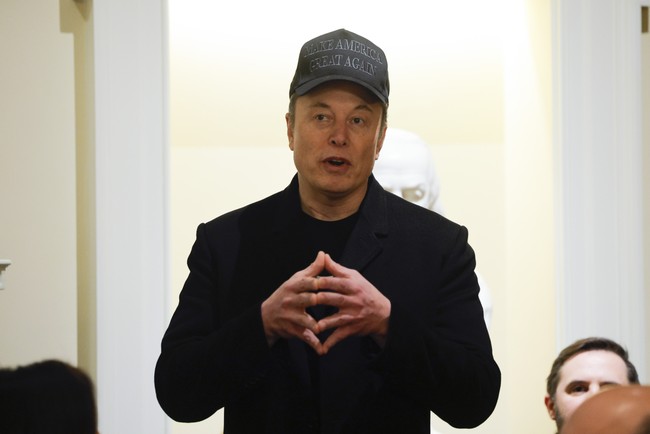
Elon Musk argued that only a dramatic boom in artificial intelligence and robotics can blunt the United States’ mounting debt problem, and this piece examines that claim, the mechanics of inflation and deflation, and why Republicans insist the real cure is fiscal responsibility and spending cuts.
Elon Musk has a track record of bold forecasts, and his latest on tackling the national debt is no exception. On a recent podcast, he suggested the only practical fix is widespread deployment of AI and robotics to dramatically increase output. His idea forces a look at how technology, prices, and government finances interact in the real world.
Here are his words, presented exactly as he said them on the program. “I think that’s pretty much the only thing that’s going to solve for the U.S. debt crisis, because currently the U.S. debt is insanely high,” Musk said. “The interest payments on the debt exceed the entire military budget of the United States – just the interest payments, and that’s at least in the short-term going to continue to increase.”
“So I think actually the only thing that can solve for the debt situation is AI and robotics,” he added. “It probably would cause significant deflation because deflation or inflation is really the ratio of goods and services produced to the change in the money supply.”
Musk’s point about interest payments is stark: the federal tab is enormous, with the national debt now sitting around $38 trillion, and interest costs are ballooning. From a Republican viewpoint, that is a national crisis of priorities and spending, not just a matter of technology adoption. Interest obligations siphon resources from defense, infrastructure, and services families rely on, and they constrain future policy choices.
Technological progress can raise output and reduce unit costs, and to some extent that can temper price inflation. But the economic mechanics make clear why Musk’s prescription is incomplete. Deflation means each dollar buys more because goods and services are produced more abundantly relative to money, so the real burden of fixed debt grows rather than shrinks.
Put another way, when productivity advances push prices down, the nominal value of obligations does not adjust down. A mortgage or a Treasury bond is a fixed nominal claim, so rapid deflation increases its real burden. Republicans long have warned that relying on market miracles to erase reckless fiscal policy is wishful thinking; policy choices matter more than hoping robots will save the balance sheet.
AI and robotics will transform sectors like manufacturing, logistics, and some services, raising productivity and lowering costs in many areas. Yet technology rarely substitutes for the entirety of human labor across a complex economy, and there are limits to how fast or how comprehensively automation can scale. Even if output expands substantially, political institutions still decide tax rates, spending priorities, and entitlement structures that drive long-term debt dynamics.
The practical Republican remedy remains straightforward and old-fashioned: control spending, reform entitlements, and stop adding to the liabilities that compound interest creates. That means reducing unnecessary programs, enforcing budget discipline, and prioritizing growth-friendly policies that increase private-sector investment and wage growth, not relying on technocratic salvation alone.
Musk’s vision does capture an important truth: innovation matters, and higher productivity is a tool for prosperity. But conservatives argue innovation should be paired with fiscal sanity so that gains in output benefit citizens rather than placating a reckless fiscal stance. A nation that spends within its means keeps options open and preserves strength for defense and emergencies.
Relying solely on AI-driven deflation to solve a $38 trillion problem is risky politics and risky economics. The Treasury bill will still come due; interest keeps compounding; and absent policy reform, every efficiency gain can be offset by continued government spending. The sensible Republican case is that technology helps, but only discipline and responsible budgeting will secure long-term solvency.
In short, embrace innovation and welcome productivity gains, but pair them with a commitment to shrink deficits and reform entitlements. Without that fiscal backbone, even the most dramatic advances in AI and robotics will be an unreliable fix for a problem created by policy choices and entrenched spending patterns.



Add comment