
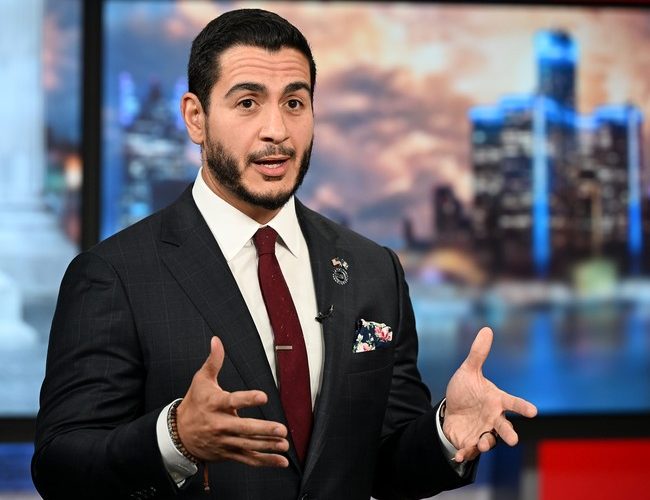
Abdul El-Sayed narrowly won Michigan’s Democratic Senate primary, but controversy followed as his association with Twitch streamer Hasan Piker sparked harsh criticism and raised questions about whether that alliance will hurt El-Sayed in the general election.
El-Sayed emerged from a crowded primary with a slim margin, and in tight races the obvious move is to unite the party and bring former opponents’ supporters into the fold. Instead, one high-profile surrogate set off a firestorm with language and behavior that many voters and fellow Democrats found objectionable. That reaction exposed tensions within the party about messaging, electability, and the company candidates keep when the stakes rise.
Hasan Piker, a popular left-leaning streamer, delivered an expletive-filled on-air tirade about critics who suggested El-Sayed needed to mend fences, grabbing headlines for the worst of it. The rant included this line: “You are all unbelievable Islamophobic pieces of sh**,” followed by “Now, you’re gonna sit there and be like, well, you know, he really gotta come to me now, like, what are you talking about? Do you want to f**kin win, or not? Lock the f**k in.” Those words landed badly outside Piker’s base and inflamed concerns among more moderate voters.
When asked about Piker’s comments and whether he would distance himself, El-Sayed declined to condemn the streamer outright and instead framed the relationship as a matter of differing perspectives. His response, “welcome to his perspective,” struck critics as weak and evasive rather than a clear rebuke of incendiary rhetoric. That answer left some Democrats wondering if El-Sayed truly grasps how outside influencers can shape a candidate’s image in a general election.
El-Sayed faced follow-up questions about whether he would continue campaigning alongside Piker, and he offered, “I’m focused on campaigning in this state,” adding, “I’m not as focused on who I’m campaigning with.” That deflection did not satisfy many observers who expect candidates to take responsibility for campaign allies when controversies arise. The general election will test whether voters care more about policy or the optics created by associations like this one.
https://x.com/RNCResearch/status/2085167802697080979
Critics pointed to Piker’s past comments that crossed lines for many Americans, including a highly inflammatory remark that he later repeated in criticism: “America deserved 9/11.” That statement and other provocative acts have been used repeatedly by opponents to argue that Piker is a toxic presence on the trail. For a statewide candidate in Michigan, national headlines about a surrogate’s extremism can become a sustained drag on voter trust.
Inside the Democratic fold, there were sharp voices urging El-Sayed to consider the political costs. Representative Hillary Scholten publicly criticized the decision to bring Piker in as a key speaker, arguing that choosing a controversial, nonlocal influencer as a closer sends a message about priorities and judgment. Her remarks raised the question of whether local voters feel represented when national personalities dominate a campaign’s closing moments.
The backlash did not stop with grassroots actors; elected Democrats also sounded alarms. Senator John Fetterman challenged El-Sayed directly, saying he would be a prime target for Republican attack ads and suggesting a heavy ad buy that would highlight the association. Fetterman’s exact words were blunt: “If I was a Republican, I’d dump $20 million in ads. He pals around with Hasan Piker, who said America deserved 9/11, and you’re gonna try to win a general election?” That kind of public admonition from a senior party member underlines how seriously some Democrats view the risk.
Beyond the headlines, political strategists worry that El-Sayed’s narrow primary victory signals a broader challenge: a majority of primary voters backed someone else, which means outreach matters more than ever. Relying on polarizing online personalities to deliver turnout among specific segments can energize the base but alienate independents and moderates who decide close general elections. Campaigns must weigh short-term enthusiasm against long-term electability.
The clash over Piker’s involvement exposes a familiar tension in modern politics: striking the balance between energized online activism and broad-based appeal at the ballot box. For El-Sayed, the coming weeks will be a test of whether he pivots to reassure skeptical voters and unify a divided electorate, or doubles down on the alliances that sparked the current controversy.



Add comment