
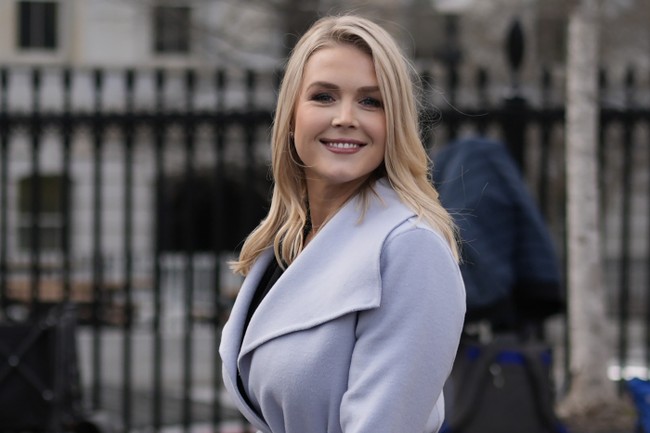
Karoline Leavitt, the Trump White House press secretary, announced she is expecting a baby girl in May 2026 while remaining in her role, calling motherhood “the closest thing to Heaven on Earth” and praising the administration for a pro-family environment.
Karoline Leavitt, 28, revealed the pregnancy news after already welcoming son Niko in July 2024, and she said she and her husband, Nick Riccio, 60, are “thrilled” to be growing their family. The timing and her decision to stay on in the White House make this a notable moment for the administration and the press office. This is being framed as a historic first: the first pregnant presidential press secretary to continue serving in the role. It underscores a different approach in the West Wing that values family life alongside official duties.
Leavitt’s own words capture the personal side of the announcement: “My husband and I are thrilled to grow our family and can’t wait to watch our son become a big brother,” she wrote on social media. She added that her “heart is overflowing with gratitude to God for the blessing of motherhood, which I truly believe is the closest thing to Heaven on Earth.” Those lines give a candid, heartfelt glimpse into why she chose to share the news publicly now and why it matters to her personally.
Senior administration officials confirmed Leavitt plans to continue in her press secretary duties while expecting, a decision that will reshape expectations for staff balancing high-profile jobs and parenthood. For conservatives who champion family-first policies, Leavitt’s situation is a welcome proof point that federal workplaces can support parents without sidelining careers. It also highlights how the Trump White House is promoting a culture that lets younger staffers advance professionally while starting or expanding their families.
Leavitt thanked President Trump and Chief of Staff Susie Wiles by name, saying she was “extremely grateful to President Trump and our Chief of Staff Susie Wiles for their support, and for fostering a pro-family environment in the White House. 2026 is going to be a great year and I am so excited to be a girl mom!” That acknowledgment is more than politeness; it signals that leadership backing matters when staff make major life choices while serving in demanding roles. The message fits a broader conservative narrative that institutions should make room for families, not force impossible trade-offs.
Observers noticed more visible family-friendly moments at the White House over the past months, from staff bringing children through a Halloween trick-or-treat line to appearances by young relatives during seasonal events. Leavitt and Niko were part of those family scenes, offering a human touch to a workplace often perceived as strictly formal. Those shared moments serve to normalize mixing family life with public service and to show that a high-pressure job can coexist with being a parent.
At Thanksgiving, Niko even joined his mother in the Press Briefing Room when the presidential turkeys arrived, sharing a lighthearted moment amid the seriousness of national duties. Small, warm scenes like that reinforce how the administration wants to present itself: strong on policy but attentive to family life. Such optics matter politically because they help paint a picture of an administration that values everyday American priorities.
The announcement also draws attention to generational dynamics inside the White House, with younger staffers like Leavitt rising to prominent positions while starting families. Her visibility as a young, working mother in a top communications role may inspire others in public service who worry they must choose between career and family. For supporters, it’s proof that conservative leadership can both demand excellence and support family commitments.
Critics may try to turn a personal milestone into a political talking point, but the core of this story is simple and relatable: a family is growing, and the mother is continuing her job. Leavitt called the expected baby “[t]he greatest Christmas gift we could ever ask for,” and the tone of her announcement stayed squarely personal and thankful. That tone, combined with the administration’s willingness to accommodate her role, sends a clear message about priorities and workplace flexibility.
This moment for Karoline Leavitt is about more than one press secretary; it’s part of a larger conversation about how government workplaces treat parents and how public servants balance duty with family life. Her decision to remain in place while pregnant sets a public example for others in high-pressure roles. It also gives conservatives a positive example to highlight when arguing that policy and culture can be arranged to support families without sacrificing professional commitment.



Add comment