
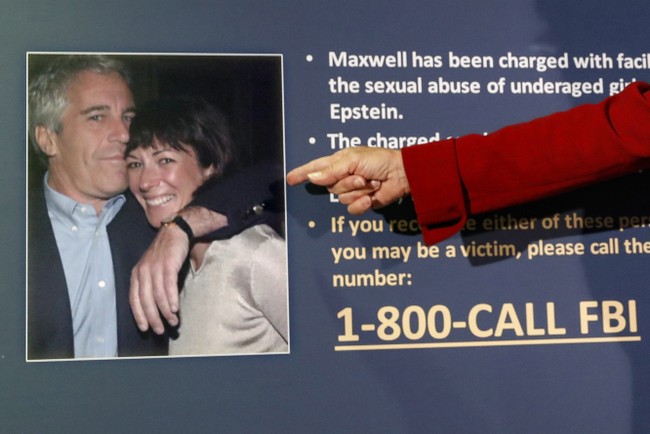
This article explains how Ghislaine Maxwell tried to use documents released under the Epstein Files Transparency Act to challenge her convictions, how a federal judge assessed those claims, and why the newly disclosed records ultimately undercut her arguments rather than help them.
Longtime Jeffrey Epstein associate Ghislaine Maxwell turned to millions of pages recently released under the Epstein Files Transparency Act in a bid to undo her convictions. She filed a pro se § 2255 petition seeking to vacate her December 2021 convictions and the 20-year sentence imposed in June 2022, arguing the newly released material undermined the prosecution or revealed constitutional flaws. The timing of the disclosures gave her a fresh avenue to press claims she had previously lost on appeal.
U.S. District Judge Paul Engelmayer rejected that approach in a 67-page opinion, finding the material did not help Maxwell’s cause. As Engelmayer put it, “far from exculpating her, it incriminates her or reinforces the correctness of the legal rulings Maxwell challenges.” The judge concluded that most of her arguments were meritless or frivolous and that many were procedurally barred because they had already been raised on appeal or could have been.
Maxwell’s motion leaned heavily on the idea that Epstein’s 2007 non-prosecution agreement in Florida shielded her from later prosecution in New York. That theory has been rejected before, including by the 2nd Circuit, and the Supreme Court declined to hear her appeal in October 2025. In the new filings she claimed EFTA disclosures showed the Florida investigation had extended into New York and therefore should have protected her, but the exhibits she cited failed to support that narrative.
One exhibit she described as showing an “expanding New York investigation” contains no mention of New York, undermining her own characterization. Another newly disclosed communication explicitly indicates Epstein’s victims were told the NPA “did not extend to New York or other jurisdictions,” which directly contradicts her argument. Engelmayer treated those documents as either irrelevant or affirmatively corroborating prior rulings against her instead of offering new exculpatory evidence.
Beyond the NPA claim, Maxwell tried to use the EFTA records to challenge a sentencing enhancement by arguing she had “largely exited the Epstein household” by 2002. Her own statements undercut that effort. During a July 2025 interview with then-Deputy Attorney General Todd Blanche she described running Epstein’s properties and staff, overseeing budgets, and remaining “still around,” and records show Epstein continued paying her roughly $250,000 annually until 2009.
Those payment details and Maxwell’s own admissions made the narrative of a distant, disengaged associate implausible to Engelmayer. The judge noted that financial ties and operational roles pointed toward significant ongoing involvement rather than withdrawal, weakening any claim that the sentencing enhancement was unsupported by the facts. Rather than creating reasonable doubt, the EFTA materials reinforced existing findings about her role.
Maxwell’s overall petition and its supplements were described by the court as lengthy, rambling, and discursive, a posture the judge found did not help her legal position. The old saying that “He who represents himself has a fool for a client” was cited in the opinion and used to highlight the pitfalls of a pro se strategy in a complex, document-heavy case. Procedural missteps and repetitive, previously rejected arguments left little room for relief.
The Epstein Files Transparency Act, enacted in November 2025, required the Department of Justice to release unclassified investigative materials relating to Epstein and Maxwell, subject to specific exceptions. That public disclosure was intended to increase transparency about the investigations, but the availability of documents does not automatically translate into reversible error or new exculpatory evidence. Courts still require that any newly cited material be both credible and likely to have changed the outcome of the trial.
Engelmayer’s denial of Maxwell’s petition keeps her convictions and sentence intact, closing this particular procedural door. For now, the records Maxwell hoped would overturn or weaken her convictions instead buttressed the government’s position in the judge’s view. The case illustrates the limits of post-conviction petitions based on newly released documents when courts find those materials do not materially alter the factual or legal foundations of a conviction.



Add comment