
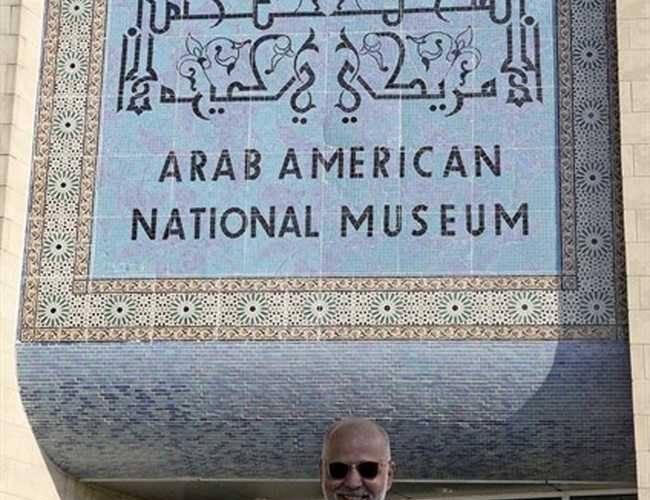
The Smithsonian‑affiliated Arab American National Museum in Dearborn presents post‑9/11 history through the lens of Arab American grievance, arguing that the community “suffered two-fold” after the attacks; this piece examines those claims, the museum’s narrative choices, and the broader questions about museums, facts, and public funding.
The museum’s exhibit frames its message around a placard that reads exactly, “The Arab American community suffered two-fold as a result of the tragic events of September 11th. As with all Americans, they suffered the horror and grief. However, Arab Americans were unfairly held responsible, yet not a single Arab American was found guilty of any connection to September 11th,” and that framing drives the rest of the display. That statement is accurate in part: Arab Americans shared the national grief, and no prosecution found Arab American conspirators tied to 9/11. The controversy comes from how the museum balances that grief against the larger national tragedy and the operational failures that allowed the attacks to happen.
The museum emphasizes stories of detention, deportation, and discrimination that followed the attacks, presenting those post‑9/11 enforcement actions as a primary thread of the story. A museum can and should tell the experiences of communities that felt targeted, but treating those experiences as the central theme risks diminishing the scale of what actually occurred on that day. Exhibits carry weight; when a Smithsonian‑affiliated institution centers one perspective, it shapes public memory.
The museum claims some Arab Americans were “deported for minor visa violations or petty offenses which previously would have been overlooked,” and it treats stricter enforcement afterward as evidence of unfair treatment. That is a debatable interpretation when the record shows multiple operational lapses involving the hijackers themselves. Pointing to honest grievances about profiling and wrongful treatment is not the same as ignoring the reality that serious immigration violations and missteps occurred before September 11, 2001.
Government reviews and the 9/11 Commission documented a variety of immigration irregularities among the hijackers that mattered to the tragedy’s unfolding. At least two hijackers were visa overstays on September 11. Other hijackers had overstayed authorized stays, enrolled in flight school without correcting their visa status, or entered on student or tourist visas and did not follow the rules attached to those statuses. Multiple hijackers made false statements on applications or violated the terms of their visas while inside the country.
- At least two hijackers were visa overstays on September 11.
- Some hijackers had previously overstayed their authorized stays.
- One entered on a tourist visa but enrolled in flight school without changing his status.
- Another entered on a student visa but never attended the school it was issued for.
- Multiple hijackers made false statements on applications or otherwise violated visa terms.
Saying Arab Americans “suffered twofold” collapses distinct realities into a single moral equivalence: the mass murder of nearly 3,000 people versus the post‑attack experiences of some individuals who faced heightened scrutiny. That risk of moral flatness matters in public storytelling because context gets lost. Museums should give visitors the tools to weigh competing facts, not stack interpretation on top of the most politically useful narrative.
https://x.com/foxnewspolitics/status/2092190892631400785
There’s also a question about funding and institutional priorities when a taxpayer‑supported affiliate foregrounds controversy over widely documented failures that contributed to the attacks. Public trust in museums depends on credible, balanced displays that acknowledge both community harm where it occurred and failures of policy or enforcement that made the tragedy possible. When exhibits emphasize grievance without full context, they invite reasonable pushback.
Dearborn’s large Arab and Muslim population makes community‑focused programming natural and expected, but serving a community and reframing national events are not the same thing. A local museum can honor local experiences while still presenting the broader factual landscape that includes the operational shortcomings and terror victims. Doing otherwise risks turning memory into advocacy, which is not the primary role of a national institution linked to the Smithsonian.
At a minimum, museum visitors deserve transparent sourcing, clear context, and a willingness to place individual community experiences next to the broader historical record. Facts should anchor exhibits so visitors can assess claims for themselves rather than being shepherded toward a single political interpretation. That modest standard protects the integrity of public museums and the public’s trust in them.

Add comment