
This piece examines JPMorgan Chase’s admission that it closed more than 50 Trump-related accounts in February 2021, the fallout for the Trump Organization, and the broader implications of banks deciding which citizens and businesses can access the financial system.
President Trump long argued that Chase and other financial institutions effectively cut off the Trump Organization after Jan. 6, 2021, and the bank’s recent court filings now back up that claim in stark terms. The bank confirmed it shut down “more than 50 Trump accounts” including hotel, development, retail and a personal private banking relationship tied to an inheritance. That admission changes the debate from allegation to corporate action and raises questions about the power banks wield over political actors and private businesses.
The abrupt closures, delivered with a terse suggestion that Mr. Trump “find a more suitable institution with which to conduct business,” were devastating to the company’s cash flow and operations. Those actions forced the Trump Organization and its affiliates into difficult choices to keep funds moving, including turning to less conventional financial channels. For any business, sudden account closures can mean payroll disruptions, stalled deals and a scramble to preserve customer and vendor trust.
Eric Trump described the financial pain firsthand at a speech in October 2025, saying the family had to lean on cryptocurrencies to survive after being cut off. That anecdote illustrates a broader reality: when traditional banks decide to walk away, many affected customers end up exploring alternatives that sit outside standard regulatory visibility. The dynamic creates instability and incentives for dollar-denominated activity to migrate to less transparent corners of the system.
In response to the lawsuit filed by Mr. Trump and the Trump Organization, the bank’s court papers made clear what had long been suspected: the account closures were wide-ranging and included major components of the real estate empire. The accounts affected spanned multiple states and business lines, touching hotels, housing projects and retail operations in Illinois, Florida and New York. The personal private banking relationship that handled an inheritance from Mr. Trump’s father was also cut off.
In a response to a lawsuit filed last month by Mr. Trump and the Trump Organization, JPMorgan, the nation’s largest bank, said for the first time late Friday that it cut off more than 50 Trump accounts in February 2021, shortly after Mr. Trump’s first term ended.
The accounts included those for Trump hotels, housing developments and retail shops in Illinois, Florida and New York, as well as Mr. Trump’s personal private banking relationship that handled his inheritance from his father, according to letters filed to the court.
The bank offered no concrete reason for the closures beyond a routine explanation that accounts were shut due to legal or regulatory risk. That kind of vague justification is a bad look when entire commercial operations are upended without warning. From a Republican perspective, it’s deeply troubling when private firms coordinate behavior that effectively sidelines a political figure and his businesses without transparent standards or due process.
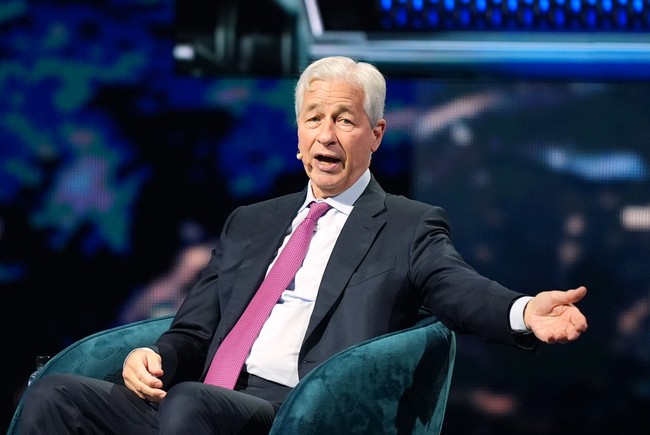
Jamie Dimon’s public posture—to insist banks do not debank people for political or religious affiliations—now jars against the facts on the ground. Dimon said, “People have to grow up here… We do not debank people for political or religious affiliations.” Given Chase’s own court filing, that claim looks at best incomplete and at worst misleading. Americans should be able to debate and oppose political figures without facing financial exile from major institutions.
Observing which clients remained with the bank during the same period invites uncomfortable comparisons. Some high-profile clients who were accused of far worse behavior did not face the same blanket account closures, which fuels the perception that political considerations played a role. When banks selectively apply account-closure policies, they cross from risk management into political gatekeeping, and that is dangerous for a free market and for civil liberties.
For the Trump Organization and its supporters, the legal fight is about more than money; it is about accountability and establishing clear rules that prevent financial institutions from becoming arbiters of political acceptability. It’s no surprise that Mr. Trump sued for damages and that observers on the right view this as a broader assault on a private citizen and company. The case will test whether influential corporations can be held to account for economic actions that have clear political consequences.
Practical outcomes matter: settlements, apologies, or court rulings could redraw the line between legitimate risk management and politically motivated financial exclusion. Whatever happens in the courtroom, the episode should prompt lawmakers and regulators to revisit how banks make these consequential decisions and to demand transparency. Citizens should not wake up to find their livelihoods severed by opaque corporate choices tied to political winds.
Beyond the courtroom, this episode is a warning shot about concentration of financial power and the need for clearer rules to protect ordinary businesses and political actors from arbitrary exclusion. If large banks can quietly cut off accounts en masse with little explanation, the next target could be someone less prominent and with fewer resources to fight back. Ensuring fair access to banking is a matter of economic freedom and political equality.

Add comment