
New: Hezbollah Chief Busted for Manhattan Synagogue Attack Plot
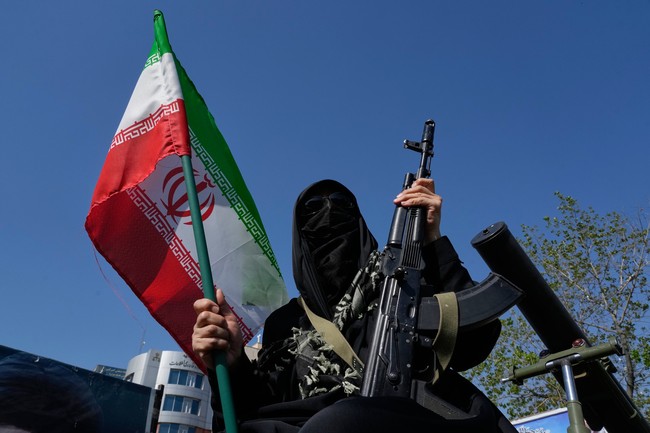
The United States has detained an Iraqi militia commander tied to Kataib Hezbollah after his arrest in Turkey, and federal authorities say he plotted attacks on Jewish sites here and abroad, including a New York synagogue. The case highlights both a concrete law enforcement victory and lingering vulnerabilities about foreign-backed militias and their networks inside the U.S.
A criminal complaint unsealed in Manhattan names Mohammad Baqer Saad Dawood al-Saadi as a commander in Kataib Hezbollah and accuses him of planning multiple attacks across Europe and North America. U.S. authorities allege he organized plots targeting Jewish communities and American interests, and that Turkish authorities detained and handed him over to U.S. custody. The arrest removes a dangerous operative from the field, but it also raises immediate questions about the breadth of networks he may have commanded or influenced.
A commander of an Iraqi militia has been charged with plotting to attack Jewish sites in the United States, including a synagogue in New York, and carrying out attacks in Europe as part of a broader campaign of retaliation by Iran since the war began in February.
A criminal complaint unsealed on Friday accused the commander, Mohammad Baqer Saad Dawood al-Saadi, of planning at least 20 attacks in Europe and Canada since late February. Mr. al-Saadi was detained in Turkey sometime recently and handed over to U.S. authorities, Mr. al-Saadi’s lawyer said in federal court in Manhattan on Friday.
Mr. al-Saadi, according to the complaint, is a commander of Kataib Hezbollah, an Iraqi militia that is a proxy for Islamic Revolutionary Guards Corp and has helped Tehran project power across the region, including through attacks on American forces and diplomatic targets.
The complaint paints a picture of an operator who coordinated strikes beyond Iraq, leveraging Iran-backed networks to threaten Western targets. As a senior figure in an organization described as a proxy of the Islamic Revolutionary Guard Corps, his capture matters beyond the single plots named in the filing. It offers investigators a chance to trace contacts, financiers, safe houses, and co-conspirators who may be scattered across continents.
The complaint says that Mr. al-Saadi planned to kill Americans and Jews in Los Angeles and that he had started planning an attack on a synagogue in New York City. As a leader of Kataib Hezbollah, Mr. al-Saadi worked with Maj. Gen. Qassim Suleimani, the head of Iran’s security machinery, according to the complaint. The U.S. military killed Mr. Suleimani in a strike in 2020.
Mr. al-Saadi is one of the highest level figures tied to Iran known to have been arrested by the United States since the war began. For years, and during the current conflict, the United States and Israel have focused on killing Iranian officials.
There are tactical and strategic strands to this story: tactically, removing a planner reduces immediate risk to specific targets; strategically, it exposes ongoing Iranian efforts to project violence through proxies. The complaint also connects al-Saadi to figures and operations dating back years, showing continuity in the way Tehran cultivates and uses militias to advance regional goals. That historical link underlines why vigilance and sustained pressure matter.
We should also note practical concerns that come with any capture like this. Militia commanders often direct operations from a distance and rely on local foot soldiers and sympathizers to do the dirty work. Even with al-Saadi in custody, people he recruited or vetted may already be in place and capable of carrying out plots with little direct oversight from their former commander.
Domestically, the arrest raises questions about who inside the United States might serve as the operational muscle for such schemes. Intelligence and law enforcement must look for channels of recruitment, radicalization, and logistical support that can be exploited by foreign proxies. That means following the money, communication chains, and travel patterns that allowed this plot to mature.
There are also immigration and border security implications that defenders of stronger controls will point to, given the history of irregular entries and the complex screening challenges that follow. The presence of foreign nationals in the country, both legal and illegal, creates vectors that hostile actors have long tried to exploit, and this case adds urgency to efforts to close those gaps. At the same time, investigators need to differentiate between legitimate immigrant communities and the small fraction who might be recruited for violence.
This arrest is a reminder that modern conflicts spill across borders and that our homeland security posture must adapt accordingly. Law enforcement wins are meaningful, but they do not end an adversary’s ability to mount attacks if networks remain intact. Building resilience means blending aggressive counterterrorism work with intelligence sharing, improved screening, and community engagement to head off radicalization.
Editor’s Note: For decades, former presidents have been all talk and no action. Now, Donald Trump is eliminating the threat from Iran once and for all.
Help us report the truth about the Trump administration’s decisive actions to keep Americans safe and bring peace to the world. Join RedState VIP and use promo code FIGHT to get 60% off your VIP membership.

Add comment