
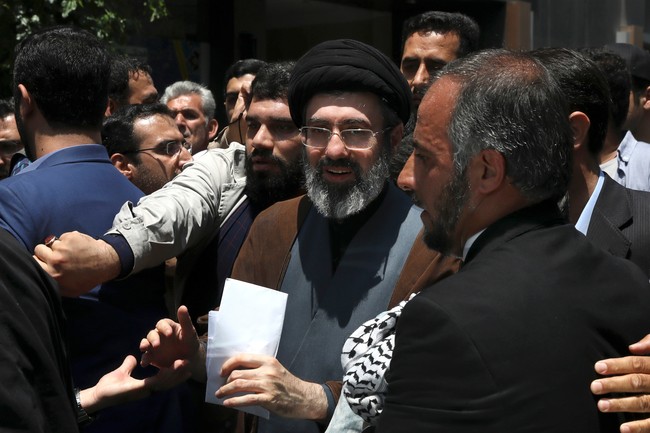
I’ll walk through the odd New Year statements from Iran’s president and its murky supreme leader, highlight the contradictions and the credibility gap, note how leaders are hiding after a string of targeted strikes, place this in the regional security context, and point out why neighboring states are unlikely to trust Tehran’s peace offers.
Iran’s leadership is broadcasting confidence while looking more like it’s on the defensive. Public statements from Tehran claim strength and regional solidarity, but visible behavior tells a different story. Leaders vanish from public view, key spokesmen have recently been killed, and the regime’s rhetoric reads like damage control more than strategy.
The Revolutionary Guards’ recent spokesman dared President Trump about the Strait of Hormuz, a classic boast meant to signal toughness. That same spokesman and chief propagandist was later eliminated, underscoring how risky those public taunts have become. When senior figures go silent or get taken out, the remaining officials naturally start acting cautious and evasive.
There are signs Tehran is trying to manage optics as much as policy. “Breaking the enemy?” reads like triumphal chest-thumping, yet the leadership can’t show itself, which makes the boast ring hollow. It is no surprise skeptics doubt the regime’s claims when masked or absent figures are the ones making them.
The so-called supreme leader’s statement claimed Iranian forces had succeeded in “breaking the enemy” and pushed for better ties with neighbors because of “shared religion and strategic interests.” He also denied strikes on Turkey and Oman and accused Israel of staging a false flag to drive a wedge between Iran and Arab states. Those assertions are direct and defiant, but denial only matters when the denier is credible.
In the statement, Khamenei said that despite the heavy losses, Iranian forces have succeeded in “breaking the enemy.”
Khamenei also commented on the strikes on neighboring Arab Gulf states, stating that he believes in good relations with neighboring countries due to their “shared religion and strategic interests.”
Khamenei also denied attacking Turkey and Oman, accusing Israel of attempting to create a ‘false-flag’ to create divisions between Iran and its neighbors.
Republican readers will note the pattern: talk tough, act timid. Tehran’s denials about attacks on Turkey and Oman clash with reports and military responses from neighbors. When NATO-member Turkey is warning about missiles, denials are less persuasive and more deflective, especially when independent evidence points the other way.
The Iranian president’s New Year remarks are similarly odd. He appears publicly but in controlled, awkward settings that suggest concealment rather than confidence. Photographs showing him behind curtains or draped blankets make him look like a target in hiding, not a leader rallying a nation.
He even floated forming a “security structure composed of Islamic countries in the Middle East” to guarantee regional peace and security. On its face that sounds reasonable, but context matters: a nation firing on its neighbors is not in a position to broker trust. Proposals for regional security require credibility and predictable behavior, both of which are in short supply in Tehran right now.
Meanwhile, propaganda imagery—such as displays of eliminated enemies—reads as a weird mix of bravado and anxiety. Showing photographs of dead opponents as a backdrop to talks about peace exposes an odd disconnect between message and means. It invites the obvious question: who would trust a negotiator who celebrates violence while pledging cooperation?
Regional leaders will be skeptical for good reasons. States hit by stray or intentional attacks will prioritize defense and alliances over Tehran’s late-stage offers. When neighbors face real missile threats, they will likely prefer hard security guarantees and stronger ties with reliable partners, rather than assurances from a regime that denies well-documented strikes.
On the ground this all looks like a regime scrambling for narrative control. Some officials boast and vanish, others visualize grand regional councils, and the messaging is full of contradictions. From a Republican perspective, the smart response is clear-eyed deterrence, support for allies, and no rush to accept Tehran’s pledges until behavior matches words.


Add comment