
This piece argues that sanctuary policies in California directly undermined federal immigration enforcement after Immigration & Customs Enforcement issued a detainer for an individual later accused of murder, examines Tom Homan’s criticisms on Fox & Friends, and lays out why those policies, political as they are, have real public safety consequences.
Sanctuary jurisdictions are built on the idea that local governments should shield people who are in the country illegally, even from federal authorities. That setup often means local officials refuse to cooperate with ICE detainers, turning a legal enforcement tool into nothing more than a piece of paper. The results can be tragic when someone who should have been flagged and turned over to federal authorities is instead released back onto the streets.
Recently, an immigrant from Venezuela using the name Marcos Iriarte-Valdez, with an apparent real name Marcos Eduardo Iriarte Valdezusper, was arrested for allegedly stabbing a California man to death in front of the victim’s home. ICE had issued a detainer for Valdezusper, but local authorities released him without notifying federal agents. That sequence of choices is at the core of the outrage from immigration enforcement veterans and many conservative observers.
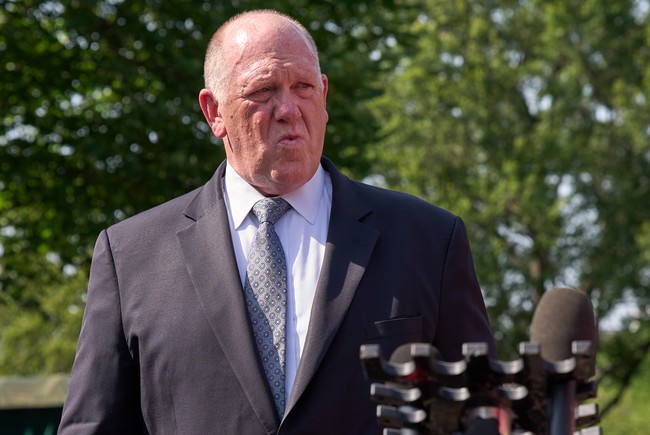
Border Czar Tom Homan spoke about the case on Fox & Friends and accused California officials of putting politics ahead of public safety. He said ICE did what it was supposed to do: locate the person, investigate, and issue a detainer because the subject was illegally in the United States and had a criminal history. Homan stressed that a phone call to alert ICE prior to release would have been enough to prevent this tragedy.
https://x.com/RapidResponse47/status/2087882050296496533
Look, there is no reason for it. The bottom line is, you’re right, it’s just politics. It’s a sanctuary jurisdiction. They know, for over a decade, I can’t think of the hundreds of cases like this (that) have happened. It’s just one case after another after another. We’ll talk about this today and tomorrow. Then we’ll move on. Then next week there will be another one in some other place, in another sanctuary state. And what really upset me, the response from the Governor’s office, was that ICE had billions of dollars; they should be doing their job. We did our job. We located this person in their facility. We did an investigation, found out he is illegally in the United States, he has a criminal history, he is deportable, so we issued a detainer, asking them to notify us before they release him. Now, I don’t care about sanctuary policies, obviously: “we can’t honor detainers, we don’t think they’re legal.” There’s nothing illegal; there’s nothing against a sanctuary law in California for a deputy to just pick the phone up and say, “Hey, this guy’s being released in an hour.” You don’t have to hold him one minute longer than you would normally hold him. Just call us before you release him! It’s common sense. Now this person’s dead because Governor Newsom and the State of California put politics, hatred of President Trump, over public safety.
Homan’s point is straightforward: federal agents did their job and asked for cooperation; local officials refused. That refusal was not a technicality but an active choice rooted in sanctuary policy. Critics argue the choice reflects a political posture more concerned with signaling than with the safety of residents.
Supporters of sanctuary policies insist they protect immigrant communities from what they call overreach by federal authorities. But opponents counter that refusing to notify ICE when someone with a detainer is about to be released is not protection, it is obstruction. When cooperation would have required no detention time beyond the norm—only a phone call—political posturing becomes a moral failure if an avoidable crime follows.
Many on the right point to a double standard: similar enforcement actions during the prior administration attracted less public outcry from the same critics now defending sanctuary choices. They see that inconsistency as proof that current opposition is driven by partisan resentment rather than principle. That feeling is sharpened when a public safety outcome appears to follow directly from the refusal to cooperate.
The case also highlights how the detainer system depends on local-federal cooperation to work effectively. ICE can issue a detainer and request notification, but in jurisdictions that decline to honor detainers, the federal agency relies on being informed in time to act. When that information loop is cut by local policy, the system breaks down and federal law enforcement options narrow dramatically.
Politically, the fallout lands squarely on state leadership and county officials who defend sanctuary rules. Conservatives argue these leaders trade real security for political virtue signaling, and that trade-offs like this one are intolerable when they result in preventable loss of life. The debate is not merely legalistic; it is about choosing between a public safety-first approach and a policy stance that places ideology ahead of practical cooperation.
There is also a public messaging angle. When state officials respond to tragedies by blaming federal agencies rather than admitting any possible local responsibility, it deepens mistrust. For many voters, a simple, commonsense step like notifying ICE before a release would have changed the outcome without compromising lawful rights or creating new detention burdens.
The discussion will continue in political and legal forums, but the core issue here is plain: when local policies block routine cooperation with federal detainers, the consequences can be deadly. That reality drives the debate over sanctuary rules and whether they are worth the risks they create.


Add comment