
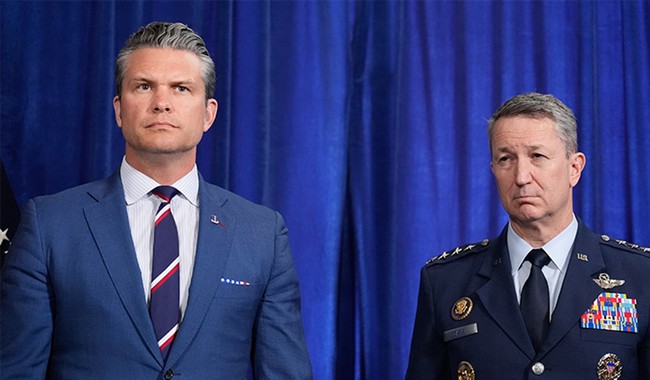
Day 13 of Operation Epic Fury finds U.S. and allied forces pressing hard against Iran’s military capabilities, with Secretary of War Pete Hegseth and Chairman of the Joint Chiefs General Dan Caine briefing the press on decisive progress, significant strikes, and ongoing rescue efforts.
Friday’s briefing opened with a blunt assessment from Secretary Hegseth: the campaign is overwhelming Iran’s forces and degrading their ability to fight. He said this is not a fair fight, and that the combination of American and Israeli power is destroying Iran’s military infrastructure at a speed few could have imagined. That clarity matters because the public deserves straightforward reporting, not wishful thinking.
Hegseth laid out numbers and effects: more than 15,000 targets struck, averaging over 1,000 a day, driven by unprecedented cooperation between our Air Force and Israel’s. He described routine flights over Iran and Tehran by fighters and bombers, guided by ever-improving intelligence. The message was simple: allied air power dominates the skies and is systematically hitting valuable military nodes to prevent regeneration of Iran’s capabilities.
Hegseth made a stark claim about Iran’s defenses and production abilities: missile and drone defenses are largely neutralized, and their production lines have been targeted to stop future threats. He asserted that missile defenses are down about 90 percent and one-way attack drones down about 95 percent, while factories and lines that produce ballistic missiles have been “functionally defeated.” Those are the kinds of hits that remove the enemy’s ability to fight tomorrow, not just today.
“That the United States is decimating the radical Iranian regime military, in a way the world has never seen before. Never before has a modern, capable military, which Iran used to have, been so quickly destroyed and rendered ineffective. Devastated. We said it would not be a fair fight, and it has not been.”
Hegseth doubled down on the scale of the effort, saying the combined sortie volume and “bomber pulses” are the highest yet and will continue to ramp up. He highlighted the use of AI, cyber, space, electronic warfare, and counter-UAS tools to blind and confuse Iranian command and control. When technology and will are synchronized, the results are decisive and rapid.
“As I said in our first press conference on Day 2 — that was just 10 short days ago: the combination of the two most power air forces is unprecedented and unbeatable. Between our Air Force and that of the Israelis, over 15,000 enemy targets have been struck. That’s well over 1,000 a day. No other combination of countries in the world can do that.
“So today, as we speak, we fly over the top. Of Iran and Tehran. Fighters and bombers every day, picking targets as they choose. As our intelligence gets better and better and more refined. Looking up, the IRCG and Iranian regime sees only two things on side of aircraft: the Stars and Stripes and the Star of David. The evil regime’s worst nightmare.
On the maritime front, Hegseth described Iranian actions in the Strait of Hormuz as “sheer desperation” and emphasized that the allied plan is handling those moves without panic. He stressed that U.S. forces are on a deliberate path to “defeat, destroy, disable all of their meaningful military capabilities” and that tempo is being driven intentionally. Maintaining control of key waterways and chokepoints is fundamental to stopping escalation and protecting commerce.
Hegseth returned to the theme of eliminating Iran’s capacity to rebuild, saying production centers, military plants, and defense innovation hubs have been targeted to prevent future missile construction. He insisted that even if stocks remain, they are being shot down or otherwise neutralized while the sources of future weapons are taken out. That strategic focus—destroying supply and production—removes the enemy’s long-term threat.
“Even more importantly, they also don’t have the ability to build more. That’s the most important component I’d like to emphasize today. Soon and very soon, all of Iran’s defense companies will be destroyed. For example, as of two days ago, Iran’s entire ballistic missile production capacity — every company that builds every component of those missiles — have been functionally defeated. Buildings, factories, and lines all across Iran: destroyed. So, we’re shooting down and destroying what missiles they still have in stock. But more importantly, ensuring that they have no ability to make more. Their production lines, their military plants, their defense innovation centers: defeated.
Hegseth painted Iran’s leadership as broken and on the run, saying they’ve gone underground and are “cowering.” He relayed intelligence suggesting their so-called leadership is wounded and resorting to weak, audio-less statements. That kind of disarray at the top translates into poor battlefield coordination and declining morale among rank-and-file forces.
With each passing hour — we know, and we know that they know — that the military capabilities of their evil regime are crumbling. They can barely communicate, let alone coordinate. They are confused. We know it.
The secretary made it clear who’s running operations and who answers for direction: President Trump, he said, sets the tempo and strategy. Hegseth framed this as America First power projection—precision strikes, rapid innovation, and relentless pressure. From this perspective, strong leadership and clear political direction are the backbone of success in conflict.
General Dan Caine opened by acknowledging the KC-135 tanker incident and stressing that rescue and recovery remain active efforts requiring prayers and support. He spent much of his time honoring the troops, praising their maturity, grit, and tenacity, and underscoring gratitude for their service. That recognition matters to the men and women carrying out complex and dangerous missions every day.
After their statements, Hegseth and Caine took questions from the press while reiterating their priorities: keep pressure on the enemy, protect American forces, and target the systems that enable Iran to attack again. The tone of the briefing was unambiguous—this campaign is designed to remove future threats and preserve American and allied security.



Add comment