
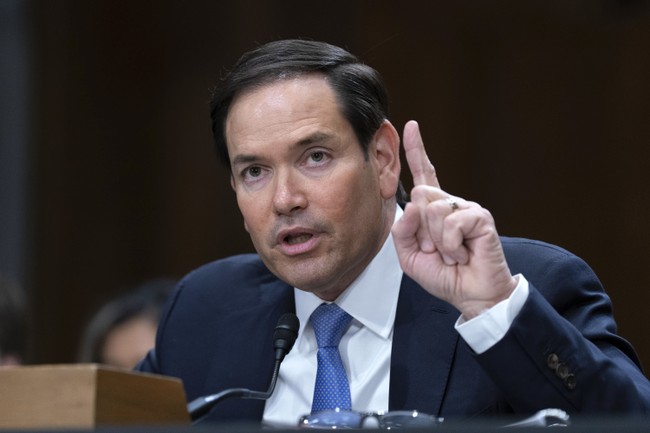
Denmark and Greenland have requested a timely ministerial meeting with U.S. Secretary of State Marco Rubio after remarks by President Trump about Greenland’s strategic importance, and this article lays out the facts, the quoted remarks in full, and what a Republican approach to the situation emphasizes.
Tuesday turned into a Greenland-focused news day, with developments ranging from a mining strike to diplomatic outreach. The Danish and Greenlandic foreign ministers have asked for an early meeting with Secretary of State Marco Rubio to address recent U.S. comments. That move signals they want direct engagement at a high level rather than letting the matter drift into partisan noise.
What they likely want is clarification and reassurance about U.S. intentions in the Arctic and North Atlantic. From a Republican viewpoint, those concerns are understandable when national security and strategic geography are involved. Rubio, as Secretary of State, is well placed to deliver straightforward answers and to stress America’s role in defending strategic interests.
There’s a practical reality here: Greenland occupies a key position at the entrance to the Arctic Ocean and will grow only more important as shipping lanes and strategic competition evolve. The United States has legitimate security interests in the region, and those interests deserve to be discussed candidly at the foreign-minister level. A meeting gives both sides a chance to temper rhetoric and outline practical cooperation on defense, infrastructure, and maritime awareness.
Some of the impetus for this meeting comes from remarks President Trump made to reporters while airborne. In the original statements, the president said: “Greenland is COVERED with Russian and Chinese ships all over the place!” That line alone would make any government sit up and ask for details, and rightly so. The president’s broader point was to highlight the security risk and to press allies to recognize the strategic stakes.
The president’s comments in full were:
“I will say this about Greenland. We need Greenland from a national security situation. It’s so strategic. Right now, Greenland is covered with Russian and Chinese ships all over the place. We need Greenland from the standpoint of national security. And Denmark is not going to be able to do it, I can tell you. You know what Denmark did recently? To boost up security on Greenland? They added one more dog sled. It’s true! They thought that was a great move.”
When pressed afterward, the president added: “I don’t want to talk about Greenland right now. I just say this: We need Greenland from the standpoint of national security. And the European Union needs us to have it. And they know that.” Those lines underscore the administration’s focus on practical defense priorities rather than symbolic gestures.
From the Republican perspective, blunt talk that forces allies to confront reality can be productive even if it produces initial alarm. Allies sometimes require a wake-up call to step up security, and blunt public language has a way of focusing attention. That said, diplomacy is how you move from rhetoric to cooperation, which is why the requested meeting matters.
Greenland’s government, together with Denmark, has emphasized that the request is for an early ministerial-level discussion between Secretary Rubio, Greenlandic Foreign Minister Vivian Motzfeldt, and Danish Foreign Minister Lars Løkke Rasmussen. The stated purpose is to “discuss the United States’ striking statements regarding Greenland.” That phrasing makes clear they want straight answers and context.
Republicans who value strong national defense will want Rubio to reassure partners while also making sure America’s strategic posture is clear. That means laying out what U.S. presence or partnership might look like, how it would deter adversaries, and what burden-sharing Denmark and the EU can realistically provide. A productive session would move from talking points to specific steps for surveillance, maritime cooperation, and contingency planning.
There’s no indication the request signals anything beyond concern and a desire for clarification; annexation fantasies are remote and unhelpful to serious diplomacy. Washington should treat the meeting as an opportunity to be firm about security priorities, to listen to partner concerns, and to map out workable collaboration that protects shared interests in the Arctic and North Atlantic.
What remains to be seen is the timing and agenda Secretary Rubio will set, and whether Denmark and Greenland will feel satisfied by the answers they receive. A clear-eyed Republican approach accepts the geopolitical facts and uses diplomacy backed by credible defense options to secure American and allied interests. That combination is the sensible way forward for a region that will only grow in strategic value.



Add comment