
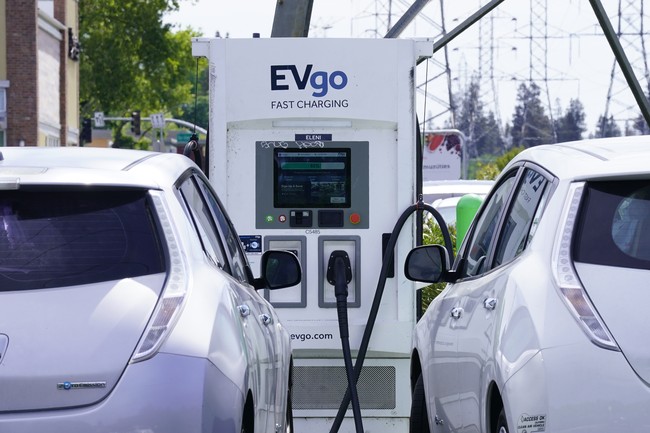
The automakers’ push toward electric vehicles has run into harsh market reality: consumers are buying fewer EVs and legacy carmakers are taking big losses, prompting a clear industry shift back to hybrids and gas-powered models while policymakers who pushed mandates face the political fallout.
When Tesla first popularized electric cars they felt fresh, fast, and a little rebellious. That initial buzz attracted early adopters who wanted tech, speed, and a green badge, but momentum faded as policy and economics collided. Democrats pushed aggressive EV goals, and some policies nudged manufacturers and buyers toward an ambitious electrified future that now looks less stable.
https://x.com/SawyerMerritt/status/2072673425114411175
Ford’s recent quarter shows that theory meeting reality can be brutal. The company reported a double-digit decline in overall U.S. sales and, more starkly, a roughly 40 percent drop in EV sales in the second quarter of 2026 compared with the prior year. Supply chain headaches amplified the pain, especially for aluminum-dependent truck production, but the collapse in EV demand is the main headline.
Production constraints hit Ford’s best-sellers too, with F-Series volumes down and key aluminum suppliers suffering interruptions after factory fires. That contributed to lower output, but it did not fully explain the freefall in EV unit sales. Customers voted with their wallets, choosing affordability and capability over an electrified vision that many found premature or costly.
Ford has already pivoted, taking a large accounting hit at the end of 2025 and trimming its EV lineup to focus on hybrids and extended-range models that keep an internal combustion engine in the picture. That move reflects a broader industry lesson: full electrification overnight is expensive, risky, and politically unpopular when it forces higher sticker prices on ordinary Americans.
Ford is not alone in this recalibration. Major global automakers reported billions in EV-related losses in recent years, and several have slowed or reversed aggressive EV plans. Those losses forced executives to rethink investments, product timing, and customer priorities, and they have opened space for more pragmatic strategies that balance electric models with gas and hybrid options.
Despite the headlines, electric cars remain available for buyers who want them, with many models on the market from a wide range of brands. But availability is not the same as market fit; consumers care about price, range, charging access, and real-world convenience. The sudden push toward a single mandated pathway ignored those practical concerns and produced predictable political blowback.
The politics matter. Mandating one technology over others risks alienating voters who face higher costs or limited options, and the sales data now reinforce that point. Republican policymakers point to these market signals as evidence that choice should guide energy and transportation policy, not one-size-fits-all government mandates.
Editor’s Note: It’s America’s 250th birthday! Help RedState celebrate the greatest nation in history by honoring its past, defending its present, and preserving its future with reporting you can trust.
Join RedState VIP and use promo code AMERICA250 to receive 74% off your membership.


The whole thing was and is a Leftist’s Propaganda plan and total Stupidity! Think the Crazy face of Greta Thunberg screaming at the cameras “HOW DARE YOU when she was pushing Global Warming and great need of sustainable alternative energy over fossil fuel or petro;” while she and her Leftist Lunatic Parents now live exotically with their $Millions laughing all the way to the bank!
You electric car buyers have been HAD! This proves the adage holds water that, “a Sucker is born every minute!”