
The federal workforce has fallen to 2,686,000 as of January 2026, the lowest level recorded since the mid-1960s, and the change tracks to a sustained push to slim agencies and cancel wasteful contracts under the Department of Government Efficiency, known as DOGE. This article explains how that number emerged, how departures and contract terminations combined to shrink headcount, and why those changes matter for the size and shape of Washington moving forward.
Federal employment dropped to 2,686,000 in January 2026, according to the Bureau of Labor Statistics, a level not seen since Lyndon B. Johnson was in the White House. That raw headcount is the visible result of many policy choices: resignations, retirements, layoffs, hiring freezes, and program consolidations. When you add them together, the total shows that the government payroll has contracted in a meaningful way.
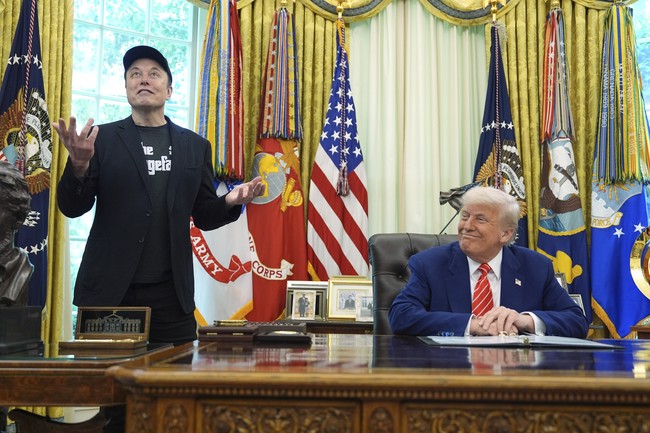
The shift began taking clear shape during President Donald Trump’s second term with a presidential initiative known publicly as DOGE, the Department of Government Efficiency. The stated goal was trimming bureaucracy, cutting administrative layers, and consolidating duplicative functions across federal agencies, and the changes were implemented through a mix of executive action, buyouts, and reorganizations. Those moves produced quick, measurable exits and a renewed focus on ending inefficient contracts.
Office of Personnel Management summaries indicate that more than 322,000 federal employees left government jobs during the first year after Trump returned to office. Those departures happened in many forms: roughly 149,500 resigned, more than 105,000 retired, and around 10,500 were laid off, even as new hires continued at a lower pace. The aggregate effect was a substantial drop in overall staffing that shows up in the labor data.
Those exits were not limited to obscure corners of the bureaucracy. Defense and Veterans Affairs, two of the largest federal employers, saw tens of thousands depart, while Health and Human Services indicated plans to reduce its full-time workforce significantly. USAID experienced one of the steepest percentage declines, and several dozen smaller programs were folded, consolidated, or reassigned to other departments to shrink overhead.
“During which 322,049 federal government employees have exited the workforce. It is the largest reduction of the federal workforce in the past two decades, according to data from the Office of Personnel Management.” That quoted summary captures the scale of the initial wave of departures and is repeated in several official summaries used to explain the reductions. Numbers like that do not materialize from a single decision; they reflect many small ones made across agencies.
Contract cancellations and descopes played a large role too. DOGE publicly posted lists of terminated contracts and projects, highlighting ceilings and projected savings tied to ending outside support and consultant agreements. When contractors are removed, the administrative workload those contracts supported also shrinks, and agencies often choose not to replace the associated civilian staff once those services are pared back.
“Over the last 3 days, agencies terminated and descoped 55 wasteful contracts with a ceiling value of $1.6B and savings of $542M, including a $47M State Dept. program support contract for “Africa / Djibouti, Somalia armored personnel carriers and Somalia National Army crew”, a $19.5M HHS IT Services contract for “support for National Institute of Environmental Health Sciences in designing, creating, updating, maintaining, and archiving online communications, including websites, webpages, applications that directly support the internet and intranet presence, mobile tools, and social media tools”, and a $151k DoW education services contract for “Director’s Development Program in Leadership – Partnership course to be held at Northwestern University”.”
Those contract announcements do not make big headlines, but they matter because they remove external support that enables internal staff. The slow end of dozens of agreements—IT services, consulting, program support—reduces the need for equivalent federal positions. Over months and years, that process reshapes how agencies operate and where work gets done.
DOGE continued to post updates showing more terminated and descoped work, again tallying ceilings and projected savings and calling out specific programs and contracts. The reporting emphasized savings totals and the types of services being cut, from social media monitoring platforms to specialized IT services. For critics, the cuts looked reckless in a few cases; for supporters, they were overdue eliminations of redundant spending.
“Over the last 9 days, agencies terminated and descoped 78 wasteful contracts with a ceiling value of $1.9B and savings of $335M, including an $616k HHS IT services contract for “social media monitoring platform subscription”, an $191k USAGM broadcasting contract for “broadcast operations and maintenance in Ethiopia, Africa”, and a $4.3M IRS IT services contract for “Inflation Reduction Act transformation project management support”.”
Even with federal spending still large and programas intact, payroll is a visible lever of change. Reducing the number of people directly employed to regulate, administer, and manage programs changes how Washington functions in a practical sense. That reality is what the labor numbers capture, and why a drop to mid-1960s levels is notable to policymakers and citizens alike.
The decline shows that sustained policy decisions can shrink the bureaucracy, not just slow its growth. Whether this proves to be a long-term realignment or a temporary phase will depend on future personnel choices, budget priorities, and the appetite for rebuilding roles that have been eliminated. For now, the data tell a clear story: federal headcount has fallen to its lowest point in decades as DOGE-driven actions took hold.

About time the government handing out jobs and firing incompetent people has begun. Government is responsible for just creating jobs and positions at anytime cut government salaries is saving taxpayers millions and billions of dollars. Thank you president Trump clean out all the dead wood and bodies.