
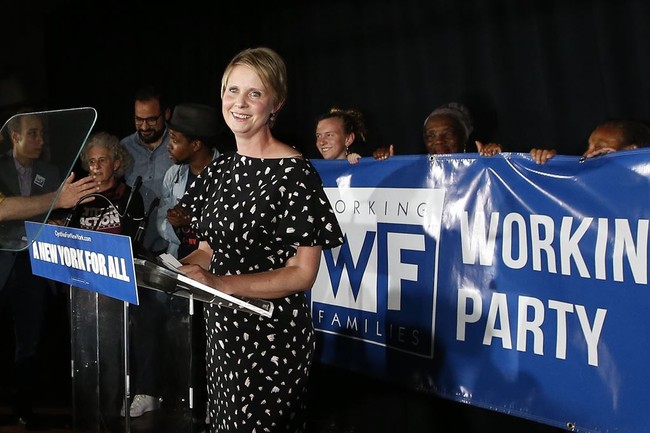
This article examines Cynthia Nixon’s appointment to New York’s Commission on Judicial Nomination, questions the merits of placing a non-lawyer on a body that screens candidates for the Court of Appeals, and connects that choice to broader concerns about activist judges, public safety, and the impact on vulnerable communities.
New York Chief Judge Rowan Wilson has chosen Cynthia Nixon for a seat on the Commission on Judicial Nomination, the panel that vets nominees for the state’s highest court. Nixon is widely known for her acting career and political activism, but she does not hold a law degree or have judicial experience. Appointing a celebrity with no legal credentials to a body that narrows the pool of possible Court of Appeals judges raises immediate questions about priorities and qualifications. The commission’s selections effectively shape the state’s judiciary for years to come.
The Commission on Judicial Nomination wields real power because the governor’s choices are limited to its nominees. Nixon’s term runs through April 2030, which means her influence could touch many future decisions about who sits on the bench. Choosing members who lack deep legal training shifts the balance from professional assessment to political considerations. That makes the integrity of the process a public concern rather than a private matter.
This appointment fits into a larger pattern in New York politics where activism and insider networks can outweigh traditional qualifications. When selection panels include activists and celebrities, it increases the chance that judges will be chosen for ideological alignment rather than legal experience. The result can be a bench that leans toward policymaking from the bench rather than strict interpretation of statutes and precedent. For citizens seeking predictable, consistent application of the law, that is troubling.
https://x.com/ycinnewyork/status/2077960037058715972
The practical consequences of a more activist judiciary are already visible in everyday life across the city and state. Changes in bail policies, sentencing approaches, and prosecutorial priorities have coincided with a rise in certain types of crime and disorder in neighborhoods. People who rely on clear enforcement of laws—seniors, small business owners, and faith communities—often feel the strain first. When the justice system appears lenient or inconsistent, it undermines public trust and makes community safety harder to guarantee.
Some communities have experienced a disproportionate share of the harm associated with these shifts in policy. Jewish New Yorkers have reported higher rates of targeted incidents in recent years, and elderly residents face a rising risk of street crime and assaults. These are not abstract statistics; they describe seniors robbed on commutes, worshippers threatened near synagogues, and small retailers dealing with persistent theft. For those directly affected, the question of who screens judicial candidates is intimately linked to whether the courts will uphold public safety.
High-profile examples of violence and victimization underscore the human cost tied to judicial and policy choices. Stories of elderly attack victims and religious leaders assaulted while going about daily life put the debate into sharp relief. Those incidents highlight how legal interpretations and prosecutorial discretion translate into tangible outcomes for ordinary people. Citizens expect judges to apply the law evenly and to act as a bulwark against crime, not as a platform for social experimentation.
Strong, experienced legal minds on selection commissions help ensure that judges possess the background necessary to weigh complex constitutional and statutory questions. New York has a deep bench of legal professionals—prosecutors, defenders, academics—who understand courtroom realities and case law. Prioritizing those qualifications helps maintain a justice system that respects precedent and avoids converting courts into arenas for ideological battles. Experience matters when decisions affect liberty, safety, and the rule of law.
Appointing activists or celebrities to powerful vetting panels risks eroding the standards by which judges are chosen. When the focus shifts toward rewarding allies or signaling ideological commitments, merit and impartiality can suffer. That, in turn, opens the door to decisions that favor policy goals over consistent legal reasoning and predictable application of statutes. For residents seeking reliable protection by the justice system, the stakes are high.
The choice to place a non-lawyer on a commission that shapes the highest court should prompt serious public discussion about what qualities matter most in judicial selection. At a time when many New Yorkers demand safer streets and respect for community institutions, ensuring that selection bodies prioritize legal experience and constitutional fidelity is a commonsense step. The debate over this appointment reflects a broader tension about whether courts should interpret law impartially or advance a political agenda from the bench.



Add comment