
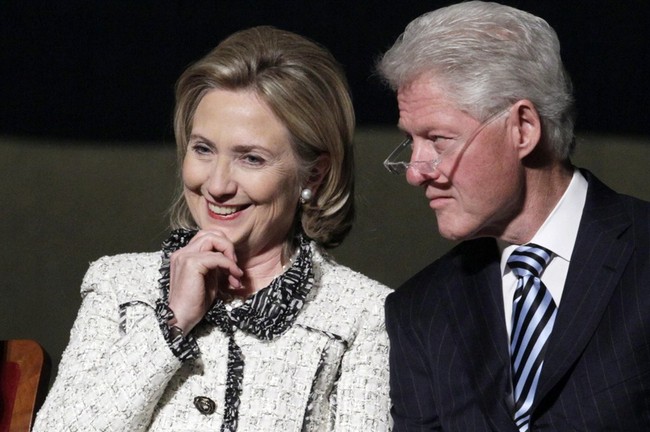
The House Oversight fight over Bill and Hillary Clinton centers on subpoenas tied to the Jeffrey Epstein matter, a likely contempt vote, and public claims about voluntary cooperation; the Clintons’ conditional offers, committee responses, and unfolding developments are now shaping whether the full House will take formal action.
UPDATE 2/2/26 8:10 p.m. ET
James Comer posted this after the initial publication of this story.
The Oversight Committee has been pressing the Clintons for testimony about their ties to Jeffrey Epstein, and tensions escalated into threats of contempt of Congress for refusing subpoenas. After committee Republicans moved to transmit the Bill Clinton matter to the floor, nine Democrats joined them on that vote, making a bipartisan push that raised pressure on the former president. The threat of contempt and a possible criminal referral to the Department of Justice created a deadline for some sort of response.
Committee chair James Comer has been blunt about his expectations and skeptical of last-minute overtures from the Clintons’ lawyers. Comer said the committee needed formal, written terms and that vague signals were not enough to stop planned floor action. That posture reflects how oversight works: congressional subpoenas are legal orders, not invitations to negotiate in headlines.
Reports surfaced that the Clintons had agreed to testify, but Comer quickly dismissed that characterization as incomplete. Media items suggested an arrangement, yet Comer demanded specifics and warned that an email without firm commitments would not suffice. His point was clear: if testimony is offered, it must be formal, recorded, and verifiable.
The email from the Clintons’ team reportedly outlined offerings with limits and conditions that the committee treated as partial at best. The proposed terms included a four-hour transcribed interview for Bill Clinton and options for Hillary Clinton that ranged from a sworn declaration to an in-person interview under narrowly defined circumstances. Those sorts of caveats are the reason the committee and its Republican members viewed the response as an attempt to control the terms of oversight rather than comply fully.
The only reason they have said they agree to terms is because the House has moved forward with contempt. I will clarify the terms they are agreeing to and then discuss next steps with my committee members.
The Clintons’ attorney sent an email to the committee in the middle of the House Rules Committee meeting, prepping the contempt citations while Comer was testifying. The House was planning on a contempt vote and then a criminal referral to DoJ for the Clintons for not complying with a subpoena on Wednesday.
Onlookers watching the political theater will see two familiar moves: a high-profile family trying to limit exposure and an oversight committee insisting that subpoenas be honored on straightforward terms. Republicans on the committee argue that selective cooperation and heavily conditioned offers undermine the point of subpoenas. The committee’s aim is to get sworn, on-the-record testimony that can be evaluated by lawmakers and, if necessary, used in referrals.
Some in the press framed the back-and-forth as the Clintons finally agreeing to talk, but source reporting and Comer’s statements made that claim shaky from the start. The committee emphasized the need for clear, enforceable protocol rather than media-driven summaries. That distinction matters; oversight requires documented commitments, not press releases.
Comer: There is no offer..They’re trying to set the rules.
Comer: They sent an email. We need to see something in writing
Comer: They see the writing on the wall that this is going to be a big bipartisan vote
The Rules Committee is preparing the contempt citation for the floor tonight.
Another layer of the dispute is Hillary Clinton’s proposed option to submit a sworn declaration in lieu of live testimony, with the caveat of an in-person interview only if required. To Republicans who want full accountability, a declaration is not the same as subject-to-cross-examination testimony. Allowing selective formats would set a precedent that powerful figures can pick how they comply with congressional subpoenas.
Outside the committee chambers, political instincts shape how this story plays. Republicans see a pattern: powerful Democrats attempting to limit transparency, then using lawyers and media to control the narrative. Committee members, especially those who won cross-party support to escalate the matter, appear ready to force a clear resolution on the floor rather than accept an ambiguous offer.
As developments keep arriving, the central question remains whether the Clintons will provide the precise, written commitments the committee demands or whether the House will move forward with contempt and possible criminal referral. For now, the dispute highlights the clash between conditioned cooperation and the authority of congressional oversight.
In a Saturday letter to Comer obtained by The New York Times, their lawyers said former President Bill Clinton would agree to sit for a four-hour transcribed interview with the full committee.
The lawyers asked that former Secretary of State Hillary Clinton, who has said she never met or spoke to Epstein, be allowed to submit a sworn declaration instead of testifying.
They added she would agree to an in-person interview if required, but only “with appropriate adjustments for the paucity of information she has to offer in this matter,” according to the letter.
This article has been updated for clarity.


Time to hang these contemptuous Traitorous Criminals out to dry!
DOJ go get them and if you won’t then it’s time for the Military to do it under Constitutional provisions!