
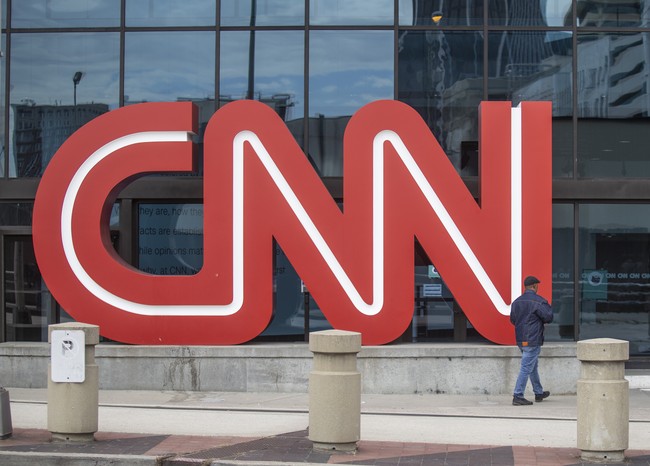
President Donald Trump delivered a prime-time speech about alleged election vulnerabilities and newly declassified material on China and voter files, and several major networks chose not to air it live; CNN openly explained that executives feared broadcasting the speech “in full, unedited” because they thought it might be dangerous, prompting concerns about media gatekeeping and unequal treatment of political figures.
President Trump used a national address to highlight what he described as weaknesses in the election system and newly declassified information claiming foreign access to U.S. voter files. The speech, given in prime time, normally would draw full coverage from broadcast networks, yet several outlets opted to skip airing it live. That decision surprised many viewers who expect networks to carry major presidential remarks in full and let the audience judge the content directly.
Instead of simply covering the speech, some networks framed their decision as a matter of public safety and editorial responsibility. CNN’s on-air commentary dropped the mask by saying, “Some network executives felt it would be dangerous to just air Trump’s speech live, in full, unedited without knowing what he was going to say ahead of time. That’s where we are in America.” That line candidly admits a choice to filter a sitting president’s words rather than present them unaltered to viewers.
When networks intervene like this, they effectively tell the public they cannot handle the raw material and must receive it through a supervised lens. Viewers are then offered a version of events wrapped in the outlet’s interpretation rather than the president’s unedited statements. That approach raises obvious fairness questions when one party’s leader can be cut off while another, at other times, receives uninterrupted airtime regardless of accuracy.
CNN personalities also pushed a narrative that Trump is uniquely responsible for dangerous rhetoric, with the claim that “Trump’s election lies led to violence,” Stelter said. Yet the record shows the former president repeatedly urged peaceful behavior and called for calm on January 6 when chaos erupted. The network’s framing leaves out those appeals and insists on a causal line without exploring the nuance of instructions versus actions taken by others.
https://x.com/EricLDaugh/status/2078098376281686122
There is a long history of media mistakes and false narratives that inflamed public opinion, from the Russia collusion saga to other erroneous headlines that linger in public memory. Those episodes show the real harm of broadcast error and spin, which can mislead millions for years. So when networks decide that live airing is too risky, the greater risk might be their own unchecked and repeated errors shaping the story instead of open access to the original remarks.
Choosing not to simulcast a presidential address sends a message: the audience must be protected from certain messages rather than trusted to evaluate them. That mindset treats viewers like children who need filters to arrive at acceptable conclusions, and it concentrates power over public discourse in newsroom executives. The better standard for a free society is to present primary material and allow viewers to form opinions, supplemented by informed analysis that is clearly identified as commentary.
Beyond editorial choices, the inconsistency is striking. I do not recall the same level of restraint when the White House held events under President Biden that included demonstrably false statements. Those events often ran live or were given wide platforming despite questions about accuracy. Applying a double standard based on political alignment erodes trust and fuels the idea that media outlets are arbiters enforcing a partisan line.
When newsrooms claim danger as the rationale, they must show why raw speech poses more threat than filtered interpretation, and why the public should be denied the chance to hear and judge. Labeling speech as inherently hazardous lets gatekeepers decide which ideas are fit for public consumption. That power, once normalized, becomes a tool for shaping elections and public opinion rather than merely reporting facts.
The broader issue is less about one speech and more about precedent: will news organizations continue to withhold live coverage of prominent political voices because they fear the audience’s reaction? “That’s where we are in America,” Brian Stelter warned, and his warning should trouble anyone who cares about equal treatment in media coverage, free access to primary information, and the right of citizens to evaluate political claims for themselves.


Add comment