
I’ll describe playful otters at Baltimore’s National Aquarium, recall sledding otters from a childhood creek, explain North American river otter habits and cold-weather adaptations, preserve the aquarium’s quoted scene exactly, and place the original video embeds where they belong.
Otters have a way of turning ordinary days into little celebrations, and the footage from Baltimore proves it. Security cameras showed two otters treating a snowy deck like a playground, rolling and sliding with an enthusiasm that’s hard not to smile at. Those moments capture an animal that is smart, athletic, and plainly delighted by simple pleasures.
A pair of otters slid into their week with an early morning romp in the snow at Baltimore’s National Aquarium.
Security cameras captured the fun around 7 a.m. at the aquarium, which described the otters as “rolling, sliding and romping through the snow” on an outside deck near the city’s Inner Harbor.
While a nor’easter blasted much of the Northeast, one of the visiting otters at the aquarium rolled on its back on the snowy deck before scampering into a running start to slide across the snow.
“Marylanders may have been fretting about the snow, but the otters visiting our Harbor Wetland exhibit were not!” the aquarium wrote in a Facebook post.
Watching animals act out that kind of unfussy joy is a reminder that the small things matter. The aquarium video delivers that in spades, showing how a pair of inquisitive mammals used a dusting of snow as a chance to play. Those scenes are also a neat public window into animal behavior that many people rarely see in person.
My own memory of otters comes from Bear Creek in Allamakee County, Iowa, where my family lived when I was young. We regularly saw a pair cruising the creek and raising pups, and they kept a well-worn mud slide that led into the water. The adults taught the youngsters to belly-slide down that path, and watching them at full tilt was unforgettable.
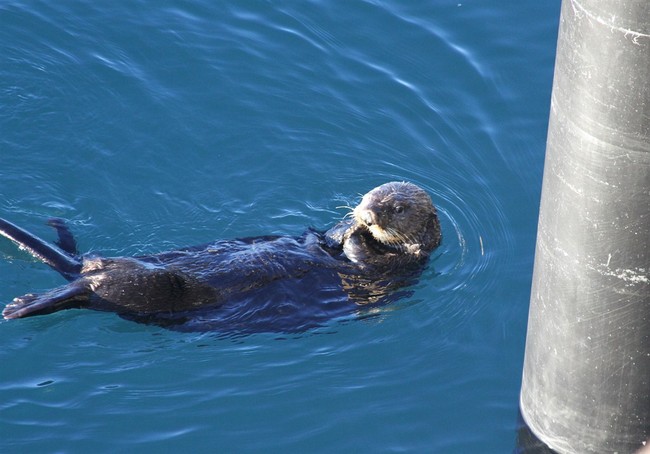
Otters are naturally suited for cold water and rigorous play. North American river otters, Lontra canadensis, range across much of the northern states, Canada, and into Alaska, and their thick fur and insulated bodies handle icy conditions well. They combine curiosity and intelligence with a body built for fast turns, dives, and surface tricks.
Their diet centers on fish, but river otters are adaptable feeders and will take crustaceans, amphibians, and small mammals when the chance arises. That opportunism is a big reason they thrive in diverse waterways and can bounce back when habitats improve or protections are enforced. Watching them hunt or simply frolic shows a blend of purpose and play that animals with fewer survival worries rarely display.
Otter anatomy supports both speed and endurance in cold water: dense underfur traps warmth, a sleek topcoat sheds water, and webbed feet plus a powerful tail give propulsion and steering. Those traits let them slide into icy pools or swim long enough to chase down fish, and they frequently use rocks and other tools to crack shells and access food. The combination of cleverness and physical design makes them one of nature’s great small predators.
People often ascribe humanlike merriment to otters because their behavior looks playful, and in many cases it is. Sledding, playfights, and group chases strengthen bonds and build skills for hunting and survival. Seeing two otters make the most of a sudden snowfall is both a natural history lesson and a small dose of cheer for anyone watching.
There’s a practical side to this, too: public exhibits like the National Aquarium’s Harbor Wetland give people a chance to connect with wildlife close to urban centers. When those encounters emphasize animal welfare and habitat conservation, they can build broader support for protecting rivers, wetlands, and coastlines. Folks who enjoy watching otters slide may be more likely to support sane, local conservation efforts that keep waterways healthy.
Back at Bear Creek, our otters extended their slide up the hill and sometimes hit the spring-fed stream at full tilt, a reminder that these animals love motion. Cold water was never an obstacle—they were built for it and seemed to relish it. Watching them then and now, in Baltimore, it’s easy to see why otters capture attention and affection.
Editor’s Note: With President Trump back in the White House, the state of our Union is strong once again.



Add comment