
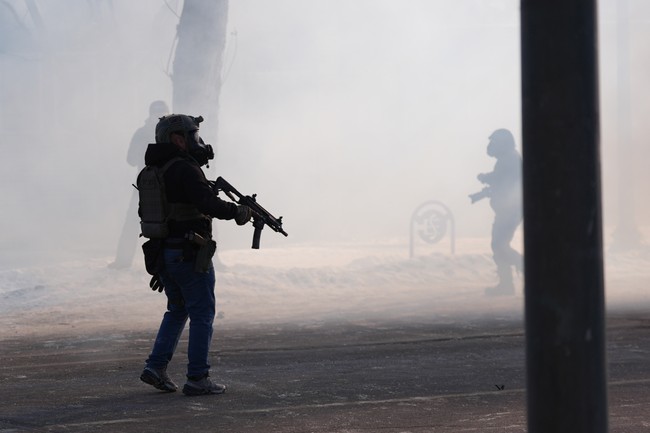
The Minneapolis protests turned violent when a crowd targeting federal immigration agents smashed into a Home2Suites hotel they believed was housing ICE personnel, shattering windows, vandalizing property, and clashing with security and a lone police officer before local authorities finally regained control.
Gov. Tim Walz described the unrest as peaceful, but eyewitness video and on-scene reports tell a different story of thrown objects, graffiti, and a physical assault that left a federal agent injured. Claims that ICE shot Alex Pretti were repeated by some officials, which inflamed already tense crowds and muddied the facts surrounding the initial shooting. When political leaders misstate what happened, it encourages chaos and makes it harder to protect innocent bystanders. Citizens and travelers at that hotel had every right to expect safety and order, not to be the focus of a mob.
The protesters blocked streets with debris, including pallets and a mattress, and then targeted the hotel’s front windows and doors with vandalism. Once the crowd forced entry, lobby damage and confrontations with private security followed quickly, creating a dangerous scene for guests and staff. Footage from the incident captures people attempting to push past security while hotel employees and a single police officer fought to hold a perimeter. That lone MPD officer did what he could, but the scale of the crowd overwhelmed the initial defenses.
READ MORE: Walz, Ellison Make Things Even Worse With Disgraceful Remarks About ICE and the Border Patrol Shooting
Video evidence included graphic and chaotic moments that underline how quickly a demonstration can become an attack on private property and personal safety. The crowd sprayed graffiti across the building and damaged vehicles in the parking lot they thought were connected to ICE operations. One federal agent showed a bloody hand in footage, though details about how that injury occurred remain unclear. Injuries and property damage are predictable results when lawlessness replaces lawful protest.
Despite the escalation, there was a troubling period of more than an hour with minimal local police presence at the scene, a delay that allowed the situation to worsen. When officers finally arrived and announced themselves as the Minneapolis Police Department, they moved to arrest those blocking and attacking the hotel. The slow response raises questions about priorities and enforcement choices by local officials who oversee public safety operations. Residents and visitors deserve a police force that steps in promptly to stop violent acts, not one that hesitates while a mob carries out destruction.
The tactics used by the agitators went beyond civil disobedience into harassment, stalking, and assault, with clear property destruction and threats to personal safety. Breaking windows and doors, trashing lobbies, and confronting security staff are criminal acts that should be treated as such, regardless of any political claims driving the crowd. Protecting constitutional rights does not mean tolerating violence or intimidation against private citizens and businesses. Leaders who excuse or downplay this behavior are sending a dangerous message that disorder is acceptable.
Community members watching the footage saw targeted behavior that looked more like coordinated intimidation than spontaneous protest. Blocking emergency egress, piling debris in public ways, and damaging other people’s vehicles crosses every line between protest and predation. Those inside the hotel, many of whom had no connection to immigration enforcement, were placed at risk by a political campaign of harassment. Local officials must prioritize the safety of nonpartisan residents and guests over protecting violent demonstrators.
Federal agents and hotel staff showed restraint under extreme pressure, but restraint alone cannot be the only barrier between a mob and the public. There was clear evidence of organized effort to find and confront people believed to be connected to ICE, and when vigilante tactics replace lawful process, the rule of law suffers. Law enforcement has to balance civil liberties with public safety, and in situations like this, the balance was painfully off for too long. The result was preventable harm and a visible failure to protect everyday people.
City leaders who portray violent, destructive actions as harmless or justified are failing their constituents and emboldening more disorder. This episode should be a moment of reckoning for officials who prioritize political narratives over law and order. Minneapolis residents deserve leadership that supports public safety, holds criminals accountable, and protects businesses and travelers from targeted attacks. Until that happens, the risks to innocent people will remain unacceptably high.
Footage shown during the incident reveals the raw intensity of the confrontation and the degree of damage inflicted before order was restored. Protesters forced entry and fought with security while some assaulted vehicles in the parking lot. The scene underscores why rapid, decisive intervention is necessary to prevent escalation. It also highlights how misinformation about who was involved can escalate tensions into violence.
The struggle to keep the mob out of the lobby led to close-quarters scuffles with security and the lone officer attempting to maintain control. For more than an hour, the hotel’s occupants were effectively under siege with limited protection. That delay in reinforcement is something city officials will need to explain to those affected. Travelers, workers, and local residents should not have to wait for safety to be restored when danger is visible and immediate.
Attempts to breach the building show the crowd testing and then breaking physical barriers, with people pushing forward despite security resistance. The images and videos are a stark reminder that peaceful protest is entirely different from storming private spaces. Those responsible for organizing or inciting such actions need to be held to account. Law enforcement must be prepared to act rapidly to prevent harm and property loss whenever unlawful behavior takes hold.
After officers secured the location and announced arrests, investigators began sorting through the damage and identifying individuals responsible for the most serious offenses. That process will be important not just for justice, but for sending a message that violent conduct will not be tolerated. If authorities fail to follow through, the pattern of targeting private venues and intimidating residents will likely continue. Accountability matters, and it must be visible.
The actions that night were not protest in any meaningful sense; they were criminal and dangerous. Local leaders who minimize or excuse those actions risk normalizing lawless behavior and undermining community safety. Minneapolis needs policies and leadership that protect people, enforce the law, and keep private citizens from being turned into pawns in political battles. Only then will residents be able to feel secure in their homes and businesses again.

Add comment