
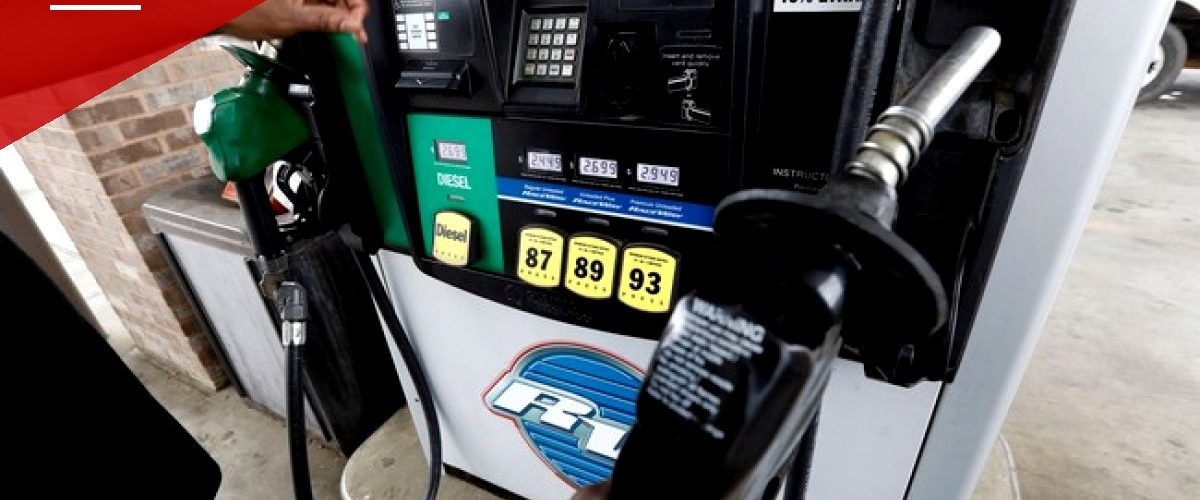
Diesel fuel prices are climbing across the country, driven in part by ongoing conflict in the Middle East, but no state is paying more at the pump than California, where the median price has reached $8 a gallon.
By comparison, the national median for the lower 48 states sits at about $6 a gallon. Texas and Florida are running at $5.90, and Iowa comes in at $5.80. Among California’s neighbors, Oregon’s median price is $6.33, Arizona’s is $6.50, and Nevada’s is $6.65.
Several factors explain the gap between California and the rest of the country.
Taxes
California levies nearly a dollar in taxes on every gallon of diesel sold. That includes an excise tax of $0.482 per gallon and a sales tax of $0.4474 per gallon, for a combined tax burden of $0.9294 per gallon.
Refining capacity
The state’s refining capacity has shrunk dramatically over the past four decades. In the 1980s, California had more than 50 refineries capable of producing diesel. Today, that number stands at 14.
Oil production
California also sits on substantial petroleum reserves, but oil production and the issuance of new drilling permits have declined sharply since the 1980s under successive state administrations, including that of Governor Gavin Newsom.
The picture is different in Alaska, where diesel also runs above $6 a gallon in parts of the state. Alaska has the lowest gasoline and diesel taxes in the nation, at under nine cents a gallon, but only three commercial refineries operate in the state — in Kenai, North Pole, and near Valdez — and only the Kenai and Valdez facilities produce the ultra-low sulfur diesel used in transportation. There, the constraint is refining capacity, not taxation or restricted drilling.
California, by contrast, faces all three pressures at once: high taxes, reduced refining capacity, and curtailed oil production, a combination that has pushed its diesel prices well above every other state in the country.



Add comment