
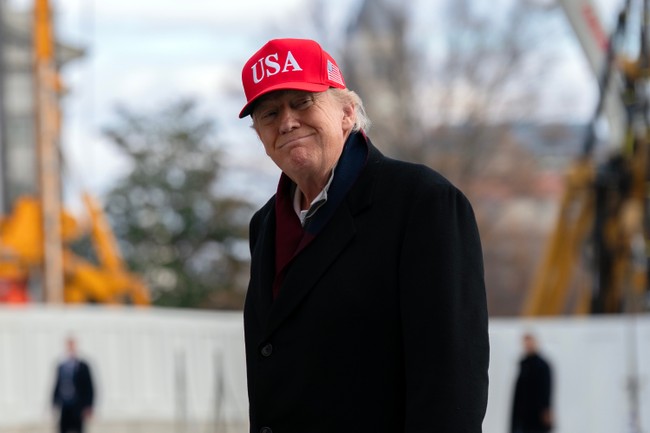
President Trump sat for a blunt interview with Politico and used the moment to criticize European leaders over migration, energy policy, and what he called a fixation on woke politics, arguing their choices have weakened the continent and opened the door to instability.
In the interview, Trump called out European governments for policies he says are tearing nations apart and weakening their ability to defend themselves and their borders. He argued that open migration and green energy mandates have real costs, and that political correctness has left many leaders unable to take tough actions. Trump framed the issue as one of survival for some countries if current trends continue.
“I think they’re weak,” Trump said of Europe’s political leaders. “But I also think that they want to be so politically correct.”
“I think they don’t know what to do,” he added. “Europe doesn’t know what to do.”
The outlet that conducted the interview labeled him “The Most Influential Man in Europe,” a headline that underscored the clash between his direct style and the continent’s mainstream political class. The piece framed his influence as disruptive and unpredictable and suggested his approach could upend long-standing European assumptions. Trump leaned into that portrayal, saying the United States’ posture under his leadership forces a rethinking of alliances and expectations.
Trump also pointed to Europe’s response to the Russia-Ukraine conflict, accusing leaders of endless talk and little decisive action. He said European capitals “shuddered” over his new National Security Strategy because it refuses to accept the status quo and proposes a tougher stance on immigration and geopolitics. In his view, rhetoric without deliverable results leaves the continent exposed and unable to craft a durable defense.
His National Security Strategy, released recently, aims to reassert American strength and economic leadership, arguing that clarity and toughness produce stability. That message landed poorly with many European commentators who see it as a challenge to their governing consensus. Trump argued that the old diplomatic niceties have failed to stop migration pressures and have not forced durable solutions in Eastern Europe.
Migration was a central target in the interview: Trump described major European cities as struggling under the strain of flows from the Middle East and Africa. He warned that without stricter border controls and clearer policies, some nations could face internal collapse or lose essential cohesion. For him, open borders and lax enforcement are not moral virtues but strategic liabilities.
On energy policy, Trump criticized green mandates that he says have driven up costs and weakened industrial competitiveness across Europe. He described those policies as self-inflicted economic pain that harms ordinary citizens and undermines national resilience. In his telling, leaders who prioritize ideology over practical energy security are compounding their countries’ vulnerabilities.
Trump also accused European elites of doubling down on censorship and groupthink, arguing those tendencies stifle effective debate and prevent realistic problem solving. He painted a picture of political classes more concerned with signaling virtue than delivering results, and he said that fosters resentment and political fragmentation. That assessment echoes broader conservative critiques about elites being disconnected from voters’ everyday concerns.
Throughout the interview, Trump used plain, provocative language to push his view that America must remain strong and unapologetic in defense of its interests. He presented strength and clear policy as the antidote to what he sees as Europe’s drift into weakness. The stakes, he suggested, are not only political pride but the long-term viability of some European states.
He repeatedly emphasized results over rhetoric, arguing that European leaders talk but fail to produce concrete outcomes that would resolve conflicts or secure borders. In his view, political correctness and indecision have real-world consequences that extend beyond domestic politics into global stability. That combination of themes — migration, energy, and the limits of political correctness — formed the core of his critique during the interview.
Watch the full interview here:
Add comment