
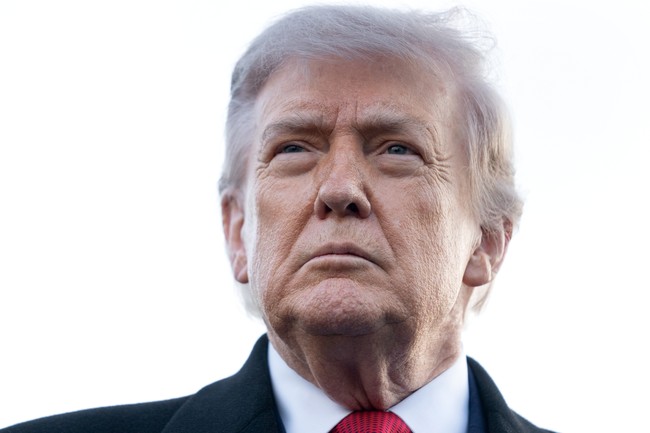
Trump’s last-minute halt to planned strikes on Iran followed a period of intense military pressure and indirect diplomacy, with Tehran reportedly agreeing to high-level talks that persuaded the president to call off attacks while keeping a naval blockade in place; the sequence shows a pattern of using force to gain leverage and then pausing for negotiated outcomes.
In recent weeks, tensions escalated into direct confrontations that put U.S. forces and regional partners on high alert. Iran downed an Army Apache and launched drone and missile strikes against targets tied to American interests in the region, prompting a sharp U.S. military response. That response included strikes across multiple Iranian sites intended to degrade Tehran’s ability to threaten shipping and U.S. assets.
The night operation targeted radar, air defenses, communications, and surveillance nodes, and reportedly involved Tomahawk cruise missiles fired from ships in the region. Explosions were reported near key locations, and Iran’s Revolutionary Guard acknowledged damage to military infrastructure and a manufacturing complex. Pentagon officials described the actions as precise and proportional, aimed at protecting commercial shipping and reducing threats to forces on the ground.
https://x.com/CENTCOM/status/2064824143640502670?ref_src=twsrc%5Etfw
President Trump publicly leaned on American military strength to force a diplomatic opening, warning Tehran that failure to negotiate would bring heavier consequences. His public warnings, including posts on social platforms and interviews, ratcheted pressure up and made the possibility of more strikes very real. The approach reflected a clear strategy: apply pain where it hurts to compel Tehran to the table without abandoning the option to negotiate.
Among the more striking threats was a declaration about Kharg Island, the strategic Persian Gulf terminal that handles the vast majority of Iranian crude exports. The president signaled that control of Iran’s oil lifelines could become a lever, drawing a comparison to past U.S. actions that aimed to squeeze hostile regimes economically and logistically. That line of pressure is designed to impose immediate, tangible costs while offering a path to a deal if Tehran capitulates on key terms.
Then, in the eleventh hour, President Trump announced the cancellation of scheduled strikes, saying the highest levels of Iranian leadership had greenlit discussions and final points had been approved. He framed the decision as one made from a position of strength, keeping the naval blockade and other leverage tools in place until a formal transaction is signed. The move underscores a negotiating posture where strikes are a means to an outcome, not the endgame itself.
The statement released by the president included this exact language: “Based on the fact that discussions with the Islamic Republic of Iran have been brought to the highest level of Iranian leadership and approved, I have, as President of the United States of America, cancelled the scheduled strikes and bombings against Iran this evening. Discussions and final points have been, in both concept and great detail, approved by all parties involved, including the United States, Israel, Saudi Arabia, UAE, Qatar, Turkey, Pakistan, Bahrain, Kuwait, Jordan, Egypt, and others. The Naval Blockade will remain in full force and effect until this Transaction is finalized — Time and place of the signing to be announced shortly.”
This cycle of force then pause is hardly accidental; it’s the consistent element of a strategy that refuses to let bad actors bargain from strength. By combining military strikes, economic pressure, regional coordination, and the threat of tighter controls over oil exports, the administration seeks to reshape Tehran’s cost-benefit calculus. If the president can convert coercive measures into concrete concessions, that will be presented as a vindication of a tougher line where prior administrations were perceived as weak.
Of course, skeptics will question whether a last-minute pause indicates real progress or simply buys time for Iran to regroup. That skepticism is healthy in a world where negotiated settlements have a history of collapsing. Even so, the administration’s posture sends a clear signal to allies and adversaries alike: the United States can and will use calibrated force to protect its interests, and it will trade strikes for verifiable, high-level commitments when the other side shows signs of backing down.
The Qatari-mediated channels that had produced little over months suddenly look more promising when backed by demonstrated willingness to strike. Regional buy-in from Gulf partners and Israel, combined with U.S. naval measures, raises the stakes for Tehran in ways diplomatic talks alone did not. Whether this leads to a durable settlement or another round of brinkmanship will depend on follow-through and the details of whatever transaction is ultimately presented for signing.
What matters now is verification and enforcement: keeping the blockade, monitoring compliance, and ensuring any agreement includes clear, measurable steps that reduce Iran’s ability to menace shipping and regional stability. The approach is unapologetically tough, and for those who believe strength restores deterrence, the pause looks less like retreat and more like leverage being converted into a chance for a negotiated outcome.


Add comment