
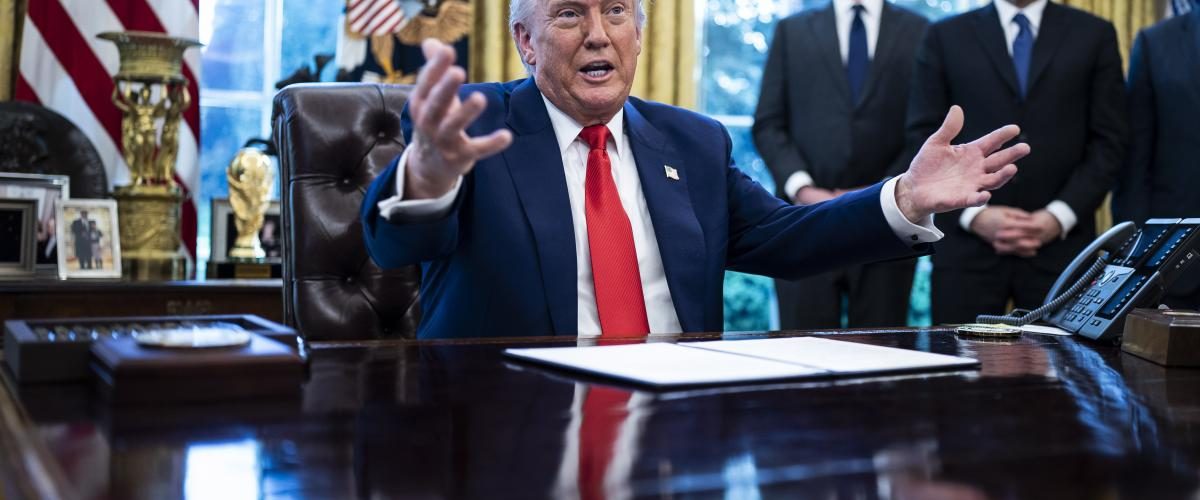
The Trump administration on Thursday broke the record for the longest full government shutdown under any U.S. president as the Senate failed to advance a Republican-backed measure to pay essential federal workers, Axios reports. This piece explains what happened, why the vote mattered, how Republican senators positioned themselves, and what the immediate consequences look like for federal workers and agencies.
Senate action stalled when a Republican-crafted plan to fund pay for essential federal employees did not get the votes needed to proceed. Republicans argued the measure was narrowly focused, intended only to ensure compensation for those still on duty during the stoppage. Supporters emphasized that paying people who show up to work is a basic responsibility regardless of the larger budget fight.
The broader shutdown centers on a dispute over long-term funding priorities that the White House and congressional Democrats have failed to settle. Republican leaders framed their objection not as a refusal to pay workers but as a push to keep funding negotiations intact and to protect border and national security demands. That stance was sold to the public as a principled negotiation tactic, insisting Congress should not just pass blank checks without policy changes.
Democrats countered that partial measures create precedent for piecemeal fixes and undercut leverage to secure broader funding priorities important to their constituencies. They argued sticking to full appropriations processes keeps transparency and accountability intact. The result was a gridlock where procedural rules and strategic positioning left essential workers stuck in the middle.
On the ground, federal employees faced immediate practical problems: missed paychecks for many, uncertainty about when normal operations will resume, and stress from furloughs or delayed salaries. Essential personnel, like air traffic controllers and TSA staff, continued to work but without the regular assurance of on-time pay, which advocates said was unfair. Republican senators highlighted those real-world consequences to justify a stopgap that isolated pay from other budget fights.
Republicans also used messaging framed around fairness and common sense, arguing their proposal was narrowly tailored to avoid rewarding political brinkmanship while still protecting workers. They pointed out the public optics of telling people who work through a shutdown they will not be paid, and they leveraged that to question the Democrats’ negotiating posture. Senate Republicans wanted to make clear they were not abandoning the goal of a full appropriations agreement while making a humanitarian case for pay.
Still, procedural dynamics in the Senate are unforgiving: cloture votes and filibuster rules make it difficult to advance measures unless leadership can build a broad coalition. The failure to carry the Republican-backed plan showed how thin that coalition was in this instance, and how procedural hurdles can defeat even narrowly drawn proposals. That political reality sharpened criticism from both sides about priorities and tactics.
Beyond the immediate budget mechanics, the shutdown has broader implications for public perception and policy momentum. Republicans argued their approach reinforced a message of fiscal discipline and negotiating leverage, while Democrats accused Republicans of playing politics with people’s livelihoods. The media coverage and public reaction will shape how each party positions itself for future rounds of bargaining and potential electoral consequences.
Administrative consequences are also looming: agencies began to reassess timelines for services and programs that depend on continuous funding. Contractors and smaller service providers that depend on federal business faced cash-flow concerns, compounding the shutdown’s ripple effects. Those economic pressures can influence local communities in ways that go beyond the abstract counting of days of a shutdown.
As talks continue, the standoff highlighted the limits of short-term fixes in a polarized Washington. Republicans pushed a focused relief measure for workers as both moral defense and political strategy, but Senate arithmetic and Democratic opposition blocked that route. The result is a longer shutdown and a tougher path ahead for resolving the broader spending disputes that created this crisis.



Add comment