
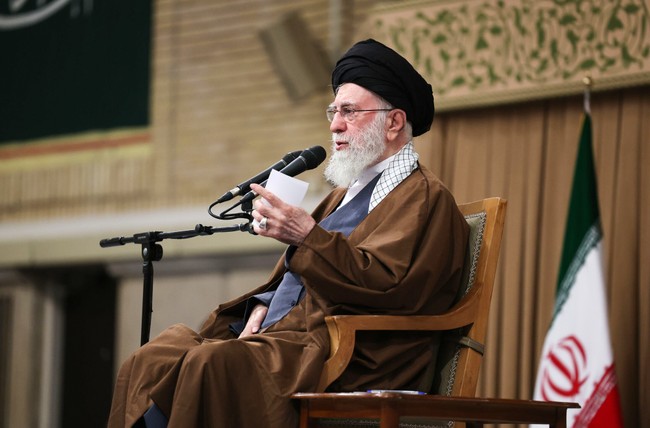
The United States is on alert after Iranian state television aired an explicit assassination threat that repurposed footage from the Butler, Pennsylvania attack on President Trump. U.S. protective services are reportedly aware and responding as tensions between Tehran and Washington escalate, while mass protests inside Iran appear to be suppressed. This piece walks through the threat, the suppression of reporting from Iran, the U.S. response, and what the administration has publicly said so far. The situation is fluid, with information scarce and official silence deliberate.
Earlier in the week, Iranian state television broadcast an ominous message that replayed the attempted attack footage and declared, “he missed – we won’t.” That line alone makes clear the intent to intimidate and signals a higher degree of malicious intent than a passing threat. Given Iran’s history of using proxies and state intelligence assets abroad, such rhetoric cannot be shrugged off as mere bluster. Smart security posture accepts the possibility of capability and intent, and treats threats accordingly.
Officials have confirmed the United States Secret Service is aware of the broadcast and the danger it implies. Awareness is the bare minimum; action and vigilance are what protect lives. With the country still smarting from attempts on political figures, the protective apparatus must assume hostile state actors could leverage infiltrators or operatives already inside the country. This concern is sharpened by the chaotic immigration and border policies that can leave gaps for bad actors to exploit.
No matter how screwed up, no matter how bedeviled by sanctions and by its own people, Iran still is a nation-state with all of the resources of a nation-state. Worse, it’s a hostile nation-state that has almost certainly infiltrated operatives into the United States, very likely during the Biden administration’s shameful non-enforcement of immigration law and border security. It wouldn’t be surprising to learn that some of the Iranians who have entered the country are trained operators who may be much more effective than Thomas Crooks.
Inside Iran, long-running economic collapse and brutal repression have brought tens of thousands into the streets, and then the streets abruptly fell quiet in many reports. That sudden silence is chilling because it often means the regime has choked off communications and movement with force. Reports of thousands killed in crackdowns have circulated, though independent verification is extremely difficult right now. The regime’s willingness to shoot and detain protesters suggests that domestic instability will continue to produce unpredictable and dangerous foreign policy effects.
Washington has not stood still. Military assets have been repositioned toward the region, including an aircraft carrier task group, a classic and deliberate signaling tool. Historically, sending carriers closer is meant to deter escalation and remind authoritarian rulers that the United States can project overwhelming power. Whether Tehran interprets such moves as a deterrent or an incident generator depends on the regime’s calculus and its perception of American resolve. That unknown makes prudence and secrecy in planning all the more valuable.
President Trump has been intentionally tight-lipped about any potential military options, adhering to a posture of strategic ambiguity. That approach follows the maxim: “tell them nothing. When it’s over, tell them who won.” Remaining publicly circumspect keeps adversaries guessing and protects operational security. At the same time, the president did tell reporters that “very important sources on the other side” told him Iran had, for the time being, halted some executions of protesters.
On Thursday afternoon, Trump told the media that “very important sources on the other side” informed him that Iran has halted the execution of protesters, but said he is keeping an eye on the situation.
On Friday, the president announced on TRUTH Social that hundreds of scheduled executions had been halted.
Information coming out of Iran is increasingly sparse and contested, making public assessments harder and more prone to error. That scarcity elevates the value of human intelligence and signals, and it increases the risk of surprise. A nation-state with the capabilities of Iran can weaponize disinformation, conceal operations, and deploy deniable assets. The protective services in the U.S. must assume a broad array of tactics when evaluating the threat environment.
For now, the posture across Washington combines heightened protective measures, military signaling, and cautious public commentary from the Trump administration. The interplay of domestic unrest inside Iran and Tehran’s external threats creates a dangerous mix that could inspire acts of asymmetric violence. Authorities are right to treat the televised threat as serious and to prepare accordingly, keeping citizens and public officials safer while intelligence efforts continue.
As officials sort through limited and noisy reporting, the need for vigilant, professional countermeasures is clear. Keeping the public informed without amplifying propaganda or compromising operations is a delicate balance. Meanwhile, those in charge must work quietly and effectively to neutralize risks and to ensure threats remain just that—threats that never reach fruition.
Add comment