
The collapse of Iran’s theocratic regime would reshape the Middle East, creating a strategic opening that Riyadh is already poised to exploit; this article examines the likely Saudi response, the durability of the U.S.-Saudi relationship, the prospect of a reformed Iran, and what these shifts mean for American interests and regional stability.
If the Iranian regime collapses, the immediate effect will be a severe disruption of the current balance of power in the region. Tehran has been the primary state sponsor of militant proxies and ideological influence across the Levant and Persian Gulf for decades. Its removal would not automatically produce a liberal democracy or a friendly government, but it would hand competing powers a chance to expand their reach.
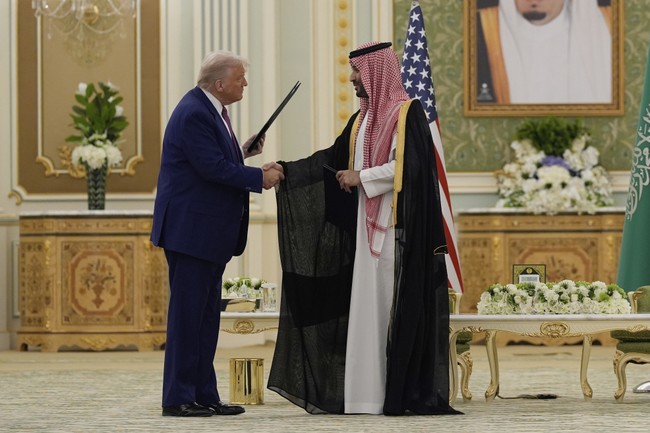
Saudi Arabia sees opportunities where others see chaos. Riyadh has modernized its posture in recent years and is pushing to play a more assertive role beyond its borders. That ambition tracks with Crown Prince Mohammed bin Salman’s stated goal of reshaping regional dynamics, and the kingdom will move decisively to secure its interests if Iran weakens.
As Iran weakens, a power vacuum is emerging across the Middle East — and Saudi Arabia is moving to fill it by recalibrating relations with former rivals, hedging global partnerships and asserting a more independent foreign policy, according to several experts.
Javed Ali, former senior official at the National Security Council and professor at the University of Michigan, told Fox News Digital that “Since Iran’s 1979 revolution, both Saudi Arabia and Iran have vied for influence across the broader Muslim world. Mohammed bin Salman’s consolidation of power in the kingdom has also introduced a markedly different vision from that of his predecessors.”
Riyadh’s recent moves, from Yemen to Turkey, are fueling debate over whether Crown Prince Mohammed bin Salman’s expanding regional role still aligns with U.S. interests. As part of that recalibration, Bloomberg reported on Jan. 9 that Turkey is seeking entry into the Saudi–Pakistan mutual defense pact signed four months earlier, according to people familiar with the talks.
The historical U.S.-Saudi partnership rests on strategic alignment more than shared values, and that means it can shift when interests diverge. Saudis will remain allies when it serves the kingdom’s survival and prosperity, not out of ideological affinity. American policymakers should remember that influence follows capability, credibility, and clear national interest, not platitudes about friendship.
Personal experience in the region highlights the cultural distance between the United States and the kingdom. Saudi society remains conservative in ways that challenge Western norms, and political power is concentrated in a ruling family with traditional and religious elements. Those realities matter when American officials calculate how far Riyadh will go to align itself with U.S. objectives.
The status of U.S. leadership is a direct determinant of how regional partners behave. When Washington projects strength, allies are reassured and rivals think twice. Conversely, a perceived decline in American will or capability encourages hedging, deals with other powers, and independent regional strategies that may not sync with U.S. aims.
Michael Rubin, a senior fellow at the American Enterprise Institute, said Saudi Arabia’s current trajectory must be viewed through years of accumulated frustration with U.S. policy.
“To be fair to MBS, previous U.S. administrations did not uphold their end of the bargain either,” Rubin told Fox News Digital, pointing to repeated Houthi attacks on Saudi territory. “The Houthis launched hundreds of drones and rockets that the Obama administration ignored.”
Beyond Riyadh’s calculations, a renewed Iran could re-emerge in several forms, from a moderate, pragmatic state to a renewed theocracy or fragmented regional actors. If sanctions lift for a reformed, secular-leaning government, Iran might return as an economic player rather than a sponsor of regional unrest. That outcome would be preferable for American and allied security interests, but it is far from guaranteed.
U.S. strategy should be pragmatic and interest-driven: protect American forces and citizens, deter aggression, and cultivate reliable regional partners without pretending to transform societies overnight. Support for stability should not equate to unconditional backing of any single regime in the region. Washington must balance realpolitik with the promotion of long-term American principles.
In the near term, expect Riyadh to pursue influence wherever Iranian withdrawal leaves gaps: diplomacy, security arrangements, energy markets, and regional institutions. The kingdom will chase advantages that secure its borders, expand markets, and bolster its bargaining position with global powers. American leaders will need to manage those moves in ways that defend U.S. interests while avoiding blind loyalty.
The future of the Middle East after Iran’s potential fall hinges on a mix of local choices and external leadership. Saudi ambitions, the character of whatever replaces Iran’s regime, and how the United States responds will shape the next chapter. The core point for American conservatives is simple: strong, clear U.S. leadership remains the best hedge against instability and against rivals stepping into any vacuum.



Add comment