
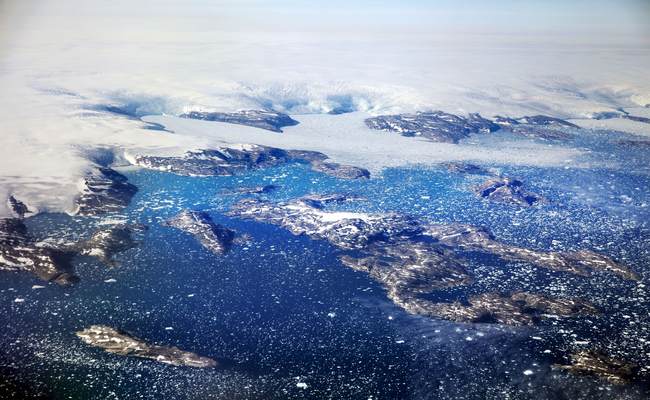
I’ll explain the trip by a bipartisan congressional delegation to Copenhagen, why Sen. Lisa Murkowski pushed the message that “Greenland needs to be viewed as our ally, not as an asset,” the historical context of U.S. interest in Greenland, and the political dynamics that make this episode mostly symbolic rather than decisive.
A bipartisan group of U.S. lawmakers flew to Copenhagen to express support for Denmark and Greenland and to reinforce that Greenland should remain a Danish territory. The visit included meetings with Danish and Greenlandic leaders and consultations with ministers, members of parliament, and business figures. That kind of delegation is standard when Congress wants to send a message or score political points, especially when the president has floated an unconventional policy idea. For those of us in Alaska, Greenland’s strategic value is obvious, but that doesn’t mean the executive branch should be hobbled by constant second-guessing from the Hill.
A bipartisan U.S. Congress delegation visited Copenhagen on Friday to voice support for Denmark and Greenland, insisting that President Donald Trump’s designs on the Arctic island did not have the backing of the American people.
The two-day visit comes alongside a European show of support in the form of a military reconnaissance mission to Greenland, a Danish autonomous territory.
Senator Lisa Murkowski took a prominent role on the trip and described the conversations as constructive. She emphasized the importance of nurturing ties among the United States, Denmark, and Greenland, and she cited public opinion as evidence that an acquisition idea lacked broad support. Her phrasing—”Greenland needs to be viewed as our ally, not as an asset”—is politically savvy and appeals to alliance norms. But that line also compresses two different truths into one neat slogan.
The 11 visiting U.S. lawmakers held talks with Danish Prime Minister Mette Frederiksen and her Greenlandic counterpart Jens-Frederik Nielsen, as well as Denmark’s foreign and defence ministers, members of parliament and business leaders.
Republican Sen. Lisa Murkowski said there was “good dialogue” in the meetings, and stressed it was important to “nurture” ties between the United States, Denmark and Greenland.
“When you ask the American people whether or not they think it is a good idea for the United States to acquire Greenland, the vast majority — some 75 percent — will say, ‘We do not think that that is a good idea'”, Murkowski told reporters.
“Greenland needs to be viewed as our ally, not as an asset,” she said.
Viewed practically, alliance and asset are not opposites. Greenland’s geography makes it an asset for the United States when used as a forward operating location for defense and logistics. A U.S. military presence there has mattered since World War II and remains strategically valuable in a region where Russia and China are increasingly active. Saying Greenland is an ally signals respect for sovereignty and cooperation, while acknowledging its strategic worth should shape how we posture forces and negotiate with partners.
American interest in Greenland is hardly new. Offers and proposals to acquire or lease the island date back to the 19th and 20th centuries. Those historical efforts show that policymakers have long recognized Greenland’s strategic location in the Arctic and North Atlantic. The recurring interest from U.S. officials reflects enduring concerns about trade routes, early-warning systems, and the ability to project power in high latitudes as competition grows.
The delegation to Copenhagen included legislators from both parties, but the composition underscored which party dominated the visit. The list of participants read like a roll call of congressional heavyweights and committee veterans who wanted to be seen taking a stand. Symbolic trips like this are often more about signaling to domestic audiences than altering foreign policy, which constitutionally resides with the executive branch. Still, symbolism matters in diplomacy and can influence relationships when done with respect and clarity.
The trip’s practical impact will be limited unless it converts into sustained policy coordination between Washington and Copenhagen. Diplomatic muscle is built through ongoing defense agreements, intelligence sharing, infrastructure investments, and joint planning—nothing that can be fully achieved by a short visit alone. If the goal is to keep Greenland aligned with Western interests, steady, substantive cooperation beats headline-grabbing statements every time.
The political theater around Greenland also reveals how opponents of presidential initiatives often mobilize international partners to block options they dislike. That is a familiar pattern in Washington and one that voters see as a form of elite pushback. Responsible conservative policy should defend American interests while keeping allies close, ensuring we preserve both the strategic benefits of Greenland and the dignity of our partnerships.
Here are the members of the bipartisan group: Senator Chris Coons (D-DE); Senator Dick Durbin (D-IL); Senator Peter Welch (D-VT); Senator Jeanne Shaheen (D-NH); Senator Thom Tillis (R-NC); Senator Lisa Murkowski (R-AK); Representative Steny Hoyer (MD-05); Representative Gregory Meeks (NY-05); Representative Madeleine Dean (PA-04); Representative Sara Jacobs (CA-51); Representative Sarah McBride (DE-AL).


Add comment