
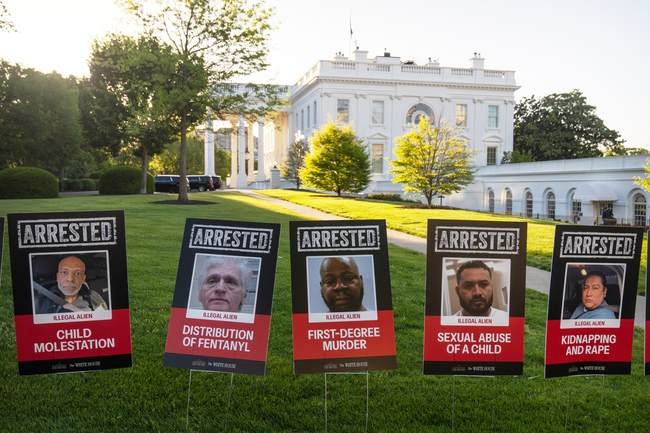
This article examines a recent Modesto triple homicide allegedly carried out by a previously deported Mexican national who had prior DUI arrests, the role sanctuary policies and local jail procedures played in his release, and the reaction from DHS and local law enforcement amid accusations that California’s sanctuary rules prioritized the suspect over public safety.
The Modesto case is a blunt example of how policy and procedure collide with violent crime, according to reporting shared widely on X by Bill Melugin. Authorities say a two-week-old infant, the infant’s mother, and the infant’s grandmother were stabbed to death, and the suspect, identified in reporting as Joaquin Escoto, had a record including previous deportation and multiple DUI arrests. This tragedy has reopened fierce debate over sanctuary laws and how local officials respond to federal immigration requests.
Local officials and federal authorities tell different parts of the story about what happened when Escoto was taken into custody for a DUI in June 2025. San Joaquin County Sheriff Pat Withrow said the jail did not receive ICE’s request to be notified of a potential release until after Escoto was already free. Sheriff Withrow stated, “We did not do anything wrong here,” and emphasized the timing issue and that what arrived was a notification request rather than a formal hold.
https://x.com/BillMelugin_/status/2062924242102960593
The timeline from law enforcement and DHS diverge on whether a detainer was lodged and whether the county would have honored it even if they had received it earlier. The practical effect of California’s sanctuary statutes is that many low-level offenses do not trigger cooperation with federal immigration authorities, and several officials have pointed to those legal constraints. Critics argue those constraints created a predictable gap in enforcement that placed public safety at risk in this instance.
The report shared on X includes a statement attributed to DHS that frames the situation as a preventable failure. Bill Melugin writes:
ICYMI: A previously deported Mexican illegal alien with four prior DUI arrests has been charged with a triple murder in Modesto, CA after he allegedly stabbed to death a two-week-old baby, the baby’s mom, and the baby’s grandma. DHS tells @FoxNews that when Joaquin Escoto was arrested for his latest DUI in June 2025, ICE sent a request to the San Joaquin County Jail to be notified if he were to be released, and DHS provided us the request they sent over. Escoto was still released without any heads up to ICE.
San Joaquin County Sheriff Pat Withrow told media outlets that Escsoto was arrested for that DUI at 1am, and he was released at 6am. He says the jail didn’t get a fax from ICE requesting notification of his release until 9am.
“We did not do anything wrong here,” Withrow said. “Their hold request came after he was already gone. It wasn’t even a hold. It was just a request to notify them when he was going to be released. He was already gone.”
However, under California’s sanctuary laws, DUI is not a serious enough offense to allow cooperation with ICE, so even if the ICE request would have come in sooner, it’s unlikely ICE’s request would have been honored by San Joaquin County.
Shortly after that passage, Melugin passed along a DHS statement that interprets the events more severely and assigns direct blame to sanctuary officials. DHS statement to FOX:
“ICE lodged an arrest detainer the same day this criminal illegal alien was arrested for driving under the influence. By the way, that was the same day he was released by sanctuary politicians.
In the sheriff’s own words, he “probably would not” have honored the detainer because it was “just a DUI.” They knowingly set this violent criminal loose, and he slaughtered a two-week-old baby in cold blood, along with the infant’s mother and grandmother.
California’s sanctuary politicians MUST STOP this deadly game. They CHOOSE every single day to release criminal illegal aliens back into our communities, directly endangering American families and creating more innocent victims.”
The case has become shorthand for conservatives who argue that sanctuary policies and lax enforcement choices encourage repeat offenders to remain free and threaten public safety. California operates under the California Values Act, which limits local cooperation with federal immigration enforcement in many circumstances, shaping how counties respond to ICE notifications. That legal backdrop is central to why critics say this suspect was not detained for transfer to federal custody after his DUI arrest.
Beyond law and policy, there is a raw human cost here: three lives lost and a community left to grieve. Supporters of stricter enforcement contend that had federal requests been honored or state rules allowed fuller cooperation, those victims might be alive today. Opponents of changing sanctuary laws warn against criminalizing entire immigrant communities and urge reforms that target violent offenders without sweeping consequences for nonviolent residents.
This incident also raises operational questions about how jails handle time-sensitive detention requests, the communication channels between local and federal agencies, and whether statutory limits on cooperation should be revisited. For many policymakers and citizens, those procedural and legal questions now have a fresh urgency because of the severity of the alleged crime. The tension between civil liberties, state law, and protecting communities will likely keep this case in the headlines while investigations and legal actions proceed.



Add comment