
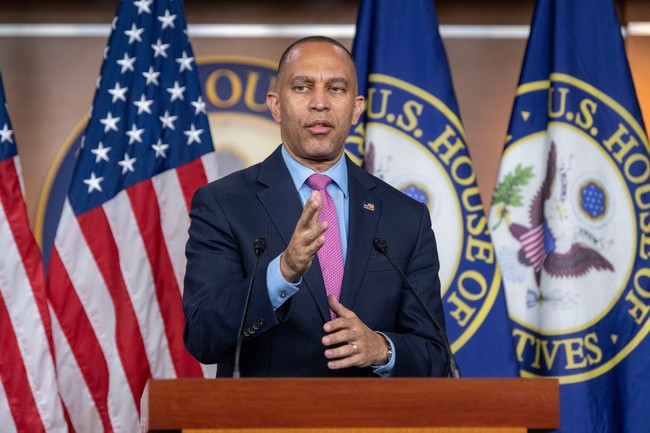
This piece examines how prominent House Democrats have reacted to recent primary wins by candidates tied to the Democratic Socialists of America, critiques Hakeem Jeffries’ effort to blame former President Trump for the movement’s rise, traces socialism’s roots inside the Democratic coalition, and surveys notable winners and challengers pushing overtly socialist agendas.
Watching House Democrats scramble to distance themselves from DSA-affiliated victors in New York looks a little absurd if you follow the history. Some members are loudly promising they are not socialists while their party has long accommodated radical voices, and that tension is now bursting into public view as the 2026 midterms approach.
There are genuinely extreme examples among recent nominees, and their past statements and behavior make it easier for moderate Democrats to posture. Yet pointing fingers now for political survival does not erase decades of play-acting and coalition-building that allowed these activists to gain traction inside the party.
Hakeem Jeffries, for one, framed the ascent of these candidates as a reaction to Trump, arguing that his presidency pushed Democrats toward more extreme positions. That line of reasoning tries to reduce a complex movement to a single villain, but it ignores longstanding ideological and organizational trends that predate Trump’s national prominence.
Trump Derangement Syndrome undoubtedly amplified and radicalized some parts of the left, making their rhetoric more openly socialist and less willing to hide behind generic Democratic labels. Still, socialism was present and influential within the Democratic Party well before Trump, and it simply became more visible during and after his terms in office.
Prominent figures long associated with democratic socialism have been shaping left-wing policy and messaging for years, with leaders like Bernie Sanders modeling how to make socialist ideas politically viable. Younger members who openly wave DSA banners have followed that playbook, turning what used to be fringe talk into mainstream Democratic discourse in certain districts.
https://x.com/RNCResearch/status/2071686976919490963
Alexandria Ocasio-Cortez is the poster child for that shift, and other DSA-aligned winners have followed her lead, staking careers on loudly progressive platforms and promises of expansive government spending. Zohran Mamdani’s 2025 mayoral victory and other recent wins show the movement’s ability to capture local and national seats by energizing voters around big promises and anti-establishment language.
When commentators insist Trump is solely responsible for this movement, they miss how party elites and institutional choices created the opening for insurgent socialists. Leaders who welcomed or tolerated radical factions inside the caucus gave them space to organize, recruit, and eventually win primaries, which is a political reality Jeffries and others should acknowledge.
Look at some of the recent primary winners and contenders and it becomes clear that many were already committed to a socialist agenda long before the last presidential cycle. Candidates endorsed by national progressive networks or by figures like Sanders often run on a platform of large-scale wealth redistribution and expanded government services, messaging that appeals in certain Democratic bases.
One striking case is the Colorado field, where contenders like Melat Kiros have drawn endorsements from progressive heavyweights and have positioned themselves as serious threats to long-serving incumbents. Those campaigns demonstrate the movement’s strategic focus: displace establishment Democrats with candidates who promise sweeping changes and brand themselves as the true voice of the party.
For Republicans and conservative observers, the concern is clear: if Democrats keep nominating candidates who openly embrace socialism, they risk alienating moderate voters and handing Republicans persuasive contrast on economic and national identity issues. Voters will ultimately decide which direction the party takes, but the decisions of current Democratic leaders helped construct the problem they now publicly complain about.
The political dynamic is simple: nurture radical voices and they grow bold, then act surprised when they dominate primaries and shape policy debates. Acknowledging that history would be a more honest starting point than blaming a single opponent for a long-term ideological shift that took place inside the party itself.
Those who watch these developments closely see a pattern of leadership choices, endorsements, and organizational support that favored insurgent candidates for years. That pattern explains current outcomes better than claims that outside forces alone produced this wave of unapologetic socialism.



Add comment