
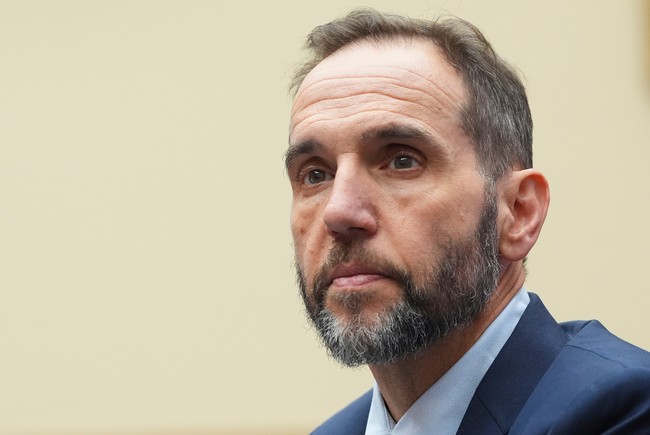
The Justice Department’s “Arctic Frost” investigation obtained nearly two years of former Pentagon official Kash Patel’s phone metadata and pursued communication records tied to multiple Republican lawmakers, using secrecy orders and a broad subpoena strategy that covered the 2020 election, January 6, and the months after.
Documents released in advance of a Senate Judiciary hearing reveal the scope and timing of subpoenas targeting Patel and others connected to the post-election effort. The subpoenas covered extensive date ranges and focused on toll and metadata that identify who communicated with whom, when, and how often. While the records did not include message content, the pattern of contacts emerged from the metadata, mapping a network of Republican officials and outside advisers. Judges signed nondisclosure orders that kept these subpoenas secret from the targets and the public for an extended period.
“Smith’s team subpoenaed records of phone calls and text messages, which did not include their content, as well as Patel’s mailing, residential and email addresses, according to documents released by Senate Judiciary Chairman Chuck Grassley ahead of a hearing Tuesday. Two subpoenas requested data from October 1, 2020, to February 22, 2023, and January 1, 2021, to November 23, 2022. Judges signed nondisclosure orders keeping the subpoenas secret.”
The dates targeted by the subpoenas span critical moments: the 2020 election, January 6, and the aftermath, a window where investigators were trying to reconstruct who coordinated what. Internal emails show prosecutors debating the volume and targets of subpoenas before proceeding, demonstrating a coordinated plan at senior levels. The investigation explicitly contemplated and then executed requests for toll records tied to members of Congress during that period. That plan involved sending demands to major carriers to pull metadata for many lawmakers and associates.
“In the coming week or so, we intend to issue subpoenas for the toll records of certain members of Congress for the period between the 2020 election and January 20 [2021] to investigate those communications.”
Names named in the internal briefing include sitting and former members of Congress and advisors central to post-election activities. The documents link communications involving Louie Gohmert, Mike Lee, Kevin McCarthy, Mark Meadows, Rudy Giuliani, John Eastman, Cleta Mitchell, and others. Records also indicate investigators had already obtained toll records for at least one congressional figure by January 2023, showing the subpoenas were not just planned but active. Those connections outline how investigators matched metadata to a wider investigative narrative.
Prosecutors discussed the list of targets and whether to notify Main Justice before firing off subpoenas, suggesting an awareness of the sensitivity of seeking members’ toll records. A line in the internal correspondence underlines that caution: “It just occurred to me that before we tell Main [main justice] we are going to fire off subpoenas for so many members tolls I should make sure Jack’s aware.” This exchange highlights how closely the team considered escalation and the potential political blowback. It also shows the inquiry was deliberate, coordinated, and expansive in its reach.
One early confirmed toll-record pull involved former Rep. Scott Perry, with documents stating, “We previously obtained toll records of Rep. Scott Perry.” Other lawmakers appear in the mapping: Gohmert tied to calls with Mark Meadows and Chip Roy, Mike Lee linked to Giuliani and John Eastman, and Kevin McCarthy appearing in logs with Ratcliffe and others. The pattern paints a networked picture of conversations among lawmakers and post-election advisers, based on who called whom and when. Even without message content, that pattern can be used to infer coordination or research lines for prosecutors.
Carrier testimony and internal DOJ notes show at least 84 subpoenas went to Verizon, AT&T, and T-Mobile connected to Arctic Frost, which later fed into the case led by Special Counsel Jack Smith. At least one carrier raised concerns about potential constitutional implications when asked about a senator’s records, flagging the legal and civil-liberties questions that follow such broad metadata requests. Those concerns add a layer of institutional pushback to the sequence of subpoenas, suggesting not every request was straightforward or uncontroversial.
“We have a methodical process for logging all information contained in the report — new information, inconsistent information.”
Investigators also used materials from the January 6 committee as a research source, combing through the committee’s report page by page and incorporating that material into investigative planning. By early 2023, congressional products and metadata collection were being combined as part of a methodical effort to map post-election interactions. The approach shows how public committee work and quiet subpoenas were folded together into the investigators’ playbook. That blending of public and secret investigative steps is central to the questions lawmakers and civil-liberty advocates will press at the hearing.
Senate testimony framed the matter as not just a procedural step but a substantive concern about transparency and whether the public and Congress received an accurate accounting. At the committee hearing, Chairman Grassley said, “If we’d followed the Democrats’ premature and ill-advised strategy, we wouldn’t have had a great deal of information we now have that shows Jack Smith misled Congress and the public, if not outright lied.” Those words are part of the record Republicans will use to question the investigation’s conduct and whether oversight was adequate. The documents make clear the probe was wide, secretive, and aimed squarely at mapping the communications of Trump allies and Republican lawmakers.

Add comment