
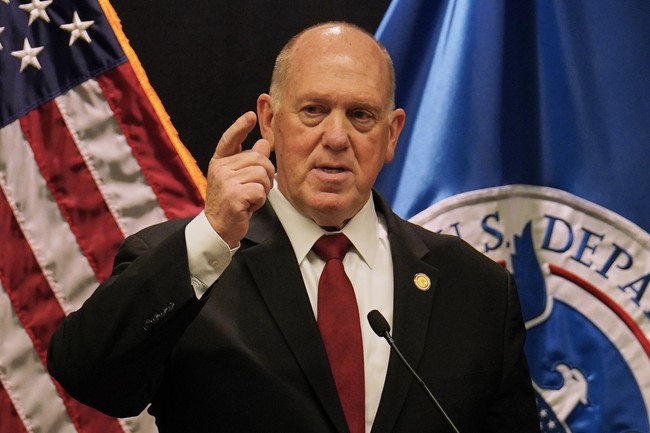
The piece examines Tom Homan’s blunt warning to New York officials about expanding ICE operations if the state seeks to limit cooperation, the apparent backtrack after high-level meetings, and the broader Republican case that federal immigration enforcement should proceed vigorously despite local opposition.
Tom Homan, a key Trump immigration figure, has been clear and relentless about his mission to remove people who are in the country illegally. He frames this as straight enforcement of federal law, not a political stunt, and his rhetoric has reflected that resolve. That posture landed him squarely in the middle of a clash with New York state leaders who have floated limits on cooperation with federal immigration authorities.
Speaking at a border security expo in Arizona, Homan said he would “flood the streets” with immigration agents in states that take steps to limit cooperation with the federal government. He singled out Hochul’s “Local Cops, Local Crimes Act” legislation, which is currently being considered by lawmakers amid snarled negotiations over the state budget.
“We’re gonna flood the zone,” Homan said in remarks, highlighting the Trump administration’s immigration strategy for the coming year. “You’re gonna see more ICE agents than you’ve ever seen before … because you forced us in this position.”
Homan said ICE will also be targeting “collaterals” — people who weren’t targets of immigration officers but are still living in the U.S. illegally — as part of the next wave of mass deportations.
“I don’t care how long you’ve been here, if you’re here illegally, entered this country illegally, you cheated,” he said in the remarks. “You cheated the system.”
Those comments were forceful, meant to signal a tough enforcement posture and to push back against sanctuary-style policies. From a Republican standpoint, enforcing immigration laws is nonnegotiable; it is the federal government’s responsibility, and officials who refuse to cooperate should not expect federal partners to look the other way. Homan’s language is blunt because he wants to make clear that federal enforcement will not be passively undermined.
Shortly after the tough talk, Homan met with Governor Kathy Hochul, and reports say he appeared to soften his immediate threat after that meeting and a separate meeting between President Trump and New York City’s new mayor. The public account suggests a pause rather than a policy change, but that pause sparked speculation about what concessions or understandings were reached in private. For opponents of lax local cooperation, even a temporary shift raises concerns about inconsistency in enforcement.
He (Homan) met with Hochul shortly after making the remarks, and appeared to back away from a crackdown after that encounter and a meeting between Trump and New York City mayor Zohran Mamdani, who took office in January.
Republicans argue that negotiations and behind-the-scenes meetings should not substitute for clear, consistent enforcement of immigration statutes. The federal government has the constitutional authority over immigration, and when states or cities refuse to assist, federal officials still have tools and jurisdiction to carry out removals. Homan’s initial vow to increase ICE presence reflects that belief and warns local leaders that obstruction won’t eliminate enforcement options.
There’s political theater here, too, and strategic signaling matters. Saying you will “flood the zone” draws attention and forces local officials to weigh political optics against public safety and legal obligations. Conservatives see that as useful leverage; if state leaders choose policies that shelter those here illegally, they must accept federal consequences. Tough talk can be effective even if it’s followed by quieter diplomacy.
The practical side is that enforcement has been stepped up in several places, with publicized repatriations and incentives for voluntary departures. Republicans point to those actions as evidence that a sustained push on immigration yields results, especially when federal priorities are clear. The narrative of a closed border and reduced crossings is used to support maintaining pressure rather than retreating to permissive enforcement.
Meanwhile, critics warn that aggressive sweeps could strain local communities and law enforcement trust. Conservatives counter that federal law must be upheld and that ensuring the rule of law protects citizens and legal immigrants alike. The tension between local policies and federal enforcement will continue to define the debate, especially in politically charged states like New York.
For Republican policymakers and advocates, the takeaway is familiar: make federal enforcement a priority, frame it as protecting the integrity of the system, and apply pressure where local actors obstruct cooperation. Whether Homan’s rhetoric turns into sustained action in New York will depend on the next rounds of negotiations and the willingness of federal officials to follow through when local resistance persists.


Add comment