
Checklist: Note Fetterman’s votes with Republicans; describe his CNN interview and anger; show SNAP consequences and his exact quotes; critique Democratic leaders and strategy; explain political fallout for Democrats. This article focuses on Sen. John Fetterman’s sharp rebuke of his party over the ongoing Schumer Shutdown and the real-world fallout for SNAP recipients.
Sen. John Fetterman of Pennsylvania has repeatedly broken with his party by voting with Republicans to reopen the government, and his patience has clearly run out. His stance stands out because most Senate Democrats have stuck with leadership despite the mounting harm to families. That divergence makes his comments more than a piece of intra-party drama — they are a warning flare about practical consequences.
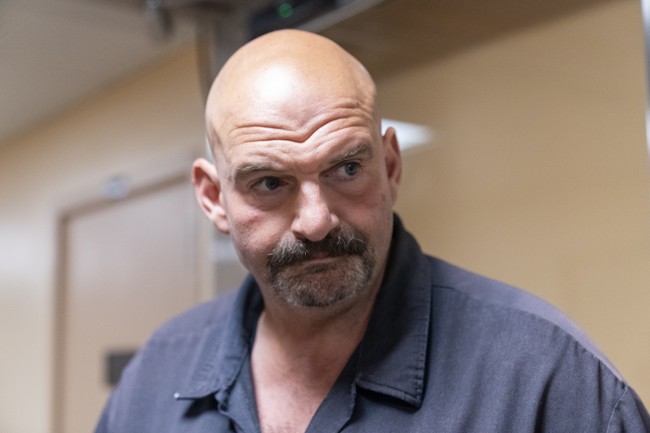
Fetterman’s frustration boiled over in a recent interview with CNN’s Manu Raju, where he described what he’s seeing on the ground as SNAP funding runs dry. He pointed to long lines at food distribution programs and warned that many households will run out of benefits quickly. Those aren’t abstract talking points; they are people showing up hungry because Washington can’t agree to open the government.
“And I don’t have an explanation for them,” Fetterman told Raju. He continued:
“All I can say is I’m sorry. It’s an absolute failure, what occurred here for the last month. And now things are really going to land. Imagine being a parent with a couple of kids, and how you’re going to fill their refrigerator and pack their lunches and get on with their lives when the things that they’ve depended on now is gone, because we can’t even agree to just open things up. Democrats, we’re not allowed just to open things up, then our party has bigger problems than I thought we might have already. It’s like, that’s not controversial – pay everybody! “
Fetterman didn’t stop there. He apologized to Americans directly for the failure to “get our s*** together and just open up our government,” an unusually blunt admission from a Senate Democrat. That profanity-cut apology underlines how raw the frustration is among lawmakers who see the fallout in their own communities.
When asked about Senate Minority Leader Chuck Schumer’s claim that each day of the shutdown improved Democrats’ political standing, Fetterman cut straight to the human cost. “Well, ask the hungry people on Saturday,” he said, making the point that political posturing doesn’t feed kids. Saying “Americans are not leverage,” he rejected the idea that suffering should be treated like a bargaining chip.
That language matters because it exposes a moral and political conflict inside the Democratic caucus. If governing becomes a game of leverage, leadership is willing to trade real hardship for perceived advantage. From a Republican view, voters see that as cynical and unacceptable, and it explains why many swing voters and blue-collar families are growing cold toward the party that once courted them.
Democrats have tried to point toward a SNAP contingency fund as a cushion, but contingency funds are designed for genuine emergencies, not for shoring up a political strategy. Using emergency pots to advance an agenda sets a risky precedent: what happens when those reserves are gone and the underlying disputes remain? That’s a practical problem, not a partisan talking point.
CNN’s decision to highlight Fetterman’s protest shows the message has penetrated mainstream coverage, despite the network’s usual framing. When even sympathetic outlets press the narrative that the party’s tactics are causing real suffering, the issue moves beyond internal squabbling. It becomes a tangible indictment of political priorities versus everyday needs.
For Republicans watching, Fetterman’s critique is ammunition and a mission statement: put governance and citizens first. When benefit lines lengthen and families scramble, voters notice whether leaders fix things or turn the crisis into a negotiation advantage. That contrast helps explain the broader political fallout the Democrats now face.
The heated exchanges and pointed language underscore a simple truth: the question here is not ideology but competence and compassion. If running the government means keeping people fed and services running, a shutdown that leaves families with empty refrigerators is a clear failure of responsibility. Those are the stakes playing out on the ground as this fight continues.



Add comment