
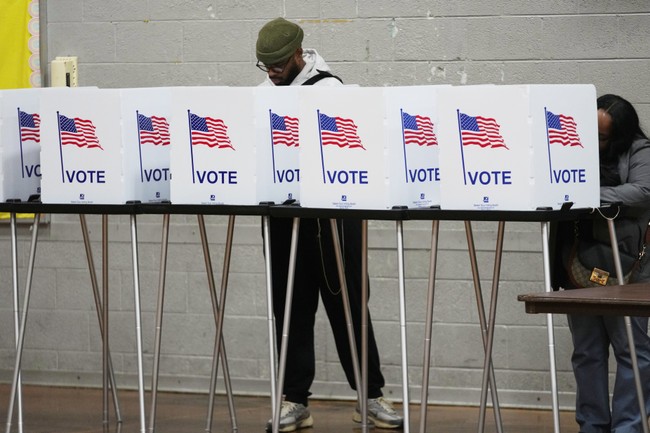
The Justice Department has opened new lawsuits against four states for refusing to turn over statewide voter registration lists, a move framed as enforcing federal law to protect election integrity and prompting fierce debate over privacy and state authority.
The federal government recently filed suits against Colorado, Hawaii, Massachusetts and Nevada after those states declined to provide detailed voter lists requested for review. The Justice Department says it needs names, birth dates, residential addresses and partial identifying numbers to verify eligibility and to evaluate how rolls are maintained. Officials argue this information is essential to preventing vote dilution and ensuring that the rolls reflect eligible voters only.
The U.S. Justice Department is suing four more states as part of its effort to collect detailed voting data and other election information across the country.
The department filed federal lawsuits against Colorado, Hawaii, Massachusetts and Nevada on Thursday for “failing to produce statewide voter registration lists upon request.” So far, 18 states have been sued, along with Fulton County in Georgia, which was sued for records related to the 2020 election.
From a conservative perspective, the pattern is familiar: federal authorities pressing for access to records while many Democratic-run jurisdictions resist on privacy or sovereignty grounds. Critics worry about how sensitive data will be handled, while supporters insist transparency and verification are basic requirements of a functioning republic. The debate centers on balancing individual privacy with the public interest in accurate voter rolls.
The department’s actions come after inquiries touched dozens of states and some counties, and the litigation tally has steadily grown. Officials say some states outright refused, while others produced incomplete datasets or raised legal and logistical objections. That has pushed the DOJ to seek court orders to compel production, and to clarify the reach of federal oversight in election administration.
The Trump administration has characterized the lawsuits as part of an effort to ensure the security of elections, and the Justice Department says the states are violating federal law by refusing to provide the voter lists and information about ineligible voters. The lawsuits have raised concerns among some Democratic officials and others who question exactly how the data will be used, and whether the department will follow privacy laws to protect the information. Some of the data sought includes names, dates of birth, residential addresses, driver’s license numbers and partial Social Security numbers.
“States have the statutory duty to preserve and protect their constituents from vote dilution,” Assistant Attorney General Harmeet K. Dhillon of the Justice Department’s Civil Rights Division said in a press release. “At this Department of Justice, we will not permit states to jeopardize the integrity and effectiveness of elections by refusing to abide by our federal elections laws. If states will not fulfill their duty to protect the integrity of the ballot, we will.”
The quote from Assistant Attorney General Harmeet K. Dhillon underscores the administration’s legal rationale and political posture. It frames the litigation as a defense of voters against dilution and a push to enforce statutes that, in the DOJ’s view, require access to registration lists. For many conservatives, that language is reassuring: the federal government is asserting a role in preserving clean rolls and uniform standards where state action is lacking.
Opponents argue the suits risk exposing private information or chilling voter participation, and they point to state laws and practices that limit data sharing. Those are legitimate concerns, but they do not eliminate the requirement that states maintain accurate records or the federal interest in ensuring equal protection under the law. Courts will now weigh those competing interests as the cases move forward.
Administrations change, but the underlying tension remains: who controls access to voter data and how it gets vetted. Conservatives pressing for stricter roll maintenance see this as protecting the franchise from errors and ineligible registrations, while many Democrats frame the issue as protecting voters’ privacy and state control. That divide drives the litigation and the political rhetoric surrounding it.
Locally, practices vary widely, and some jurisdictions still rely on paper-backed processes and in-person checks that conservatives praise for their transparency. Those examples are often cited as models for restoring confidence in elections: showing ID, signing rosters, and counting paper ballots manually or with visible audits. Advocates say consistent roll maintenance and routine checks before every election make those systems more trustworthy.
As the lawsuits proceed, expect more legal skirmishing and public argument about oversight versus autonomy. The Justice Department’s push will likely force courts to clarify federal authority over voter registration data and to set standards for how privacy concerns must be addressed. In the meantime, the political fallout will keep this issue front and center in debates over election rules and accountability.
Assistant Attorney General Harmeet Dhillon isn’t from these states and the legacy media that supports them:
Local voices will continue to push for practical fixes at the ballot box while national players litigate the boundaries of authority. That mix of courtroom and community-level action is now the battleground for the next phase of the effort to ensure voter rolls reflect eligible voters and maintain public confidence in election outcomes.

Add comment