
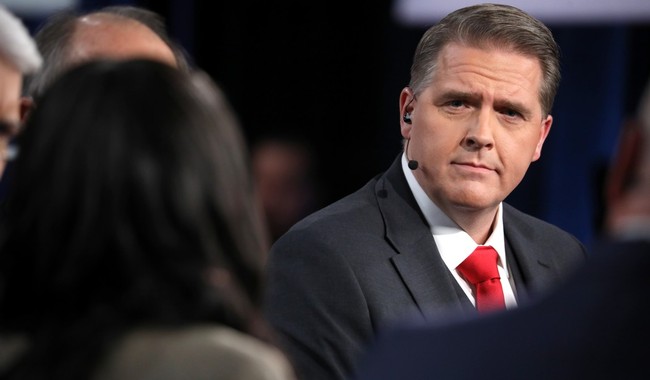
The exchange on CNN between Scott Jennings and Cameron Kasky sparked a sharp controversy after Kasky asserted that President Donald Trump was “provably” part of a “human sex-trafficking ring,” invoking Jeffrey Epstein’s crimes. This article walks through the broadcast moments, highlights the legal and editorial risks for the network, preserves the exact quoted exchanges that matter, and explains why the handling of the segment looks reckless from a liability perspective.
On a live panel, a commentator made a sweeping allegation that went far beyond opinion and into the territory of an asserted factual claim. That claim, voiced without evidence on air, raised immediate concerns about potential defamation liability for the network. Panel hosts and producers have a duty to manage on-air statements that could be defamatory, and failing to do so can expose a broadcaster to costly legal consequences.
The specific interaction began with side-discussion about terminology and political theater, then escalated quickly when Kasky shifted gears and leveled a direct charge. Scott Jennings pushed back, asking whether the panel was going to present this as an established fact. The remainder of the segment plays out like a case study in how not to moderate a debate when potentially libelous statements appear.
What followed was uncomfortable: the host, John Berman, did not immediately or forcefully correct Kasky’s claim, instead allowing the remark to stand as part of the back-and-forth. That reluctance to intervene left Jennings to press for clarity, and Kasky doubled down rather than retracting or softening his language. The exchange demonstrates how a show can transform a guest’s unproven allegation into a broadcasted claim by failing to impose clear boundaries in real time.
KASKY: I am appreciative that the president is being transparent about this. I would love it if he was more transparent about the human sex-trafficking network that he was a part of, but you can’t win them all.
BERMAN: Cameron’s grateful that the president is being transparent about the Nobel Peace Prize and his desires for Greenland. Scott, what do you think about that?
JENNINGS: You’re going to let that sit? Are we going to claim here on CNN that the president is part of a global sex trafficking ring, or…?
After Jennings demanded a clearer stance, the host pivoted to fact-checking in tone but did not immediately label Kasky’s words as reckless or unsubstantiated. That left a public record of the assertion untouched for viewers who might take the on-air exchange at face value. When a guest uses words like “provably,” the reasonable expectation is that the network will demand evidence or issue an immediate disclaimer if none exists.
KASKY: That Donald Trump was provably very involved with it.
The choice to allow that single-sentence claim to remain unchallenged is significant because “provably” signals a factual assertion rather than opinion. Broadcasters who permit factual claims without evidence risk more than viewer backlash; they risk lawsuits that can lead to large settlements and reputational damage. CNN and similar outlets have precedent nearby showing the price of letting unverified accusations stand on air.
When Berman finally responded he noted that Trump “has never been charged with any crimes in relation to Jeffrey Epstein,” which is a factual point but not a complete rebuttal to the allegation broadcast moments earlier. Not being charged is not the same as affirmatively disproving involvement, and a cautious host would have made that distinction while disavowing the unproven claim. The way the exchange was handled left the assertion hanging and the network vulnerable.
From an editorial standpoint, networks must manage guests, particularly when a contributor repeats sensational claims without evidence. Allowing a commentator to repeat a serious allegation and then double down when pressed looks like negligence. Producers and on-air hosts should have protocols to either demand proof, label the claim as unverified opinion, or cut the conversation short to prevent defamation risk.
There are tangible, real-world consequences when a major outlet broadcasts false or unverified statements about public figures. Media companies have paid heavy settlements in comparable situations, and that history should sharpen internal standards. The incident with Kasky and Jennings reads like a lapse in editorial judgment at a time when legal teams and image managers should be especially vigilant.
For viewers, the exchange is a reminder that a televised debate is not the same as a legal finding, and that charged language must be weighed against the absence of verified facts. For newsrooms, it should be a wake-up call about the duties that come with live programming: guests can be provocative, but hosts and producers have to be ready to rein them in when boundaries are crossed.



Add comment