
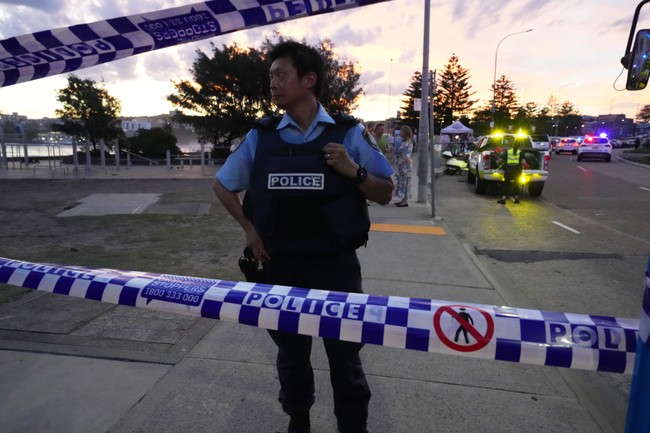
The man who raced into the chaos at Bondi Beach and wrestled a gun from a terrorist has spoken publicly for the first time since leaving the hospital, describing what drove him to act, the injuries he suffered, and the one regret that still haunts him.
The events at Bondi Beach on December 14 were sudden and brutal, and bystanders scrambled as shots rang out during a holiday gathering. Ahmed al Ahmed, a Syrian-Australian shopkeeper, says he couldn’t stand hearing people screaming and begging for help, and that feeling pushed him to intervene. He slipped up behind one of the attackers, struggled to take the weapon, and in the process became a target for the second shooter.
“I couldn’t handle it to hear kids and the woman and oldest and man screaming and asking for help and no one help,” he told reporters, describing the raw emotion that propelled him. Video captured the daring move where he leapt on the gunman and fought to remove the firearm, an act that stopped further immediate killing. After the scuffle he was hit multiple times by the other attacker and later hospitalized with several gunshot wounds.
Of the moment he engaged the shooter, al Ahmed said, “My soul and all my everything in my organ, in my body, in my brain, asked me to go, and to defend and to save innocent life. I didn’t think about it.” He detailed the physical fight in precise, stunned terms, explaining how he grabbed the man and tried to force him to drop the weapon. The block of testimony recorded in the interview captures the frantic intensity and the instinct he followed in the face of horror.
“I jumped in his back, hit him. I hold him with my right hand and start saying a word, you know, like to warn him, drop your gun, stop doing what you’re doing, and it’s come all in fast,” al Ahmed said of his struggle to remove the weapon from the gunman’s grasp. “And emotionally, I’m doing something, which is I feel something, a power in my body, my brain … I don’t want to see people killed in front of me, I don’t want to hear his gun, I don’t want to see people screaming and begging, asking for help, and that’s my soul asking me to do that.”
He makes clear he never intended to use the gun on the attacker; he was trying to stop the killing without taking life himself. “I didn’t think to shoot, and I don’t want to put my hand in blood. I don’t think I’m the one who can take life of people,” he said, explaining his moral line in the middle of the fight. That restraint did not spare him—he was struck five times by gunfire from a nearby footbridge and later told doctors he had three wounds to the chest and shoulder and two to an arm.
Eyewitness accounts and video of the confrontation spread quickly, and many praised al Ahmed’s courage for interrupting what could have been even worse carnage. Authorities later reported that the attackers’ vehicle contained homemade Islamic State flags and explosive material, and investigators described a coordinated, brutal attack that killed multiple people and injured many more. The scale of the violence underscores why immediate, decisive action by bystanders mattered so much that day.
Al Ahmed says he is proud of what he did, though he also carries regret for those he could not save. “I am proud that I did — I saved innocent people’s life. Because if I didn’t run and take the gun from the terrorists, it will be disaster, and will be more victims,” he said, while also admitting sorrow that more lives were lost. That mix of pride and grief is a familiar one among people who step into danger to protect others; they are celebrated for bravery and haunted by the limits of what they could accomplish.
The community response has been immediate and intense, with many calling al Ahmed a hero and others raising questions about how quickly police and emergency services acted. Reports emerged suggesting delays in the official response, which added to public anger and scrutiny in the aftermath. The incident has prompted broader discussion about public safety, rapid response, and the kinds of split-second decisions ordinary people are forced to make during attacks.
Al Ahmed’s description of acting on a visceral, soul-driven impulse gives a human face to an otherwise chaotic scene. His account shifts focus to the people on the sand that day, the victims and the helpers, and the brutal reality that ordinary moments can turn into life-or-death choices. He remains physically recovering and mentally processing what happened, but his basic message is straightforward: he moved because he could not stand by while others suffered.
Officials continue to investigate the attack and the circumstances surrounding it, while families and friends of the victims grieve lives cut short. The footage and interviews have sparked debate and deep emotion across the city and beyond, and the story of one man who ran toward the danger rather than away from it will be part of how this episode is remembered. As he recovers, al Ahmed keeps returning to the same idea: he could not ignore the screams, and that refusal to look away is why he acted.

Add comment