
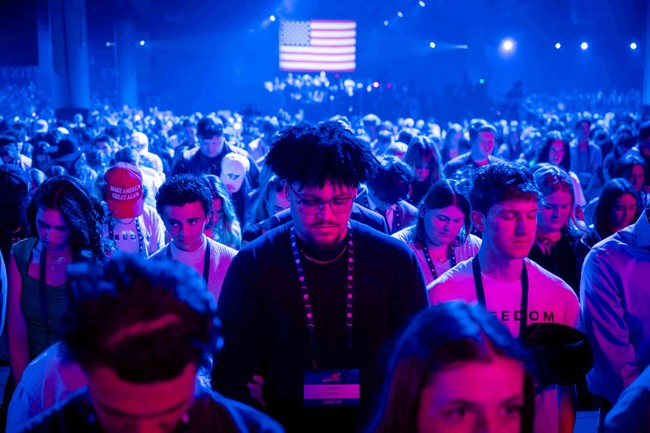
A quick look at a comforting trend: more Americans are choosing prayer over partying as the calendar turns, alcohol use is down overall, younger generations are drinking less, and faith practices remain a steady part of daily life for many people heading into 2026.
Keep the Faith: A Refreshing Bit of News to Start 2026 on the Right Note
I used to ring in New Year’s Eve in different ways, sometimes out with friends and other times quietly at home, but over the years I settled into a simple routine that centers on family and reflection. For me, the moment the clock strikes midnight is about pausing and asking for good health and blessings for the people I love. That small ritual feels like the right way to enter a new year without noise or pressure, and it shows how personal traditions can matter more than public spectacle.
What surprised me recently was seeing the idea of prayer at New Year’s move beyond private practice into something measurable at a national level. A new poll found more Americans reporting that they would say a prayer going into 2026 than plan to have an alcoholic drink to toast the occasion. The numbers suggest a cultural shift in how people mark the transition from one year to the next, and that shift is worth paying attention to.
The poll reported that out of 1,000 registered voters, 44% said they would say a prayer while 39% said they would have an alcoholic beverage, a decline from previous years. That trend fits with broader data showing alcohol consumption decreasing across the population. Observers who study social habits are noting that fewer people nationwide are turning to alcohol as their go-to way to celebrate, and the poll highlights how common prayer remains in American life.
Researchers have pointed out that the decline in drinking is strongest among younger generations, which is striking given how drinking is often portrayed in media and advertising. Even with constant cultural cues encouraging drinking, younger people are choosing different patterns, and that change may influence how future generations celebrate and unwind. The shift also opens a conversation about what people seek for comfort and meaning in stressful or uncertain times.
At the same time, some commentators emphasize that prayer at New Year’s is not necessarily a special, once-a-year event for many people. “Important to note that these numbers reflect the reality [that] many Americans pray every day or on most days. So, it’s not a special New Year’s prayer, just part of life,” he wrote:
That context matters because it reframes the headline as less about a novel ritual and more about the persistence of religious practice in everyday life. For folks whose faith is woven into daily routines, saying a prayer at midnight is simply the next instance in a long habit, not a symbolic departure from a lifestyle of drinking or partying. Recognizing that helps explain why the poll shows prayer as a common response to the new year.
Other research backs up the idea that alcohol use is falling into a longer-term decline. Surveys tracking drinking rates over decades now show a substantial drop in the percentage of adults who report drinking at all. That trend has public health implications as well as cultural ones, and it’s worth watching how reduced alcohol consumption interacts with family patterns, leisure activities, and community life.
Some Americans welcome the move toward quieter celebrations and a renewed focus on faith, community, or personal wellbeing, while others see less drinking as a mixed development depending on the context. The discussion often returns to moderation and choice: there is nothing inherently wrong with celebrating with a drink for those who do so responsibly, but seeing more people opt for prayer or sobriety at midnight reflects a broader variety of ways to mark the moment.
For many families and smaller social circles, a home-based celebration with a prayer is comfortable and meaningful, and it underlines how cultural practices can shift without much fanfare. Personal choices around drinking, faith, and celebration evolve with generations, and the current data suggests Americans are experimenting with different ways to find joy and stability as they move into a new year.
“Choose prayer. Choose courage. Choose beauty. Choose adventure. Choose family. Choose a life of faith. Most importantly, choose Christ.” — Erika Kirk, at Charlie Kirk’s memorial service.

Add comment