
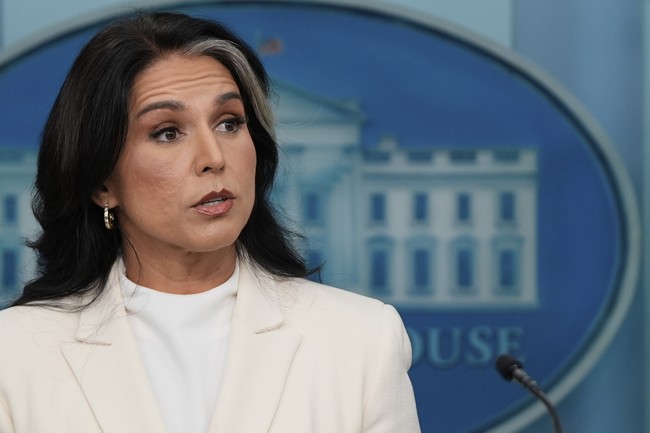
Tulsi Gabbard, now Director of National Intelligence, has released declassified material and sent criminal referrals to the Department of Justice tied to the whistleblower complaint that sparked President Trump’s 2019 impeachment. She accuses a former inspector general and a CIA-linked whistleblower of politicizing intelligence work and undermining trust in our republic. The move has raised questions about accountability inside the intelligence community and who else might face scrutiny. This article lays out the documents, the referrals, and the reactions that followed.
Gabbard used declassified records to outline what she describes as a coordinated effort between some in the intelligence community and Democratic operatives that influenced the impeachment process. She frames the disclosures as essential to restoring transparency and protecting the institutions that keep us safe. The documents, she says, show how badly process was warped when politics got mixed with national security.
“Inspector General Atkinson failed to uphold his responsibility to the American people, putting political motivations over the truth,” Gabbard wrote. She followed that with another pointed line: “And this, along with the politicization of the whistleblower process by a former CIA employee who was working hand in glove with Democrats in Congress, are egregious examples of the deep state playbook on how to weaponize the Intelligence Community.” Those are sharp words for officials who long presented themselves as nonpartisan guardians of information.
Gabbard added, “Exposing these tactics and showing how they undermine the fabric of our democratic republic furthers the critical cause of transparency and accountability and will help prevent future abuse of power.” She treats the release as a foundational step toward fixing what she calls systemic failings. That framing matters because it shifts the discussion from partisan blame to institutional reform—or at least that is how she presents it.
Shortly after the documents went public, Gabbard’s office forwarded criminal referrals to the Department of Justice for the former inspector general and for Eric Ciaramella, the individual identified as the whistleblower tied to the 2019 complaint. The referrals allege possible violations tied to how the complaint was handled and briefed to Congress. Those are serious steps; criminal referrals to DOJ are not routine and signal a determination to pursue legal accountability.
The official referral, according to reporting that summarized its language, seeks to flag “possible criminal activity in violation of federal criminal law committed by one or more former employees of the intelligence community.” It specifically references congressional briefings and the inspector general’s role in notifying members of Congress. The focus is on whether the whistleblower process and related briefings were manipulated for political ends rather than handled strictly within the rules governing classified information and whistleblower protections.
The Office of the Director of National Intelligence sent criminal referrals to the Justice Department for the whistleblower whose complaint helped trigger President Donald Trump’s 2019 impeachment and for the former intelligence community inspector general who notified Congress of the allegations, Fox News Digital has learned.
“I want to refer information that may constitute possible criminal activity in violation of federal criminal law committed by one or more former employees of the intelligence community,” ODNI’s general counsel wrote in the referral to the Justice Department.
[…]
“The possible criminal activity concerns the circumstances described in the following congressional briefings: Discussion with Intelligence Community Inspector General, House Permanent Select Comm. on Intel., 116th Cong. (2019); Briefing by the Intelligence Community Inspector General, House Permanent Select Comm. on Intel., 116th Cong. (2019),” it continued.
Those lines from the referral underscore that this is about the mechanics of how sensitive information was handled and who may have bent rules to achieve a political outcome. Critics long argued that the whistleblower complaint and the subsequent handling by certain officials were irregular. Gabbard’s action brings the dispute back into a legal and procedural arena rather than leaving it as mere political rhetoric.
Voices on the right have pushed the question of who else should be investigated, and attention naturally turns to lawmakers who interacted with the whistleblower or to officials who oversaw the process. One thread of commentary pointedly asked when other figures implicated by the documents would face similar scrutiny. Calls for broader accountability are loud among conservatives who view the 2019 episode as a case study in abuse of process.
This is an absolute gem from the IG Atkinson transcript. When John Ratcliffe exposed Ciaramella for having lied about not being in contact with anyone in Congress, Schiff jumped in to “explain” that when he himself denied it as well, he meant that Ciaramella had not been “permitted to testify,” not that he had not been in contact. No honest person with two functioning brain cells would ever believe this. Schiff should be in court facing charges just as Ciaramella should, and so should the Inspector General.
The released documents themselves are available for review through the DNI’s publication of declassified materials. Reading them shows why the controversy persists: they include testimonies, briefing notes, and internal messages that feed both the legal questions and the political narratives. For those seeking clarity, the papers lay out the sequence of decisions and communications that led to the whistleblower complaint and the congressional response.
What happens next depends on the Justice Department’s willingness to act on the referrals and how investigators interpret the evidence. Legal processes can be slow and precise, and a referral is the opening of a door, not an indictment. Still, for those demanding oversight and consequences, the referrals mark an important escalation in holding officials to account.
The debate now is less about whether mistakes were made and more about whether they rise to criminal conduct and who will be held responsible. Gabbard has framed her actions as a defense of institutional integrity, and her office has put the burden on prosecutors to determine whether the facts merit charges. That dynamic will steer the next phase of this unfolding story.

Add comment