
This article explains the fragile two-week ceasefire meant to open negotiations with Iran, reports of Tehran attempting to interfere with shipping through the Strait of Hormuz, official denials from Oman, President Donald Trump’s blunt public warning, and historical context showing why the world cannot allow Iran to control this choke point.
We are in the middle of a ceasefire intended to hold for two weeks to create space for talks with the Iranian regime. That pause was supposed to guarantee free passage through the Strait of Hormuz while negotiators worked. The underlying problem is simple: Iran has a long record of using the Strait as leverage, and that history makes any agreement fragile.
Recent accounts suggested Iran was still making trouble in the Strait and even trying to charge transit fees to tankers. Those reports alarmed regional partners and sent ripples through global energy markets because any attempt to monetize or restrict transit undercuts the ceasefire. Oman, the country on the southern side of the Strait, publicly rejected one widely circulated claim that it had agreed with Iran to impose tolls for two weeks.
Oman cannot enforce tolls in the Strait of Hormuz, citing its obligations as a signatory to international maritime agreements, per the Transport Minister.
The AP, citing a regional official who had been directly involved in negotiations, reports the ceasefire plan includes allowing both Iran and Oman to charge fees on ships transiting through the Strait and that Iran would use the money it raised for reconstruction.
Even with Oman’s denial, fresh reports kept suggesting Iran might be levying charges or otherwise interfering with transit, which would violate the terms of the ceasefire that require keeping the waterway open. That kind of behavior would be an explicit breach of the agreement and a dangerous escalation. The prospect of Iran asserting control over the Strait cannot be tolerated by free nations that depend on unimpeded shipping lanes.
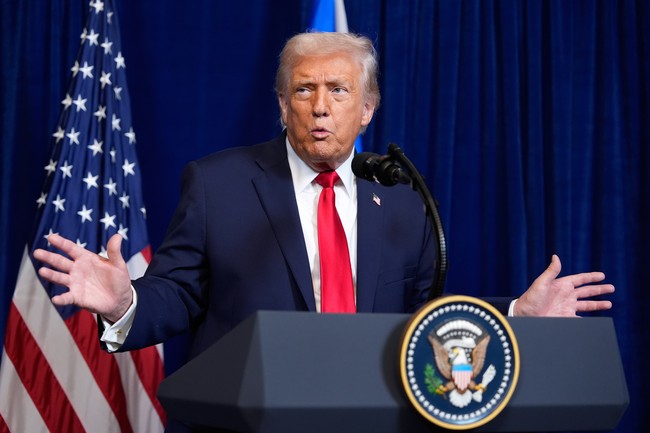
President Donald Trump stepped in publicly and left no doubt where he stands on the issue. His statements called out Iran by name and framed their actions as dishonorable and unacceptable. In that public forum he made clear the United States expects uninterrupted passage through one of the world’s most important maritime chokepoints.
“Iran is doing a very poor job, dishonorable some would say, of allowing Oil to go through the Strait of Hormuz. This is not the agreement we have!” he exclaimed on Truth Social.
Trump also addressed the reports about fees directly and warned Iran to stop any such practice immediately. “There are reports that Iran is charging fees to tankers going through the Hormuz Strait — They better not be and, if they are, they better stop now!” is the exact language he used to put Tehran on notice. That blunt, public admonition reinforces a readiness to hold Tehran accountable for violations.
International law is clear about straits used for international navigation, and customary legal principles back free transit for shipping. The United Nations Convention on the Law of the Sea treats the Strait as an international waterway that cannot be controlled to the detriment of transit rights. Maintaining that principle is not a matter of diplomacy alone; it’s about enforcing norms that keep global commerce moving.
States bordering straits shall not hamper transit passage and shall give appropriate publicity to any danger to navigation or overflight within or over the strait of which they have knowledge. There shall be no suspension of transit passage.
The record shows Iran has repeatedly used harassment, seizures, and threats to exert pressure. During the 1980s Tanker War the United States sent warships to escort neutral tankers through the Strait of Hormuz, a response that established precedent for protecting international shipping. Iran’s pattern of brinkmanship is why swift, decisive reaction is necessary when it tests the rules.
In 2008, Iran threatened to seal off the Strait of Hormuz if sanctions weren’t lifted, a move that U.S. authorities said would amount to an act of war. When the European Union announced a total embargo on Iranian oil in 2012, the Iranian regime once again promised to close the Strait of Hormuz, a move that would disrupt the flow of oil exports from Persian Gulf nations.
In defiance of Iran, the U.S., France and Britain sent aircraft carriers and warships through the Strait of Hormuz, and Iran didn’t make good on its threat.
History shows the world can and must push back when Iran tries to weaponize the Strait. Diplomatic talk is fine as a first step, but credible deterrence is what keeps chokepoints open and commerce flowing. That is why unilateral bluster will not do; it must be matched with real capacity to prevent obstruction of international waters.
The central question now is whether Iran will respect the ceasefire long enough for talks to proceed or whether violations will force a harsher response. You cannot negotiate effectively if one side treats agreements like suggestions. The entire international community has an interest in ensuring the Strait remains open and free from coercive control.



Add comment