
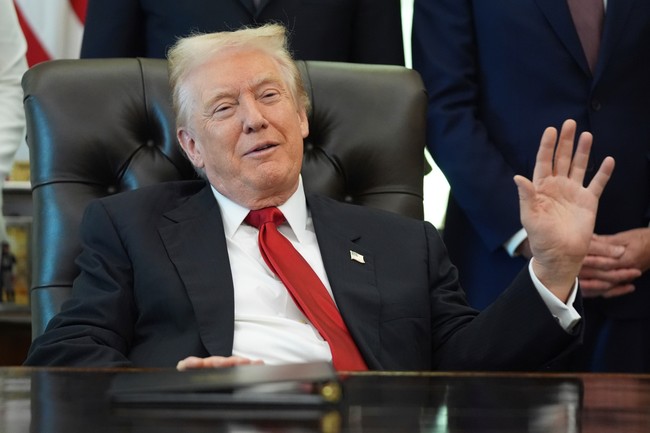
President Trump issued a broad set of pardons for people tied to post-2020-election efforts, including Rudy Giuliani and Mark Meadows, touching off predictable outrage from Democrats while shifting the legal and political landscape as talks around the Schumer shutdown continue.
The weekend buzz centered on the potential end of the so-called Schumer Shutdown, which has thrown Washington into chaos and left many Americans frustrated. While political operatives squabble over blame, the pardon move by President Trump refocused attention on the legal fights stemming from the 2020 cycle. This action was deliberate and unapologetic, signaling a clear stance against what many Republicans deem politically motivated prosecutions.
Trump’s pardons included a long list of names connected to efforts to contest the 2020 results, most notably former New York Mayor Rudy Giuliani and ex-White House chief of staff Mark Meadows. The move covers people charged in Georgia and others accused of organizing alternate electors and challenging vote counts. From a Republican perspective, this is about defending allies who were targeted by a Justice Department that, in the eyes of many conservatives, pursued cases to settle political scores rather than to serve justice.
The administration’s pardon attorney Ed Martin had more: he framed the pardons as responses to actions taken after the 2020 election and tied to alleged schemes to expose fraud and present alternate slates of electors. That explanation puts the pardons into legal and political context, underscoring that these decisions were not made lightly. For supporters, the pardons are a necessary curb on an overreaching prosecutorial approach that threatened basic political participation.
President Donald Trump issued a sweeping pardon to key figures allegedly involved in the plan to arrange an alternate slate of electors and “expose voting fraud” during the 2020 election, according to U.S. Pardon Attorney Ed Martin.
Trump pardoned high-profile individuals allegedly involved in his attempt to overturn the election, including Rudy Giuliani, Sidney Powell, Boris Epshteyn, John Eastman and Mark Meadows — and 72 other individuals allegedly associated with the effort to challenge the 2020 election results.
Expect the left to howl, full of righteous outrage and selective memory about past pardons and commutations. Democrats have little moral cover here, given that prior administrations executed controversial clemency moves of their own. That hypocrisy will be a running theme as media narratives attempt to paint this as unprecedented while ignoring context and precedent.
These pardons do not include President Trump himself, a fact that cuts through some of the overheated speculation from opponents who tried to frame the action as self-serving. Instead, the focus is clearly on allies and others who were prosecuted in cases tied to the 2020 aftermath. For Republicans watching closely, the move is a validation of the concern that legal processes had become weaponized during the post-election period.
The political calculus is immediate: how will these pardons affect ongoing negotiations in Congress, especially talks aimed at resolving the Senate-driven shutdown discussions? The response from Democrats will likely be theatrical and furious, but the practical impact matters more for legislative deals. This action complicates relationships but also forces the issue into the open, making it harder for opponents to play the victim while continuing to pursue partisan prosecutions.
For voters outside the Beltway, the spectacle of legal skirmishes and inter-party melodrama is wearisome, and many will see these pardons as another twist in a long saga about fairness in the justice system. Conservatives argue that the pardons are corrective, pushing back against prosecutorial excess and protecting political speech and strategy. The broader fight over how elections are contested, what counts as legitimate legal action, and where the line is between advocacy and criminality will continue to play out in courtrooms and in the court of public opinion.
This is a high-stakes moment with clear partisan lines and real legal ripple effects. The aftermath will be loud, partisan, and consequential, and it will shape the debates about prosecutorial discretion and political accountability for months to come. Whether you cheer or jeer, these pardons mark a decisive move in a long-running national argument about law, politics, and the limits of federal power.


The were all “novel” charges to begin with…
…they came up with new crimes to fit their charges
If every politician who challenged elections was jailed, we certainly would have few politicians walking the streets…
LOVE IT! What a brilliant move from a brilliant President Trump. I doubt the Democrat leadership will try to bring this one to an appeal court! That will really expose their weaponization “political lawfare”! However, be prepared for the WH theatrical and hypocrisy to come out as usual. Maybe they should stop their non-sense and get to work! Obviously, we know those are fighting word. GET TO WORK.
Righteous Pardons!! God bless America! I’m amazed at how brilliant our Forefathers knew back in that time to put in the check and balances into the Constitution except the Biden “Auto-pen” pardons? But the Biden rogue Administration always disregarded that pesky Constitution always causing a C. crisis!