
Checklist: Reframe the announcement, explain the executive order’s aims, present key quotes intact, outline the roles of Trump, Robert F. Kennedy Jr., and Jay Bhattacharya, and note the shift toward parental choice and international comparison in vaccination policy.
President Trump signed a new executive order aimed at changing how childhood vaccinations are recommended and discussed in this country. The directive is framed as restoring parental choice and aligning U.S. childhood vaccine guidance with practices used in peer nations. Supporters cast it as a correction to what they describe as a bloated schedule and an attempt to rebuild trust between families and public health authorities. The move immediately became the focal point of sharp debate across public health and political circles.
The order reportedly narrows the official “gold standard” childhood vaccine recommendations to 11 core vaccinations addressing the most serious diseases, and it singles out the MMR vaccine for potential reconfiguration. Officials argue the change responds to comparisons showing the United States recommends more childhood vaccines and more doses than some European peers. That comparison is driving the administration’s pitch: fewer, more targeted recommendations that emphasize parental decision-making.
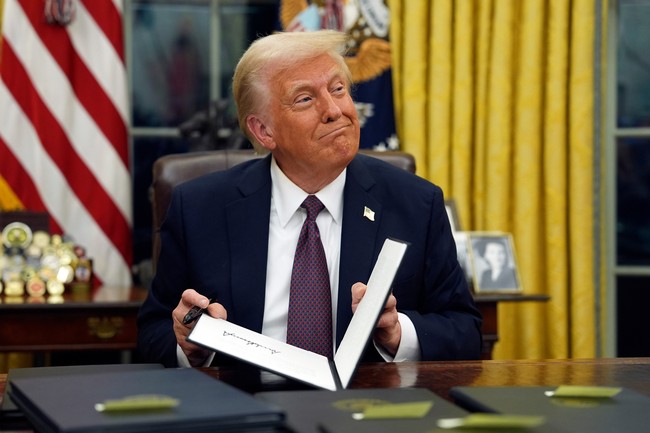
At the signing ceremony the president framed the change in blunt, populist terms, saying the prior approach asked too much of parents. He called out what he characterized as an excess of doses and framed the new policy as restoring common sense. Those comments were delivered in a direct style meant to reassure families who feel their concerns were previously sidelined. The administration presents this as a matter of freedom and transparency.
https://x.com/RapidResponse47/status/2086891991502147758
.@POTUS: For far too long, America has recommended more childhood vaccines than any peer nation, and even twice as many doses as some European countries. In many cases, we were requiring 72 jabs for our beautiful, healthy, lovely, delicate little children. Effective immediately, my administration’s recognizing Gold Standard childhood vaccine recommendations for only 11 core vaccinations against the most serious and dangerous diseases, along with the MMR. We want it in three separate vaccinations, given at separate times.
The president was flanked by HHS Secretary Robert F. Kennedy, Jr. and NIH Director Jay Bhattacharya, two figures who have been outspoken about vaccine policy in recent years. Kennedy emphasized questions around environmental factors and autism, repeating a line of inquiry he has pursued publicly. His remarks pushed the conversation toward investigating causes and exposures rather than presuming settled answers. That emphasis dovetails with the administration’s promise to reevaluate recommendations through a lens the public will see as more cautious and family-centered.
Kennedy stated, “We’re only noticing [autism] in kids who were born around 1989 or after. The older generations are not seeing those increases. So something happened in the mid ‘90s that changed our children, and it has to be an environmental exposure. You need an environmental toxin.” Those words were used to justify more study and to underline why some parents remain uneasy about the status quo. By foregrounding historical patterns, Kennedy urged officials to look beyond current assumptions. That line of argument will likely spur calls for new investigations and policy reviews.
Jay Bhattacharya described the directive as restoring autonomy for families and rebalancing the public health relationship with parents. He portrayed the change as consistent with science while also correcting what he called a one-size-fits-all approach to recommendations. That framing is intended to ease tensions between experts and communities that feel left out of the decision-making process. It signals an administrative priority: emphasize parental authority without abandoning evidence-based public health.
.@NIHDirector_Jay: “What this does is it restores the autonomy of families and parents to make good decisions for their kids. It allows and continues to emphasize the importance of science in the recommendations about vaccines, and fundamentally restores a healthy relationship between public health and parents.”
Critics will highlight risks of deviating from longstanding immunization schedules and warn about potential public health consequences. Supporters counter that restoring choice and aligning with peer-country practices will rebuild public confidence and reduce resistance. The administration insists the policy preserves parental options, including the ability to follow the expanded schedule if families prefer. That flexibility is central to the political case being made for this change.
This executive order marks a clear policy pivot by elevating parental decision-making and international comparison in vaccine guidance. It places top-level medical figures in a role of reassessment and signals the administration’s intent to prioritize perceived transparency and autonomy. The debate over the order is likely to play out in hearings, state policy decisions, and public discussion as both sides marshal evidence and public opinion. What happens next will hinge on how health agencies translate the directive into practical guidance for families and clinicians.

Home-based job that pays more than 12,000 Dollar per month by doing simple tasks on a laptop or mobile device part-time. Last month, I earned 24,863 Dollar from this job by working 4 hours per day online. Very simple jobs to do, and the earnings are insane. Everyone can now make more money online by joining the website listed below…..
𝒋𝒖𝒔𝒕 𝒖𝒔𝒊𝒏𝒈 𝒕𝒉𝒊𝒔 𝒔𝒊𝒕𝒆.. Www.PayAtHome1.Com