
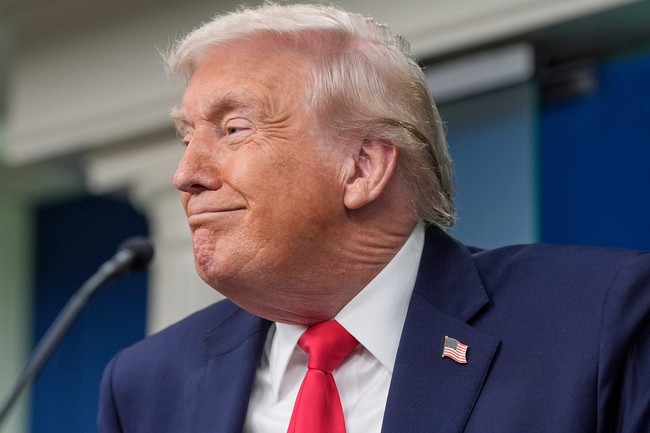
I’ll walk through the moment President Trump endorsed Sen. Susan Collins, explain why that matters for the Senate, unpack Graham Platner’s vulnerabilities, include Trump’s exact comments, and map out how this race could shape control of the upper chamber.
President Trump surprised some observers with a blunt, amused endorsement of Sen. Susan Collins in Maine, framing the race as a clear, binary choice. He made the point plainly: Collins may differ on items, but she is preferable to a radical left opponent. For conservatives worried about the Senate math, that clarity from a national Republican figure matters more than theater. This endorsement shifts the narrative from personality to consequence.
The race in Maine has always been a test of political survival for Collins, who has long outperformed polling in a state that leans blue. That track record puts her in a unique spot: she occasionally breaks with conservative orthodoxy but has proven she can win in a challenging environment. For Republicans, the vote isn’t about personal affection; it is about preserving a seat that could be pivotal for confirming judges and protecting policy wins. Losing it to a leftist would hand Democrats more power to reshape law and regulation.
https://x.com/EricLDaugh/status/2064738288934559837
Trump’s message boiled things down to character and reliability, not social graces. He underscored Collins’ voting record and contrasted it with the campaign and behavior of Graham Platner. In plain terms, he argued that Collins is a steady if imperfect choice, while Platner represents a disruptive alternative. That framing is useful for voters who weigh stability and Senate control over ideological purity.
Trump’s exact words are preserved here to avoid any distortion of tone or intent.
“She does because she’s a sane woman. She’s not my best friend at all,” Trump said.
“But she’s a sane person. She’s a person that’s never missed a vote in many years. I mean, she’s like 10,000 votes. She had 10,000 votes. She never missed a vote. Unfortunately, because sometimes she voted against me!
“You know, look, she’s a sane woman, and she’s a respected person. Maybe a little different ideology than me.
“But this guy is a thug. He’s a fake thug. He’s a phony. I made a lot of money picking out phonies. He’s a real phony. He’s a bad person.”
Those quotes matter because they shift the focus back to practical consequences and away from headline-grabbing theatrics. Calling out Platner as a “phony” and a “bad person” is blunt, but it’s designed to crystallize the risk he represents to conservative priorities. For Republican-leaning voters, the question is simple: can the GOP afford to lose a seat that could swing pivotal votes? The answer for many will be no.
Platner’s campaign has been tripped up by controversies and comments that feed a narrative of instability and radicalism. Republicans can point to those gaffes as proof that his nomination would be a political hazard for Maine and for Senate control. The steady drumbeat of problematic statements undermines his appeal to independents and moderate voters who decide tight statewide races. A candidate who can’t stop talking himself into trouble is a liability in November.
Collins, for her part, has taken some conservative-friendly positions recently, demonstrating a willingness to work with GOP priorities when possible. That makes her a pragmatic pick in a blue state where ideological purity often loses elections. For Republicans weighing long-term strategy, backing a known incumbent who sometimes breaks with the party but votes for key items can be the smarter play than gambling on an unpredictable opponent. Senate control depends on those strategic calculations more than symbolic gestures.
The practical reality is that every seat counts. If Democrats flip Maine, they gain leverage to block confirmations and pursue legislative priorities that would undo conservative victories. Protecting the Senate majority is not about rewarding loyalty alone, it’s about ensuring a functioning veto against radical shifts. That calculus informs why the endorsement carries weight beyond mere personality politics.
Looking ahead, the campaign will hinge on whether Platner’s controversies continue eroding his standing and whether Collins can consolidate support across the center. Expect the next months to focus on walk-back moments, independent voter polling, and the relentless framing of the choice as one between sanity and chaos. For Republicans, the task is to keep that frame front and center while reminding voters what control of the Senate buys in terms of judges and policy.
Whatever the noise, the core question remains unchanged: will voters pick steady experience that preserves a critical Senate seat, or will they hand that seat to a nominee who promises extreme shifts? The stakes are clear, and the coming weeks will show whether the endorsement helps tilt Maine toward preserving conservative influence in the upper chamber.



Add comment