
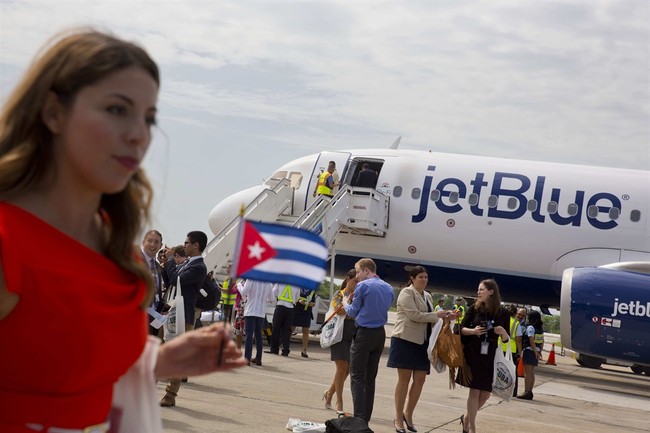
The Trump administration’s tighter restrictions on oil shipments to Cuba have pushed the island toward an aviation fuel crisis, and that squeeze is being framed as a deliberate policy to pressure the communist government into change. This article examines the shortfall, its causes, the likely military and civilian consequences, and why Republicans see economic pressure as a legitimate lever against authoritarian regimes in America’s hemisphere.
Cuba’s reported jet fuel shortage, announced in a Notice to Aviation, is not a minor supply hiccup; officials warn reserves could run dry for roughly a month beginning February 10. The shortage follows U.S. moves to block refined products from Venezuela, historically Cuba’s main supplier, and the timing and duration of the cutoffs reflect a strategic decision. From a Republican perspective, squeezing an unfree regime’s access to key imports is smart pressure that aims to avoid direct intervention while raising the domestic cost of authoritarian rule.
Cuba warned international airlines that jet fuel will no longer be available on the island beginning on Tuesday in the latest sign of fast-worsening conditions as the United States moves to cut off the communist-run nation’s oil supply.
The shortfall is set to last from February 10 through March 11, according to a Notice to Aviation (NOTAM) published late on Sunday, and comes just two days after top officials said air travel would not be impacted by a fuel rationing plan announced on Friday.
The mechanics are straightforward: block the primary supplier and make alternative shipments expensive or politically risky. The administration has publicly threatened tariffs on nations or companies that try to bypass the restrictions, effectively narrowing Cuba’s options. That approach is punitive by design and intended to heighten internal pressure on Havana’s rulers without putting American troops on the ground.
Who suffers first when jet fuel disappears? Commercial aviation and tourism get hit immediately, but so do supply chains that rely on air cargo for time-sensitive goods. Airlines that fly to Havana will have to reroute, suspend service, or arrange costly fuel stops outside Cuban airspace. The result will be fewer visitors, less foreign currency coming in, and a sharper economic contraction that hits a regime already struggling to meet basic needs for its people.
Cuba has historically relied on Venezuela to provide much of its jet fuel, but the Caribbean island nation has not received any crude or refined products from its top ally since mid-December, when the U.S. moved to block the South American nation’s exports.
U.S. president Donald Trump has since vowed Cuba would receive no more oil from Venezuela and has threatened to slap tariffs on any nation sending fuel to Cuba, effectively cutting off the island’s supply of aviation gas.
Critics will call this cruel; Republicans answer that economic pressure is preferable to military action and sometimes the only peaceful option that actually alters behavior. Cuba’s leadership has long prioritized regime survival over citizens’ welfare, funneling scarce resources into security forces and political patronage. Denying access to strategic imports forces Havana to make visible tradeoffs and exposes the regime’s priorities to its own population.
On the military side, observers wonder whether Cuba’s armed forces retain usable stocks of aviation fuel for their aging fighters. Even if some reserves exist, the island’s maintenance struggles and limited spare parts mean those planes would be hard-pressed to mount an effective offensive—especially against modern U.S. carrier-based jets. From a strategic view, the risk of any Cuban military action against American assets in the region is minimal, while the diplomatic and economic costs of continued inaction by the U.S. are more tangible.
There are also geopolitical signals here. Cutting off Venezuela-to-Cuba shipments sends a message across Latin America: the United States will use economic levers to isolate regimes that threaten regional stability or violate human rights. That message is aimed at both allies and adversaries, suggesting the administration prefers coercive diplomacy backed by concrete penalties rather than vague statements or symbolic sanctions.
Some will argue that shortages will primarily harm ordinary Cubans and that tightening the squeeze risks humanitarian fallout. Responsible policy can and should include humanitarian exceptions and oversight to ensure medical supplies and foodstuffs keep moving. Still, allowing the regime to continue business as usual while depriving its people of political freedom is the status quo that critics of current policy say we must change.
Pressuring an entrenched authoritarian regime through its economic lifelines is a tactic with historical precedent and practical force. It aims to raise the stakes for leaders insulated by ideology and patronage, making the cost of repression more obvious to those they govern. For Republicans favoring strong, decisive measures short of boots on the beach, cutting off key imports is a tool that puts leverage in the hands of policymakers and relief in the hands of the Cuban people if it leads to political opening.

Add comment