
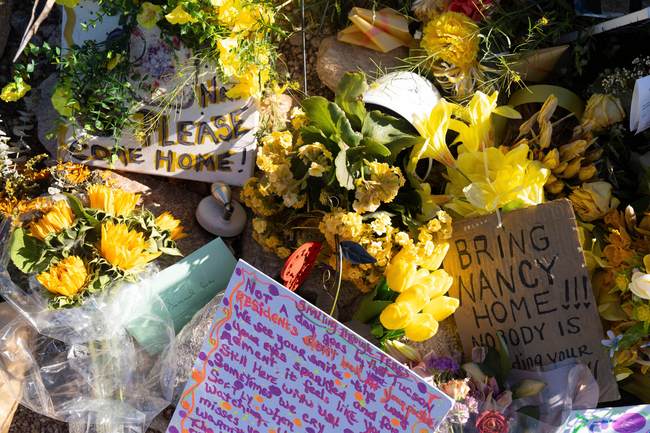
Savannah Guthrie returned to the Today show after her 84-year-old mother was reported missing, and her Easter message sparked a mix of reactions because she publicly questioned whether Jesus experienced the same kind of anguish created by uncertainty and unanswered pain. She spoke about grieving, doubt, and faith in plain terms, and the conversation that followed online showed how raw and complicated public faith can become when paired with a personal crisis.
Savannah Guthrie Questions Jesus in Easter Message in Context of Her Mom’s Abduction, and I Have Thoughts
Savannah Guthrie came back to the Today set for the first time since her mother Nancy was reported missing on February 1. The anchor chose yellow for her return, a color tied to the family and supporters during the ongoing search for the 84-year-old grandmother.
Her co-hosts and the set echoed that color, adding a visible note of solidarity while viewers watched a family trying to live through an uncertain nightmare. The disappearance, last seen when Nancy was dropped off around 9:45 pm on January 31, remains unresolved and has kept the story in the public eye.
The day before Guthrie returned to the studio she released an Easter video message that leaned into faith and honest questioning. Over the last two months she and her siblings have released messages centered on faith, painting their mother as a woman of strong belief and grounding.
In the new message Guthrie allowed herself to speak about disappointment with God and moments when she wondered if Jesus had ever felt the same particular sting of not knowing. She asked aloud whether Jesus experienced the “grievous and uniquely cruel injury of not knowing, of uncertainty and confusion and answers withheld.”
Guthrie went further, working through the idea that even the story of resurrection leaves room for questions about what Jesus felt in the hours of his death and what he knew about the time in the grave. She processed doubt without abandoning belief, ultimately returning to faith while acknowledging the rawness of family pain.
Guthrie explained that she was taught that “Jesus, in his short life, experienced every single emotion that we humans can feel.” However, in her own “season of trial,” Guthrie has “questioned whether Jesus really ever experienced this particular wound that I feel, this grievous and uniquely cruel injury of not knowing, of uncertainty and confusion and answers withheld in those darkest moments.”
The “Today” anchor then said that, after pondering the story of Jesus’ resurrection, she came to realize that maybe he had his own questions for God before his death.
“But after Jesus died, after he breathed his last, what did he actually know on the cross? He cried out, ‘My God, my God. Why have you forsaken me?’ That is the anguished cry of someone who does not know the answers,” Guthrie said. “Where did his soul and his spirit go in those days in between? And what was he thinking? Did he think his time in the grave would be a day or two, or 1000 years in the grave? Does his agony seem indefinite to him? That torment of uncertainty, the way indefinite pain can feel eternal. Perhaps he did know this feeling after all.”
She ended the reflection by offering a way back to belief, describing how the resurrection story reframed uncertainty rather than erased it. That return to faith, offered publicly on Easter Sunday, is what made the message both intimate and unavoidable for a national audience.
The clip prompted a wide range of online responses, partly because some versions circulated with edits that removed context and softened her conclusion. Short, cut-up reposts left out the resolution she reached at the end, which fuelled criticism and misunderstanding among viewers who only saw fragments.
Others watched the full message and still bristled at the timing, saying they found it odd to bring up such questions on Easter, while a few were offended that anyone would measure a family’s suffering against the passion of Christ. At the same time, many recognized a familiar struggle: believers who face life’s worst moments often wrestle with faith in public or private.
I found Guthrie’s remarks to be a strikingly human example of that wrestling—an honest, imperfect conversation shared under intense scrutiny. Families living through the disappearance of a loved one face a pain that defies tidy answers, and putting those questions into the open invites discomfort as well as compassion.
People who have gone through illness or loss will recognize the terrain: anger at the world, raw questions aimed at God, occasional shame for having asked them, and then the slow, stubborn movement back toward trust. Guthrie’s full message suggests she is moving through that arc, even as the family waits for answers.
Whether you agree with how she expressed it or not, the episode shows how personal tragedy can turn private doubts into public conversation, and how faith can bend without breaking when tested by real, unanswered pain. The Guthrie family is still living the uncertainty, and her Easter reflections made that reality visible to a lot of people at once.
Watch:



Surprising! I’ve been making 100 Dollars an hour since I started freelance on the Internet six months ago. I work long hours a day from home and do the basic work that I get from the business I met online. share this work for you opportunity This is definitely the best job I have ever done…
just use the info on this page .====> PayAtHome1.Com