
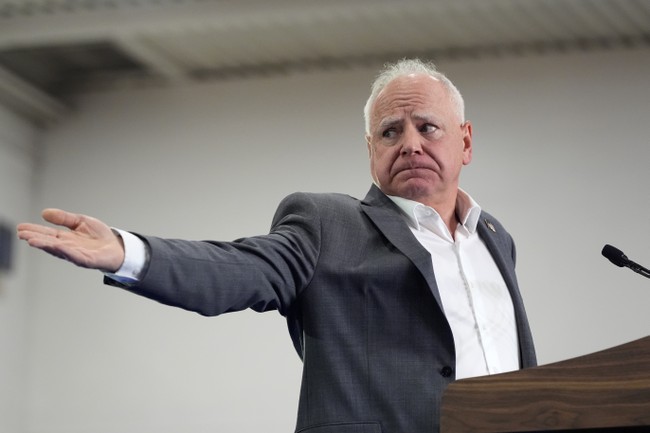
Tim Walz has dropped his reelection bid amid a sweeping fraud scandal, and independent journalist Nick Shirley is taking credit after a viral exposé pushed the story into the national spotlight. The governor tried to pivot blame toward President Trump while touting achievements, but critics point to negligence and unanswered questions about a program called “Feeding Our Future.” This piece walks through the fallout, the viral videos that ignited public scrutiny, and the political ironies that followed.
Minnesota Gov. Tim Walz announced he would not seek reelection as a massive fraud probe unfurled in his administration, and for many conservatives that decision was long overdue. Rather than own the crisis, Walz attempted to frame his exit by blaming national politics and President Donald Trump, calling the alternative a “colder, meaner place.” That line landed as tone-deaf to voters who wanted accountability at home.
Walz released a video through his daughter’s account where he listed policy wins and painted a rosy picture of his tenure, claiming achievements like “feeding our kids.” Those words stung because the “Feeding Our Future” program sits at the center of the scandal and may have cost taxpayers billions. Trying to celebrate while a major state fraud probe grows only deepens the impression of dodging responsibility.
Independent journalist Nick Shirley emerged as a central figure after posting a video that went viral, drawing more than 130 million views and pushing the issue into mainstream conversation. That kind of reach mattered in getting reporting and public pressure rolling, and Shirley’s followers celebrated what they saw as a win for transparency. From a Republican perspective, it reinforced that citizen journalists and new platforms can check government failures when legacy outlets lag behind.
Walz lashed out at Shirley, labeling him a “far-right YouTuber” and a “delusional conspiracy theorist,” opting to attack the messenger rather than answer the substance of the allegations. Those personal jabs looked defensive and only fueled suspicion among voters who wanted clear answers about how taxpayer dollars were mishandled. When officials deflect, it opens a political space for independent reporting to gain traction.
Social platforms played a decisive role in circulating Shirley’s work, and reactions were swift. Elon Musk, owner of X, replied, “Thank God.” That short response echoed with supporters who argue that platform shifts have loosened the old gatekeeper control over which stories reach the public. For many conservatives, this was proof positive that free speech reforms on social platforms can expose wrongdoing faster than traditional channels.
Shirley credited the freedom of X for allowing his reporting to spread, a claim that highlights how platform policy changes can alter the information landscape. Had two decades of content moderation norms held, some argue, this kind of viral investigation might have been suppressed or sidelined. The moment feeds into a broader Republican narrative about decentralizing influence from institutional media to individual creators.
Beyond the scandal itself, there’s a side story involving former ire directed at Elon Musk and Tesla from Walz and other left-leaning figures who disliked Musk’s decisions. Walz once celebrated a dip in Tesla’s stock when it was trading near 225 in March 2025, a number that looks quaint now with shares above 450. That contrast has become a favorite detail among critics who point out political theater that didn’t age well.
Tesla’s rebound and Musk’s resilience add a layer of poetic justice in the eyes of many conservatives: the governor attacked a successful entrepreneur and ended up losing political ground while the business in question prospered. It’s tempting for opponents to savor that irony, and for Republican commentators it underscores the risks politicians take when they posture against market success. In the end, voters are less interested in cheap shots and more in accountability and performance.
The scene in Minnesota will continue to evolve as investigations proceed and state officials respond to demands for transparency. Until then, Shirley’s viral coverage, the platform dynamics that amplified it, and Walz’s retreat from the race will be the dominant threads in the story. For now, the political fallout looks like a warning: mishandled programs and dismissive responses can make a quick path from local scandal to political exit.
Add comment