
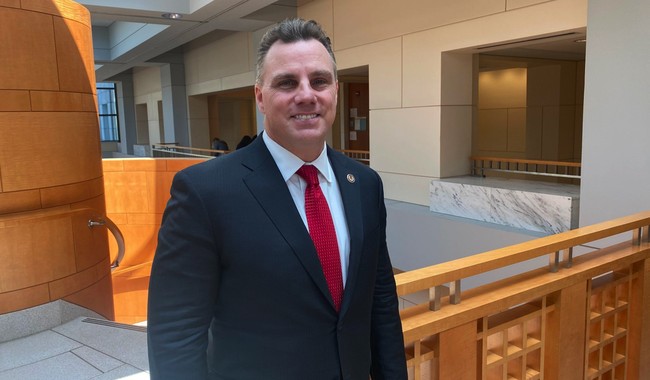
Michael Gates, a former Huntington Beach City Attorney and ex-Deputy Assistant Attorney General, has announced a campaign for California Attorney General promising to prioritize public safety, enforce existing laws, and restore trust in elections and local governance. His message stresses backing law enforcement, holding homelessness programs accountable, pushing back against Sacramento overreach, and defending parental and voting rights. Gates frames his run as a fight for residents over special interests and positions his record in Huntington Beach and the DOJ as proof of practical experience. The announcement has already drawn attention from GOP figures who view his entry as a key piece of a broader effort to change California politics.
Gates says California “deserves so much better” and argues the state currently shields criminals, wastes taxpayer dollars, and undermines local control. He promises that “If we are not safe, nothing else matters,” and vows to make public safety his top priority. That approach includes enforcing laws, supporting police, and pushing for local enforcement of anti-camping and anti-drug ordinances. Gates positions himself clearly against defunding police and for stronger accountability across municipal programs.
He also promises to confront Sacramento policies he sees as environmentally heavy-handed, insisting state mandates must not trample local authority or common sense. On elections, Gates pledges to “enforce our election laws to restore public confidence.” For voters skeptical of statewide officials and bureaucracy, that emphasis on election integrity is meant to signal a return to transparent, accountable administration. His background in both city government and the Justice Department is presented as the experience needed to enforce laws statewide.
Gates’ career began in Huntington Beach, where he served as City Attorney from 2014 until 2025, and he later took a post in the DOJ’s Civil Rights Division as a Deputy Assistant Attorney General. He resigned that federal role in November 2025 and returned to local life, a move his campaign portrays as recommitment to California residents. Supporters highlight his Huntington Beach record, especially on election-related issues, as an example of practical results. That record is central to his pitch that a change in the Attorney General’s office can produce tangible outcomes.
On the topic of voter ID and election integrity, Gates was involved in litigation after Huntington Beach adopted a ballot measure requiring voter ID at the polls in 2024. The city initially won a lower court ruling that upheld the measure and drew praise from Gates, who said, “It’s a massive black eye to the state of California,” and warned that Huntington Beach would not be intimidated or deterred. That victory was later overturned by a state appeals court, which ruled that cities lack authority to set voting requirements that conflict with statewide rules. Gates and his allies point to this back-and-forth as evidence of Sacramento overreach and the need for a statewide official willing to defend local initiatives where appropriate.
Gates laid out his agenda bluntly in public remarks and social posts, promising to “enforce the law, defend our police and sheriffs departments, protect parents’ rights, ensure elections integrity, and stand up for Californians.” He frames those priorities as basic duties the Attorney General should fulfill, not political stunts. That messaging is intentionally direct and appeals to voters tired of crime, homelessness, and perceived erosion of civil order. It also ties into broader Republican themes of law, order, and local control.
Prominent GOP figures have welcomed Gates’ entry into the race, viewing it as a necessary counterweight to the current administration in Sacramento. One gubernatorial contender publicly celebrated adding Gates to a joint ticket concept that would challenge the status quo and “Make California Golden Again.” For Republicans and independents who want a tougher stance on crime and election enforcement, Gates’ candidacy offers a concrete option in a state where such positions often face uphill battles.
The campaign narrative stresses accountability across homelessness programs, claiming they too often spend large sums with little result. Gates vows to demand measurable outcomes and to enforce existing anti-camping and anti-drug laws so cities can reclaim public spaces. That stance appeals to voters frustrated by visible failures in policy execution and the sense that local officials are sidelined. His promise to prioritize results over rhetoric is central to the campaign pitch.
As the race develops, Gates’ mix of municipal experience and federal service sets up a clear contrast with the current statewide leadership. His supporters argue California needs an Attorney General who will defend residents’ interests first, back law enforcement, and push back on Sacramento when state power tramples local decisions. The campaign will test whether that message resonates widely enough to change the state’s political direction.
Election fights and legal disputes tied to Huntington Beach’s policies have already drawn statewide attention, underscoring the stakes of who holds the Attorney General’s office. Gates’ announcement makes those stakes explicit and puts a Republican candidate with courtroom and city hall experience into the mix. Observers will be watching how his promises translate into a campaign platform and whether they attract the broader coalition needed to win statewide office.
Gates’ entrance is being discussed alongside other statewide GOP efforts to reclaim offices and influence policy from Sacramento. Supporters hope victories could lead to stronger voter ID measures, tougher law enforcement policies, and greater local autonomy. The campaign frames itself as part of a larger push to restore common-sense governance and accountability across California.
Add comment