
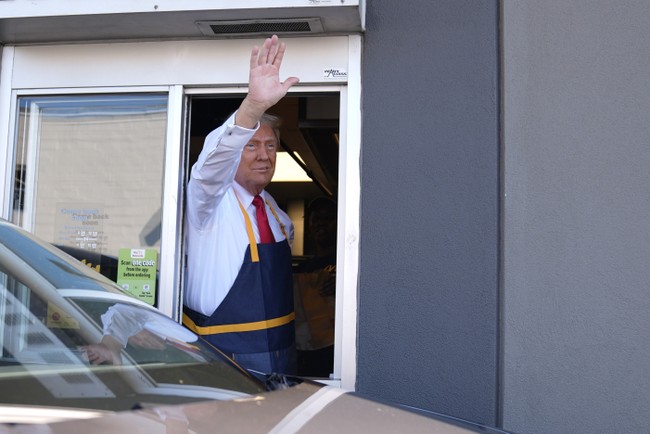
I’ll unpack the McDonald’s CEO’s blunt career counsel, explain why personal responsibility matters more than waiting on others, tie that to the role of first jobs like McDonald’s in shaping work habits, and show how a simple ethic of showing up, working hard, and learning can move a life forward.
Chris Kempczinski, CEO of McDonald’s, delivered a simple message about career ownership that cuts through excuses and entitlement culture. He told people to treat their careers like something they alone must steward, not a path someone else will hand them. That plain truth resonates especially with Americans who believe in self-reliance and hard work.
Early jobs teach habits more than titles ever will, and McDonald’s has been a training ground for generations of young workers. Lots of adults got their first taste of responsibility working late shifts, handling money, and dealing with customers. Those small, repetitive tasks build the muscle memory of dependability employers value.
The core of Kempczinski’s point is relentless accountability: own your path and stop waiting for chance or patronage to do the heavy lifting. In his own words, “The advice I would give is: remember, nobody cares about your career as much as you do,” Kempczinski said. “So this idea that there’s somebody out there who’s looking out for you, who’s going to make sure that you get that opportunity, who puts you in the right thing — great if it happens — but at the end of the day, nobody cares more about your career than you do.”
That’s not harshness for its own sake; it’s a strategy. When you accept that no one else will prioritize your climb, you begin to act differently—showing up early, staying late, asking questions, and taking on work others avoid. The cheap excuses fall away once you stop treating career progress like a lottery and start treating it like a daily practice.
There are three practical habits behind that ethic: arrive early, outwork the competition, and learn continuously. Those are not glamorous, but they produce results. Commitment to those habits compounds over months and years in ways a resume boost alone cannot replicate.
In a video posted to his Instagram account earlier this week titled “Tough Love with the McDonald’s CEO,” Kempczinski encouraged people to take full ownership of their professional journeys rather than waiting for others to open doors for them.
“The advice I would give is: remember, nobody cares about your career as much as you do,” Kempczinski said. “So this idea that there’s somebody out there who’s looking out for you, who’s going to make sure that you get that opportunity, who puts you in the right thing — great if it happens — but at the end of the day, nobody cares more about your career than you do.”
Responsibility is not a moral cudgel; it’s the lever that moves a life. If you look around and don’t like the results, the first check is to look in the mirror and adjust behavior. That applies across relationships, finances, health, and certainly work. Personal accountability is the conservative virtue that produces stable families and productive citizens.
There’s a common saying often tied to Thomas Edison that opportunity usually shows up wearing overalls and looking like work. The point holds: the visible, boring work is the shape of opportunity. Focusing on titles and recognition misses the fact that a career is an accumulation of tasks done well over time.
That accumulation starts with simple actions anyone can take. Be reliable so managers can trust you. Volunteer for the difficult tasks so you gain rare experience. Keep learning on your own time so you stay ahead when promotion season arrives. Those actions change the odds in your favor faster than hoping for a savior.
For conservatives, this message aligns with a belief in earned success and individual dignity through labor. When people take ownership, they not only improve their economic standing but also contribute to community stability. Encouraging that mindset in young workers is both practical and patriotic.
He added, “So you’ve got to own it. You’ve got to make things happen for yourself.”
That line is short, direct, and true. It cuts past entitlement talk and points to a way forward everyone can use: do the work, own the result, and refuse to outsource responsibility. Careers rise and fall on choices made daily, not on lectures or policy promises.
Start small and keep at it; careers are long projects built from steady habits. The people who win most often are not the luckiest but the most consistent. If you want different outcomes, choose different daily actions and accept that your future is primarily yours to shape.

Add comment