
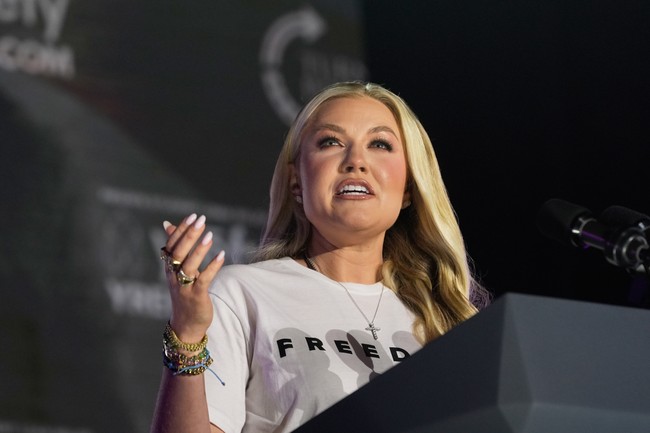
Erika Kirk announced she will meet privately with Candace Owens after weeks of public tension following Charlie Kirk’s assassination, pausing livestreams and public back-and-forths while both sides prepare for a face-to-face conversation that could settle a high-profile rift within conservative circles.
Erika Kirk posted on X that she and Candace Owens will hold a private, in-person discussion on December 15, and that public discussions, livestreams, and tweets are on hold until after that meeting. The move shifts a noisy public feud into a quieter, controlled setting and signals Erika’s preference for direct dialogue over spectacle. It also forces Owens and others who’ve been speculating publicly to stop for now and see what happens in private. For conservatives watching closely, the meeting is both a test of decorum and an opportunity for resolution.
Candace Owens has been loudly promoting speculative theories about who was behind Charlie Kirk’s murder, and those claims have only inflamed grief and suspicion in some quarters. Many of Owens’ comments have suggested broader conspiracies, touching on foreign actors, hidden networks, and even insiders at Turning Point USA. Those claims arrived amid an active law enforcement investigation and a singular arrest, and they drew sharp rebukes from people who saw them as harmful and unfounded. For Erika, whose life has been upended, public insinuations about motives and conspiracies became a personal affront.
On Fox News’ Outnumbered, Erika pushed back forcefully about attacks aimed at her family and Turning Point circles, saying, “When you go after my family, my Turning Point USA family, my Charlie Kirk Show family, when you go after the people that I love, and you’re making hundreds and thousands of dollars every single episode going after the people that I love because somehow they’re in on this, no.” That line underscored how raw emotion and accusations have turned private tragedy into public spectacle. It also made clear she was willing to defend the people close to her while still choosing a private meeting to handle the conflict with Owens.
After that appearance, Erika announced the in-person discussion, writing, “Candace Owens and I are meeting for a private, in-person discussion on Monday, December 15. @RealCandaceO and I have agreed that public discussions, livestreams, and tweets are on hold until after this meeting. I look forward to a productive conversation. Thank you.” Those exact words set the terms: no more public drama until the private sit-down is complete. For a movement that values truth and accountability, pausing the public noise is a sensible step.
Many on the right have taken notice: some praise Erika’s restraint and willingness to engage directly, while others remain skeptical of Owens’ motives and methods. The debate reflects larger tensions in conservative media between court-of-opinion theatrics and disciplined, evidence-based argument. Erika’s choice to dialogue privately suggests she wants a resolution grounded in facts and human connection rather than clicks and conspiracy. That approach appeals to those who think conservatism should model steadiness in crisis.
Candace Owens’ vocal theories about the assassination have provoked pushback not only because of their content but because of timing and tone, given the immediate aftermath of a brutal murder. Critics argue that speculative public accusations can distort ongoing investigations and harm grieving families. Supporters of Owens counter that tough questions are necessary and that the public deserves answers. The private meeting will be watched for whether it produces clarity or simply postpones another round of public disagreement.
Erika’s statement that livestreams and tweets are on hold creates a clear boundary for a movement in turmoil: a temporary ceasefire that could restore some decorum. If the meeting yields mutual understanding or at least a more respectful public posture, it could prove a turning point for how such disputes are handled in conservative circles. If it fails, expect the same sharp rhetoric and factionalism to re-emerge. Either outcome matters because it will shape media behavior and how the movement responds to internal crises going forward.
The stakes extend beyond two personalities. How this private conversation plays out will influence trust between activists, commentators, and organizations tied to Charlie Kirk’s legacy. Conservatives who want the movement to retain credibility need leaders who can balance passion with responsibility, and Erika’s decision to seek a private resolution aligns with that imperative. Observers will be watching how well private diplomacy tames public spectacle, and whether that approach can set a new norm for handling disputes in the future.


Add comment