
This article explains why Louisiana’s new law shielding oil and gas producers from climate-driven “lawfare” matters, how attribution science is being used in court, and why holding single companies legally responsible for broad weather events is flawed and unfair.
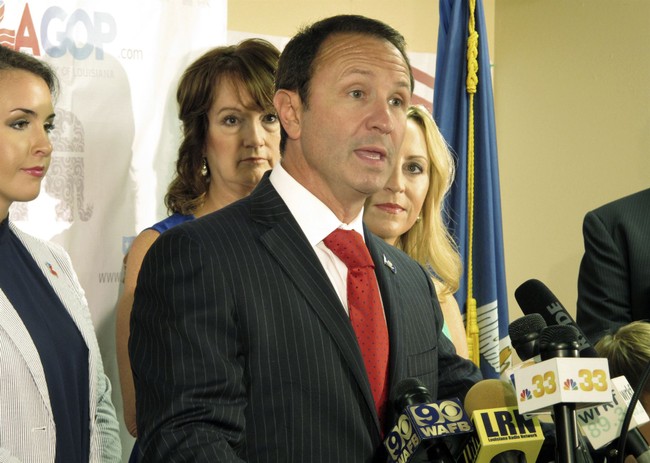
Gov. Jeff Landry signed the Louisiana Energy Protection Act to prevent environmental groups from pursuing lawsuits that aim to bankrupt oil and gas producers by blaming them for downstream weather impacts. The statute stops claims that try to tie a specific heatwave, storm, or flood to emissions from particular companies, while still allowing suits for direct harm like spills or erosion. That balance makes clear the law does not grant blanket immunity for operational damage, but it does block speculative climate litigation. For many residents and businesses in Louisiana, that distinction matters a great deal.
Trying to pin a specific weather event on one company is fundamentally unsound. It is insane to trace a molecule of carbon dioxide from one barrel of oil to a single storm, and courts should not be asked to accept that chain of reasoning as solid proof. Climate and weather are governed by complex global systems where emissions mix, disperse, and interact with natural variability over long timeframes. The scientific reality undermines the legal theory behind these high-stakes lawsuits.
Louisiana offers a practical lens on the human stakes. The state consumes the most energy per household in the nation, and reliable, affordable electricity is essential for coping with extreme heat and humidity. Nearly 70 percent of Louisiana’s electricity comes from natural gas, with nuclear and coal making up much of the remainder, keeping bills low for residents who are among the poorest in the country. Asking these communities to sacrifice cooling, transportation, and essential goods tied to petroleum products is neither realistic nor fair.
Many modern necessities depend on petroleum byproducts beyond fuel: pharmaceuticals, medical devices, plastics, and countless consumer goods rely on refining and petrochemical processes. Louisiana’s refining sector supports local jobs and supplies materials critical to everyday life, so policies that risk dismantling that industry through speculative litigation carry real economic and social costs. The law recognizes that communities should not be collateral damage in a legal strategy aimed at reshaping the energy sector.
These lawsuits often rest on a multi-step chain of assumptions that weakens at every link. Plaintiffs usually start by asserting that emissions substantially warmed the planet, then claim that marginal warming caused or amplified a specific disaster. Next comes reliance on a subset of climate science called “single event attribution,” which attempts to calculate how much climate change altered the probability or severity of an individual event. Finally, litigants ask courts to apportion a portion of that calculated influence back to specific companies, a leap that lacks a sound empirical basis.
Single event attribution has become popular among politically motivated litigants because it appears to quantify responsibility, but the method requires many subjective choices and model assumptions. Attribution studies may say an event was made more likely by human influence, yet converting that probabilistic result into legal liability assumes an accuracy and granularity the models do not provide. Judges and juries are being asked to treat modeled probabilities as precise causal facts, which risks substituting contested scientific inference for established legal standards.
Courts are then expected to divide damages fairly among defendants based on those tenuous links, a task that is nearly impossible. A single oil company operating in Louisiana contributes a vanishingly small share of global emissions, so any claim that its specific output caused or meaningfully worsened a single weather event is essentially unprovable. The fair apportionment of responsibility in such circumstances is more a matter of policy preference than a matter of demonstrable causation.
Local factors often dominate outcomes labeled as climate impacts. For example, sea level rise in parts of Louisiana is influenced heavily by subsidence, soil compaction, tectonic shifts, and groundwater extraction — processes unrelated to global greenhouse gas trends. South of I-10 much of the state sits at or below sea level, and communities like New Orleans have fought flooding issues for generations, long before modern fossil fuel use scaled up. Those historical and geological realities complicate any simple narrative that attributes local harm primarily to distant emissions.
Across the country, hundreds of attribution-driven suits have been filed, especially in states where courts and local governments may be more receptive to expansive theories of responsibility. Lawmakers in Louisiana and similar states are pushing back to preserve affordable energy and protect local industry from disruptive litigation strategies. Their approach prioritizes clear, provable harms over speculative chains of causation dressed up as science.
Affordable, reliable electricity and petroleum-derived products increase resilience to dangerous weather and support long, healthy lives through modern medicine and infrastructure. When advocacy groups pursue legal strategies aimed at bankrupting energy producers rather than addressing tangible operational harms, the potential consequences ripple through communities that depend on those industries. The Louisiana law aims to draw a line between legitimate redress for direct damage and open-ended attempts to rewrite accountability for a planet-scale phenomenon in state courts.


Climate change is a dumbocrat fraud benefiting dumbocrat donors. With the Sun heaving magnetic and radioactive particles at Earth at 3.4 million miles an hour, perhaps we should send the dumbocrats up there to block it, right???
SMART W0RK I was kind of worried about the entire thing. I’ve never worked from home, But Yeah, (Dd4) I did just join and all is good. so I will post back how it
goes!_____ JUST CLICK ON MY USERNAME