
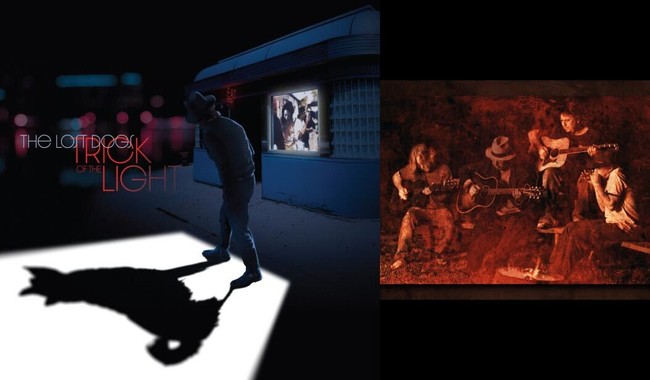
The Lost Dogs’ new album “Trick of the Light” returns to rootsy Americana with warm California sun, honest grief, and sturdy faith, delivered by veteran songwriters who know how to bend genres without breaking them. This piece looks at the band’s history, the themes of loss and resilience that thread through the record, Terry Scott Taylor’s dominant songwriting presence, and how the music blends country, folk, surf pop, and rock into a heartfelt, human statement.
The Lost Dogs have always been a meeting place for seasoned players who wanted to make music unbound by commercial expectation. The group grew out of four artists whose day jobs were in other bands, and they turned to Americana as a natural vehicle for songs that value story and soul over trend-chasing. That spirit comes through on “Trick of the Light,” which favors genuine musicianship and simple but effective arrangements. The result feels like a conversation among old friends who have lived a lot of life.
Grief and memory are central to the album, and understanding that context changes how you hear many of the songs. The band suffered a deep loss when Gene Eugene died in 2000, and that absence still shapes their work decades later. These players do not shy away from sorrow; they let it sit in the music alongside humor and gratitude. That mix gives the record emotional complexity instead of quick fixes.
Terry Scott Taylor emerges as the primary songwriter on this release, responsible for most of the tracks, and his voice carries both wit and theological weight. He writes with a clarity that often reads like a sermon in miniature, challenging listeners to live their beliefs while acknowledging the messiness of human life. Taylor’s knack for melody and knack for honest observation keeps the songs from drifting into sermonizing. He writes for people who have questions and for people who have learned to sit with unanswered ones.
Musically, Americana provides the album’s scaffolding, but the band peppers the songs with other flavors that keep things fresh. There are touches of Bakersfield country, acoustic blues, and a sunnier Southern California surf pop that lifts the tempos and adds bright hooks. The arrangements are uncluttered and purposeful; instruments breathe and voices carry. The performances feel lived-in, not manufactured, which is rare and valuable in a studio era dominated by polish.
The album’s lyrics often land on the in-between spaces where faith and daily life collide, where hope and grief coexist. Taylor is particularly adept at giving mourners permission to feel, refusing the false pressure to perform constant victory. Lines throughout the record are plainspoken but layered with meaning, and they leave room for listeners to bring their own stories into the songs. That humility in the songwriting lets the music resonate beyond any single biography.
A few tracks lean into nostalgia, remembering the long road of touring and the strange joy of small audiences and scenic drives. These moments are affectionate without being sentimental, capturing the quiet pride of artists who kept making music for the love of it. The band’s humor shows up in details that are specific enough to be real and universal enough to be relatable. When musicians sing about the ordinary parts of life, it often reveals the extraordinary within them.
When the album addresses the departed, it does so with tenderness and a wink at the uncanny ways memory works. The lyrics imagine encounters and almost-encounters that feel like reaching toward someone you miss. These scenes are not maudlin; they’re a kind of spiritual troubleshooting, testing how grief reshapes daily perception. That approach gives a spiritual honesty to the record that avoids platitudes.
The production leans toward organic textures: acoustic guitars, warm harmonies, and tasteful electric flourishes rather than studio trickery. The band trusts the songs to carry themselves, and the arrangements respect that trust. You can hear real players on real instruments, and that human touch matters when the themes are about being alive, being absent, and being faithful. The music rewards repeated listens because its subtleties reveal themselves over time.
Overall, “Trick of the Light” feels like a reunion that matters — not just a nostalgic reconvening, but a purposeful re-engagement with themes the band has long cared about. The Lost Dogs show that seasoned artists can still surprise by staying honest and letting their craftsmanship do the talking. For listeners who miss music with heart and hands-on musicianship, this record offers plenty to savor.
“Grief is not a sin. To mourn the death of someone we have loved with all our being and now have lost, at least in this life, is simply to be human … I have tried to write songs that essentially give those who mourn permission to do so without feeling they have failed God by their ability to act like jubilant overcomers.”
On the track ‘In the In-Between’ Taylor sings about living between promises and present pain, a space many will recognize. The lyrics move from theological certainties to domestic imagery, making the spiritual feel immediate. That emotional pivot is one of the record’s strengths, turning big ideas into small, graspable moments. It’s the kind of songwriting that stays with you after the last chord fades.
Kingdom is coming, the kingdom has come
We’re running a race that we’ve already won
Dying is living and the weak are strong
We gain everything when everything is goneIn the in-between
In the in-between
In the shadow of death
The table is set
Between the already and the not quite yet
In the in-between
Another track fondly remembers the touring days and the camaraderie that keeps band life alive even as bodies age. Those verses feel like postcards from the road, honest about fading strength while celebrating shared memories. The effect is comforting rather than maudlin, a way to hold loss and laughter at once. It’s a mature take on veteran musicianship.
I can still see us all
Loadin’ up the van
Travelin’ down the scenic routes and
Hangin’ with the fans
The memories still linger
In the dreams of this old man
And even though I won’t be
I’ll still be in the band
Specific lines confront the absence of Gene with tender clarity, naming him in a way that breaks through euphemism. Those moments read like private notes made public, small acts of remembrance that invite listeners into the circle. The honesty of naming a friend sets a tone for the whole album: this is music shaped by real relationships and real loss. That gives the songs a weight that many contemporary records lack.
I saw Gene today
Movin’ fast on his feet
Makin’ his way
Through the crowd on the street
Maybe gettin’ back to a Green Room track
Or the one where the horses run in Los AlamitosOh no
That can’t be right
All I suppose it was
Was a trick of the light
Instrumentally, the record balances bright hooks with spacious arrangements, and a few songs lean into sunny West Coast pop while staying rooted in Americana. Vocals and instruments are presented plainly and proudly, with no digital masks to hide behind. That authenticity supports the album’s themes of presence, absence, and faith. It’s a record by grown musicians who still care about connecting honestly with an audience.
Lines like “And yes, it’s a blessing to be breathing / When we bleed we know we’re alive” sum up the album’s approach: faith that coexists with pain, gratitude that coexists with longing. The Lost Dogs deliver songs that respect both sorrow and joy, and they do so with skill and warmth. For anyone wanting music that feels human and heartfelt, this record stands as a worthy new chapter.
And yes, it’s a blessing to be breathing
When we bleed we know we’re alive


Add comment